

Bringing a Seagrove field back into production starts with knowing what's grown up in it and how long it's been. We walk it, tell you straight whether it's a mulch job or a timber job, and give you a written price from Greensboro.
The volunteer growth in old Seagrove fields is nearly always loblolly and Virginia pine with sweetgum and cedar mixed in, over a privet and blackberry understory. All of it mulches under ten inches. Past that, the pines are worth felling and the job changes.
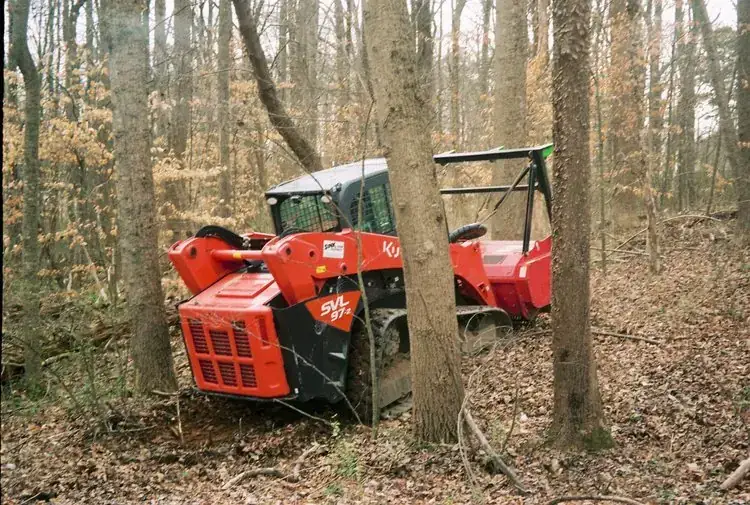
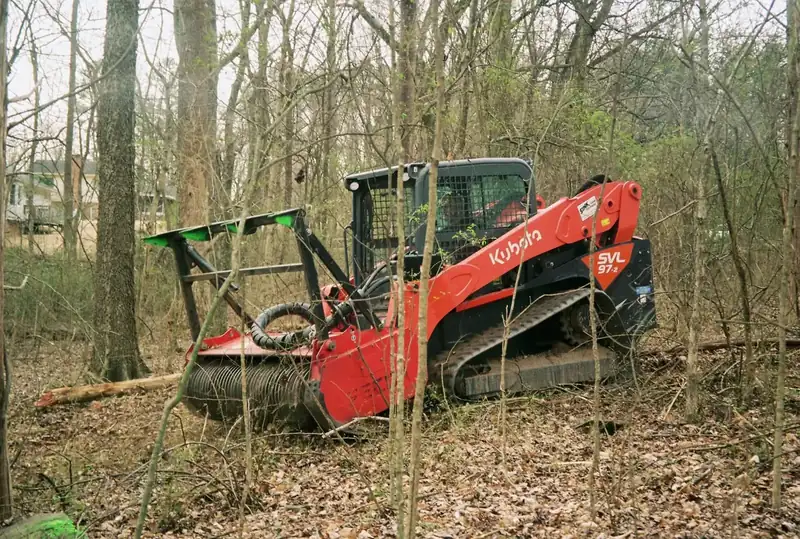
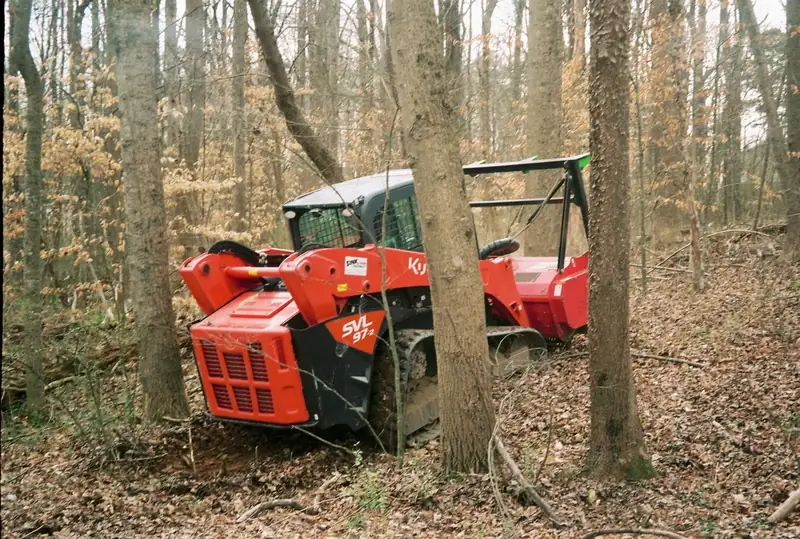
Seagrove ground conditions and how they shape pasture reclamation
The work around Seagrove is a mix of homesteads and hunting. People buying ten to forty acres off NC-705, Busbee Road and the Whynot and Erect roads want a house site, a shop pad and a driveway cut through pine, plus trails to walk the property. Hunting clubs leasing ground near the Uwharrie National Forest want lanes, plots and interior roads that will hold up in deer season. The remaining farms toward Farmer and the Moore County line need pasture reclaimed from pine and cedar, and potters themselves call us to open kiln-shed sites and gravel the lot for visitors.
Around US-220 / I-73 / I-74, Busbee Road and Farmer, the properties we're usually called to look like this:
- Pottery studios and kiln sheds needing a site opened and a gravel lot for visitors
- Remaining farms toward Farmer and the Moore County line with pasture gone to pine and cedar
- Ten to forty acre homestead tracts off NC-705, Busbee Road and the Whynot and Erect roads needing house sites, shop pads and driveways through pine
What pasture reclamation jobs look like around Seagrove
One job we see over and over near Farmer: Pottery studios and kiln sheds needing a site opened and a gravel lot for visitors. That's textbook pasture reclamation work, and it's usually a one-mobilization job for us.
Out toward Whynot the pattern changes — more Opening old fields for a homestead, orchard or market garden. The approach is the same, the time on site is what moves.
Either way, the first question we ask on a Seagrove site walk is what the ground needs to do afterward, because that decides how far we take it.
Franklinville, Sophia and Asheboro are in the same loop as Seagrove for us — same crew, same pricing basis.
Why Seagrove property owners call A&R
We're honest about the timeline to grass on a Seagrove field. Mulch in place is cheaper and slower; raked and stumped is faster and costs more. The estimate lays out both so you can pick based on your budget and your season.
For old-field and pasture reclamation in Seagrove, call (336) 392-8138. The owner walks it, prices it and runs the mulcher.
Pasture Reclamation in Seagrove: questions
Is it better to mulch or bulldoze an old field?
For a field going back to grass, mulching is better almost every time. A dozer strips the topsoil, piles the debris for burning, leaves the clay exposed to wash, and needs follow-up grading. The mulcher leaves the soil, adds organic matter, and the field is walkable the same day. Dozing makes sense only if you need bare ground immediately.
Can you find and remove the old fence?
Yes, and we do it before the mulcher gets near it. Old woven wire and barbed wire in a mulching head is expensive, so we walk the field, locate the lines, pull the wire with the grapple and pile it. Posts worth saving get flagged.
How far is A&R Land Services from Seagrove?
We're based in Greensboro, about 50 minutes from Seagrove. Randolph County is inside the radius we work every week, so there's no long-haul mobilization charge built into your estimate.
Do you handle pasture reclamation near US-220 / I-73 / I-74 and Busbee Road?
Yes. We work throughout Seagrove and the surrounding Randolph County area, including properties around US-220 / I-73 / I-74, Busbee Road and Farmer. If you're outside the town limits, send the address and we'll confirm it's in range.
How do you approach pasture reclamation on Seagrove ground?
Conservation and wildlife openings on recreational land is the most common version of it around Seagrove. We walk the field with you and talk through the mowing, liming and seeding schedule that'll actually get it back into production, and whether any drainage or fence work should happen while the ground is open. Chip handling — left in place, windrowed or removed is the factor that moves the price most on Randolph County jobs, and we'll walk through it with you on site.