
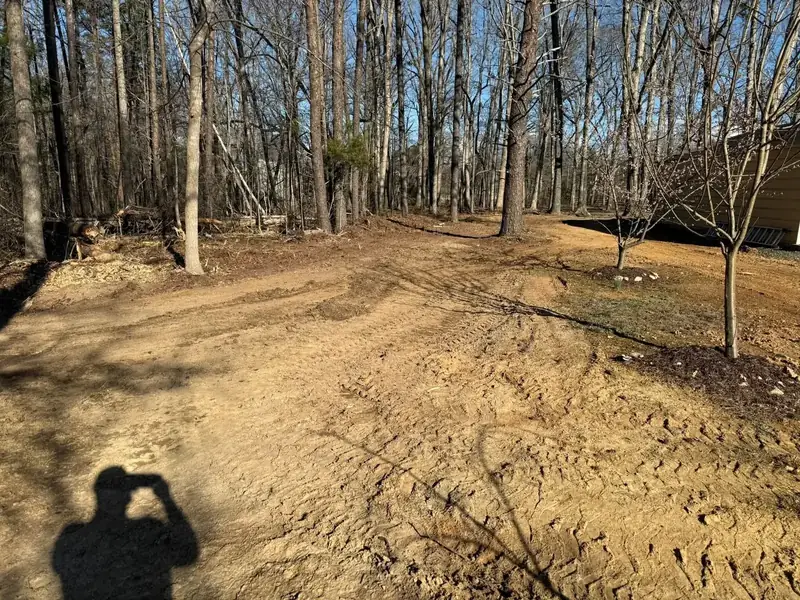
Grading is the part of land work most people never see finished, because when it's done right the only thing you notice is that water doesn't puddle and the yard doesn't wash. It's the shaping of ground to a planned slope — moving dirt from where it is to where it needs to be so a house drains, a driveway doesn't rut, a pad sits level, or a lawn can actually be mowed. Everything built on top of the dirt depends on it.
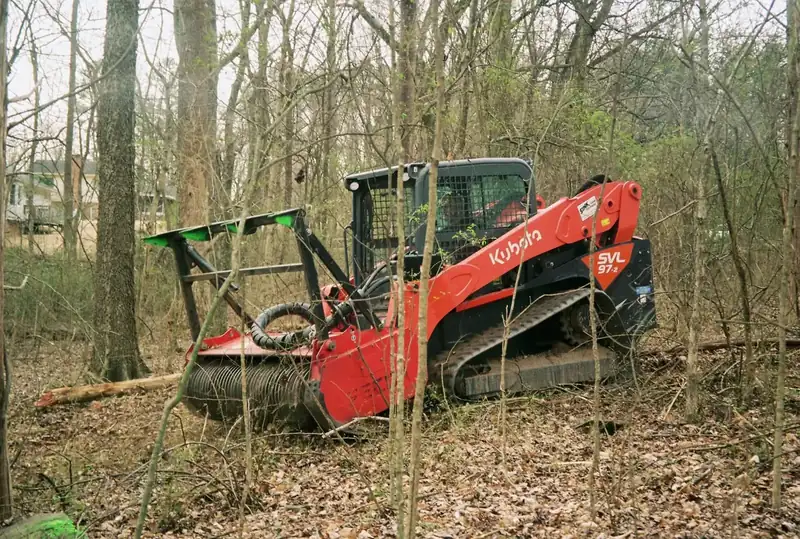
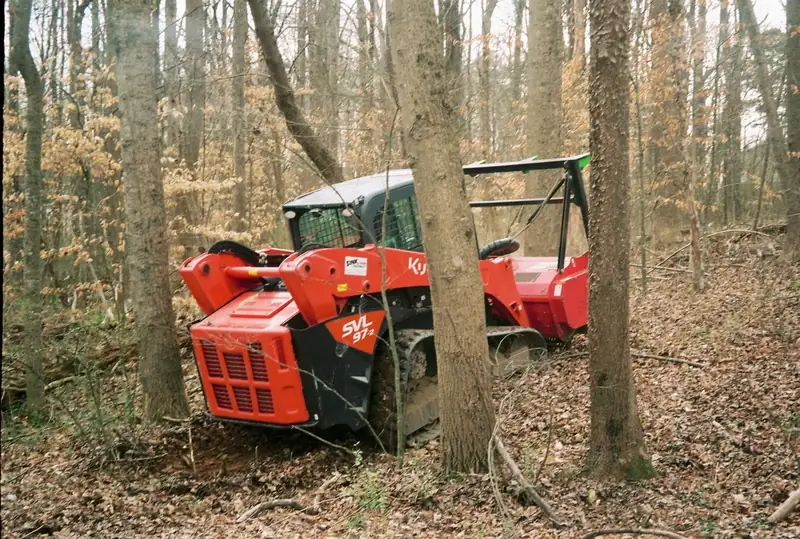
In the Piedmont that work has a specific character. The Cecil red clay under most of the Triad compacts hard, holds water for days after a rain, and sits under a few inches of topsoil at best. Grade it wet and you make soup; grade it bone dry and it chunks up like brick. We run compact track loaders with box blades, grading blades and a dozer blade, plus a mini excavator for cuts, and we check grade with a laser rather than eyeballing it from the seat.
Clark is on the machine for every grading job. He's a veteran and a working firefighter, and the approach is the same one he'd use on his own property: look at where the water is going now, figure out where it ought to go, and move the dirt once instead of three times. Free estimates across the Triad and about an hour and twenty minutes in any direction from Greensboro.
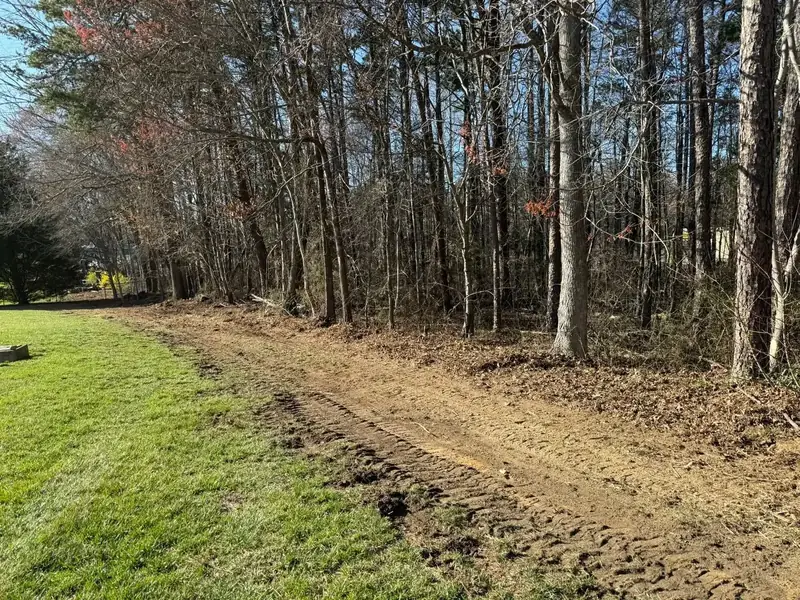
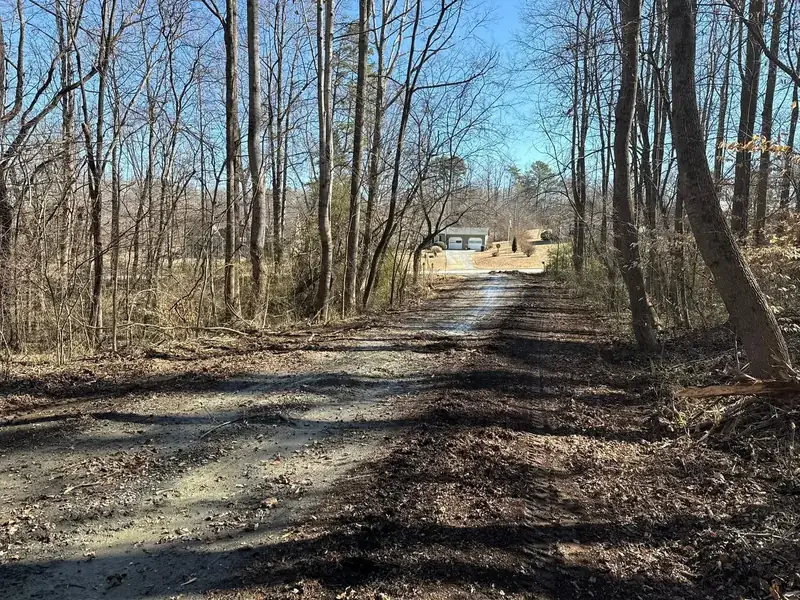
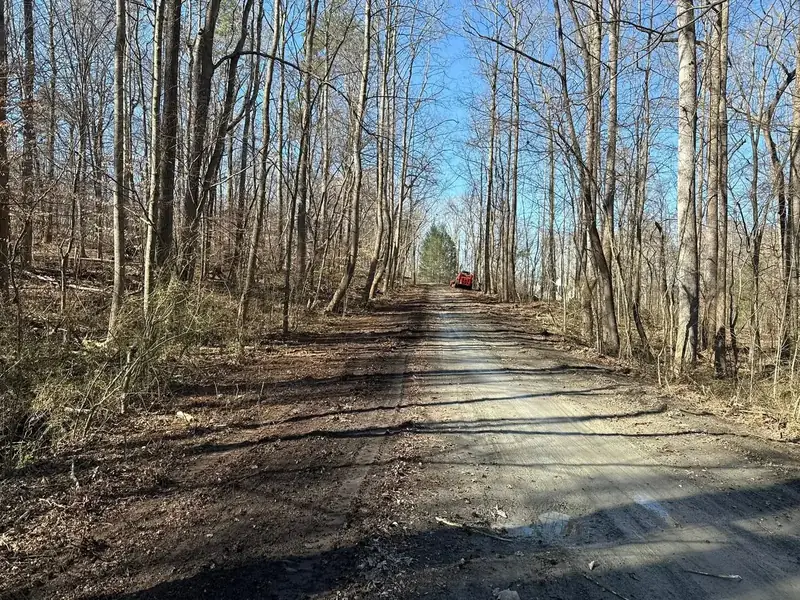
How land grading works on Piedmont ground
Grading breaks into two broad jobs. Rough grading is the heavy moving — cutting high spots, filling low ones, establishing the general shape and the drainage pattern across a site. Final grading is the fine work that follows: smoothing the surface, setting the last inch or two of slope, spreading topsoil and leaving the ground ready for seed, sod, gravel or concrete. Some jobs need both; a lot of residential calls are one or the other. A new build needs the rough work before the foundation and the final work after the framers leave. A yard that holds water usually just needs a final-grade correction.
The number that matters in all of it is slope. Around a house we want the ground falling away from the foundation — roughly six inches over the first ten feet is the standard target — so roof runoff and rain don't sit against the footing. Across a lawn, a gentle one to two percent grade sheds water without looking like a hillside. Driveways, pads and gravel lots each have their own numbers. We set those with a laser receiver on the machine and grade stakes on the ground, which is the difference between a yard that drains and one that looks like it should.
What grading won't do is fix a problem that isn't a grading problem. If water is coming from a neighbor's lot uphill, surfacing from a spring, or backing up out of a clogged culvert, reshaping the dirt only moves the puddle. We'll tell you that on the walk-through and point you toward drainage work — a swale, a french drain, a culvert — instead of charging you to push clay around.
What the job looks like
Walk it and read the water
We look at the site after a rain if we can, note where it pools and where it flows, check the existing slope with a laser, and talk through what the ground has to do once we're gone.
Scope and estimate
You get a written description of the cuts and fills, whether topsoil or fill dirt is being brought in, how the finish is left, and the price. If sediment control or a permit applies, it's called out here.
Rough shaping
Strip and stockpile usable topsoil, cut the highs, fill the lows in lifts, and establish the drainage pattern. On clay we work it at the right moisture and track it in as we go.
Finish grade
Box blade and grading blade passes to set the final slope, then topsoil spread where it's a lawn and compacted base where it's a drive or pad. Laser check at the end, not just the start.
Walk-through
We walk the finished grade with you, show you where the water will go, and fix anything that's not right before the trailer gets loaded.
Best fit for
- Water pooling against a foundation or crawl space vent
- New construction lots before and after the build
- Yards that are too rough or sloped to mow safely
- Driveway, parking and gravel lot base shaping
- Pads for shops, barns, sheds and manufactured homes
- Land being prepped to list, where a smooth lot shows better
- Fixing a previous contractor's grade that still holds water
What drives the price
We don't quote land grading from a chart. These are the things that move the number, and we'll walk through each one with you on site:
- Square footage or acreage being shaped
- How much dirt has to move — a few inches of finish vs. feet of cut and fill
- Whether topsoil, fill or stone has to be brought in or hauled off
- Soil moisture and time of year — wet clay slows everything
- Obstacles: stumps, roots, buried debris, utilities
- Tolerance required — lawn finish vs. a pad checked to the inch
- Erosion control measures if the disturbed area is large
Equipment we bring
- Compact track loader with box blade and grading blade
- Dozer blade attachment for heavier pushing
- Mini excavator with thumb for cuts and ditching
- Laser-guided grade checking on the machine and on the ground
- Dump trailer for hauling topsoil, fill or spoils
Land Grading questions
How much does grading cost in Greensboro NC?
It swings a lot. Correcting the slope around one side of a house is a few hours with one machine, and that's the low end. Rough and finish grading a full acre with fill brought in is a multi-day job and sits at the high end. The biggest cost drivers are how much dirt moves and whether material is trucked in or out. We walk the site and give a written number — no per-square-foot guesses over the phone.
How much slope should a yard have away from the house?
The standard target is about six inches of fall over the first ten feet from the foundation, which works out to five percent. Past that, one to two percent across the lawn is plenty to keep water moving without making it hard to mow. In our clay, the slope matters more than it does in sandy ground because the water isn't going to soak in — it has to run off.
Do I need a permit to grade my property in NC?
For most residential grading under an acre, no. If you disturb more than an acre, North Carolina's sediment and erosion control rules kick in and you'll need an approved plan, usually through the county or the state Division of Energy, Mineral and Land Resources. Towns can have their own stormwater rules on smaller areas. We'll tell you if your job trips a threshold.
Can you grade when the ground is wet?
Not well, and we won't pretend otherwise. Piedmont clay turns to grease when it's saturated — it won't compact, it ruts under the tracks, and anything you shape will slump. We schedule grading around the weather and will push a job a few days rather than hand you a mess that has to be redone.
What's the difference between grading and leveling?
Leveling makes ground flat. Grading makes it slope on purpose. A truly level yard holds water in our soils, so almost every job that starts as "I want it level" ends up as "I want it smooth with a gentle fall away from the house." That's grading, and it's what we do.
What areas do you grade in?
Greensboro is home base, and we work the whole Triad plus about an hour and twenty minutes out — north to the Virginia line, west to Mount Airy and Elkin, south to Salisbury, Albemarle and Sanford, and east through Durham and Chapel Hill to Raleigh.