

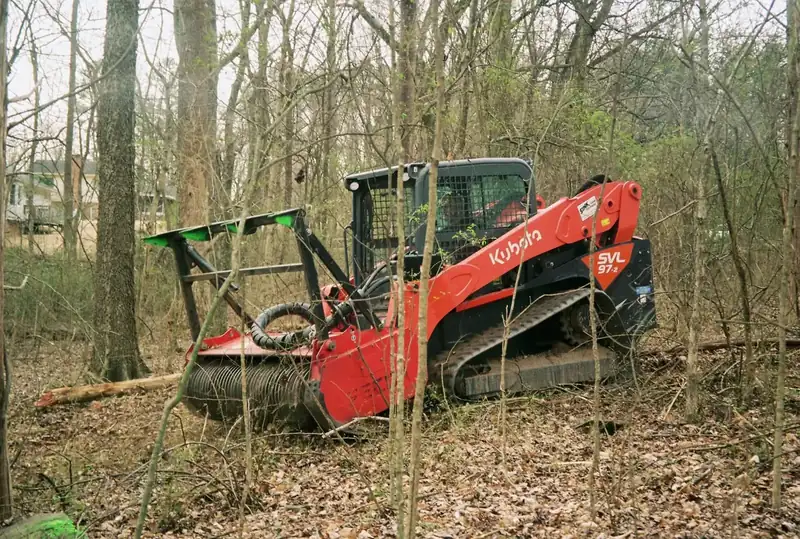
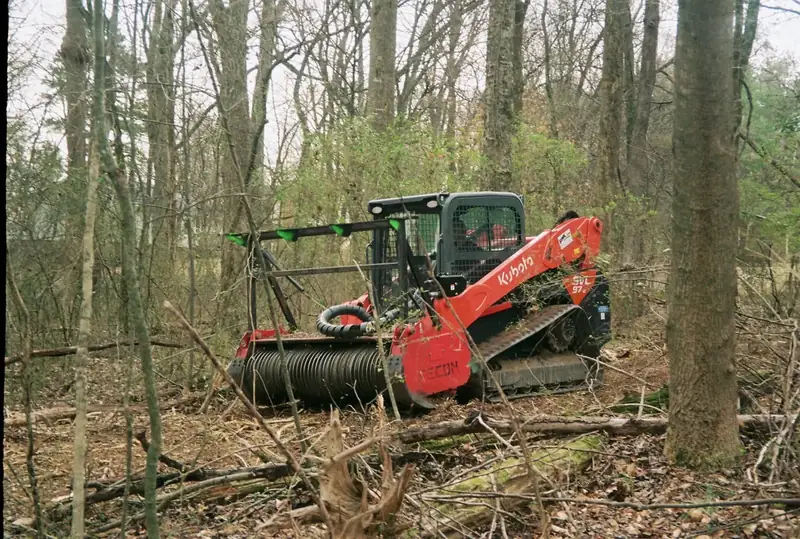
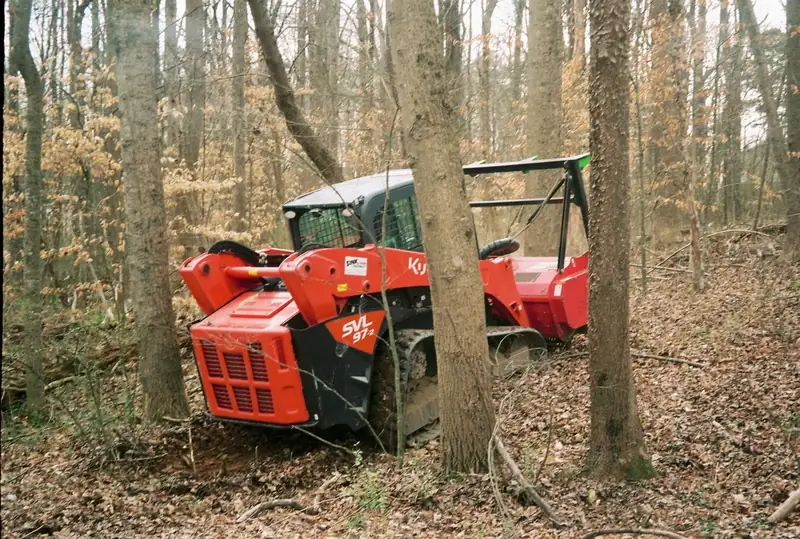
Forestry mulching is the fastest, cleanest way to clear overgrown land in the Piedmont, and it's the service we built A&R around. A high-flow track loader with a rotary mulching head drives through brush, saplings and trees, grinding them into a layer of wood chips that stays on the ground. There's nothing to pile, nothing to burn, nothing to haul, and the roots stay in place holding the soil together.
If you've watched a forestry mulcher work on YouTube and wondered whether it would handle your property — it probably will. The sweet spot is anything from head-high brush up to trees around 8 to 10 inches in diameter. Privet, honeysuckle, kudzu, sweetgum, pine thickets, volunteer cedar, briars, old fence rows — that's exactly what the machine was built for. Bigger trees can be mulched in stages, felled and handled with a grapple, or saved as shade trees depending on what you want.
We run our mulching jobs with the owner on the machine. Clark is a veteran and a firefighter, and he treats your land the way he'd treat his own: careful around the keeper trees, honest about what will and won't work, and finished when it's finished right.
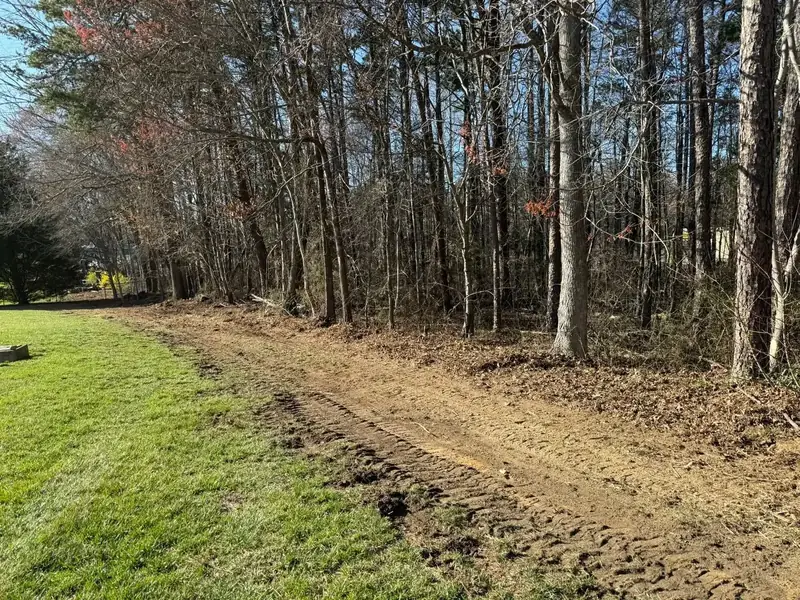
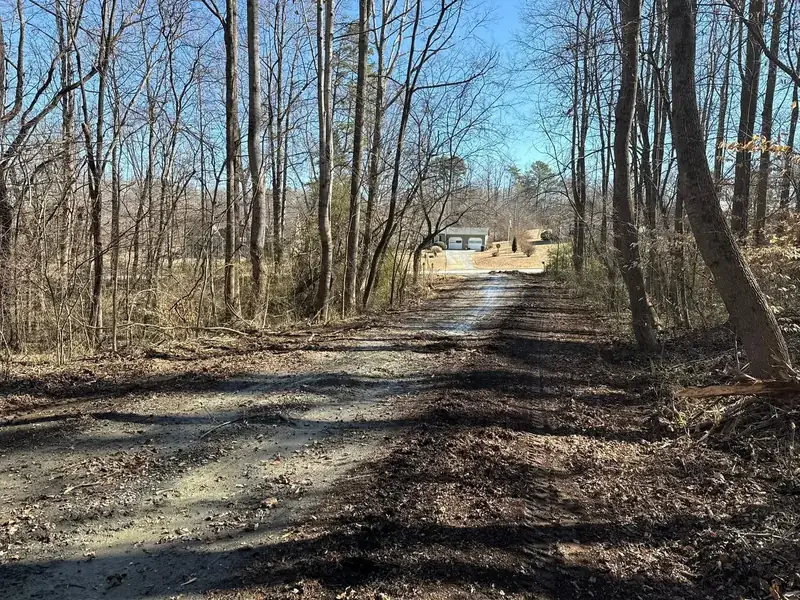
How forestry mulching works on Piedmont ground
The mulching head is a drum of carbide teeth spinning at high speed on the front of a compact track loader. The machine pushes brush and small trees over, then lowers the head onto the material and chews it into chips, typically 2 to 6 inches long, that land right where the plant was growing. The operator works from the outside in, taking standing material in passes and then going back over the ground to break the chip layer down fine.
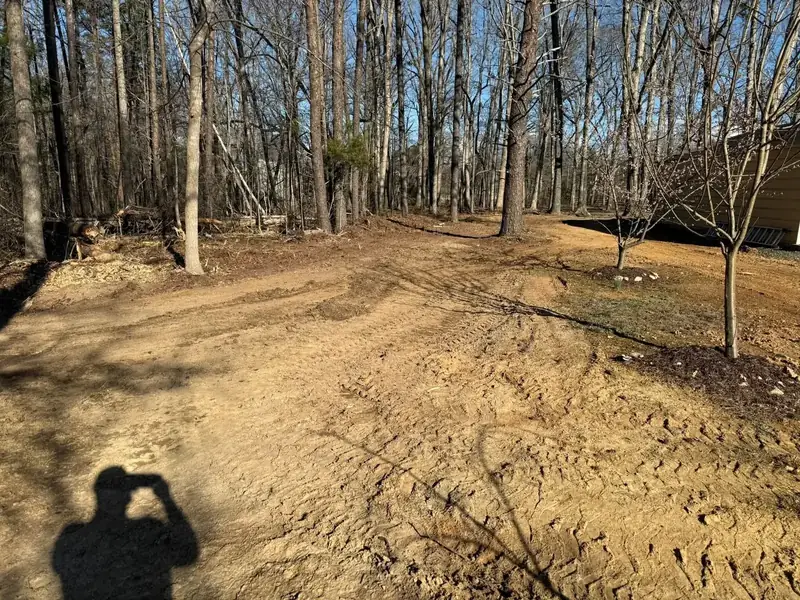
The result is a cleared property with a mulch layer that suppresses regrowth for a season or two, holds moisture, and keeps the clay from washing off slopes during the first few rains. Because the stumps are mulched to near grade and the roots stay in the soil, the ground stays firm — you can walk it, mow it or drive on it the same afternoon. If you want bare dirt later for a building pad or a lawn, we can rake off the mulch and pull stumps as a second step.
Mulching isn't the answer for everything. Large mature timber is better felled. Wet, saturated ground needs to dry before a 10,000-pound machine crosses it. And if you need a true finished grade with stumps and roots completely gone, mulching is step one, not the whole job. We'll tell you which situation you're in before we quote it.
What the job looks like
Site walk and plan
We look at the growth, mark the trees you want kept, identify wet spots, rock and property lines, and talk through where you want the mulch to end up — spread evenly, raked into windrows, or piled.
Estimate
A written scope and price based on what we saw. Mulching is usually quoted per job with a clear per-day rate for anything beyond scope.
Mulch
Standing material first, then a second pass to refine the chips and knock any stubs to grade. We keep a clean edge along driveways, fences and the trees that stay.
Walk-through
Before we load the trailer we walk the property with you. If a spot needs another pass, it gets it.
Best fit for
- Overgrown lots, back acreage and old farm fields
- Property line and fence row clearing without killing the fence
- Opening up wooded homesites while keeping the big trees
- Hunting land — shooting lanes, food plots, access trails
- Privet, honeysuckle, kudzu and briar infestations
- Pre-sale cleanup so buyers can see the land
- Firebreaks and defensible space around rural homes
What drives the price
We don't quote forestry mulching from a chart. These are the things that move the number, and we'll walk through each one with you on site:
- Acreage and density of growth
- Diameter of the largest trees being mulched
- Terrain — slope, rock, stumps from previous logging
- Ground conditions and time of year
- Access and how far equipment has to travel on site
- Finish detail — single pass vs. refined, mulch spread vs. piled
Equipment we bring
- High-flow compact track loader
- Rotary drum forestry mulching head with carbide teeth
- Grapple attachment for oversized material
- Rake and blade attachments for finishing the mulch layer
Forestry Mulching questions
How much does forestry mulching cost per acre?
In our area, mulching is typically quoted by the job after a site walk rather than by a flat per-acre rate, because an acre of waist-high briars and an acre of 8-inch sweetgum are completely different days of work. Light growth clears fast and costs the least; dense, larger material takes longer. The estimate is free and includes a realistic time frame.
What size trees can a forestry mulcher handle?
Our setup handles trees up to roughly 8–10 inches in diameter in a single pass, and larger trees in stages. For anything bigger than that, felling with a saw and handling with the grapple is faster and cleaner.
Will the brush grow back?
Some regrowth is normal — mulching grinds the plant down but doesn't kill the roots. The mulch layer suppresses it for a season or two, and a second light pass or regular mowing after that keeps it under control. For privet and kudzu we'll talk through follow-up options.
Is forestry mulching better than bulldozing?
For most residential and small-acreage clearing, yes. No burn permit, no haul-off, no stripped topsoil, no mud, and the ground is usable the same day. Bulldozing still makes sense when you need bare dirt and total stump removal for construction.
Can you mulch on a slope or near a creek?
Slopes, yes — track machines handle hillsides well, and the mulch layer is actually the best erosion control you can leave on a slope. Near creeks we follow buffer rules and work from the top down so no soil moves toward the water.
How quickly can you get to my property?
We're based in Greensboro and cover roughly an hour and twenty minutes in every direction. Most jobs are scheduled within one to two weeks of the estimate depending on the season.