

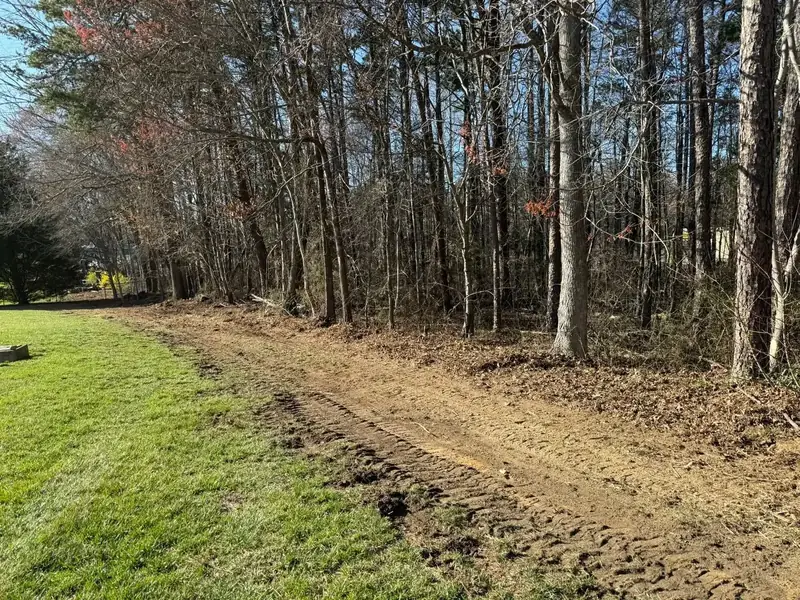
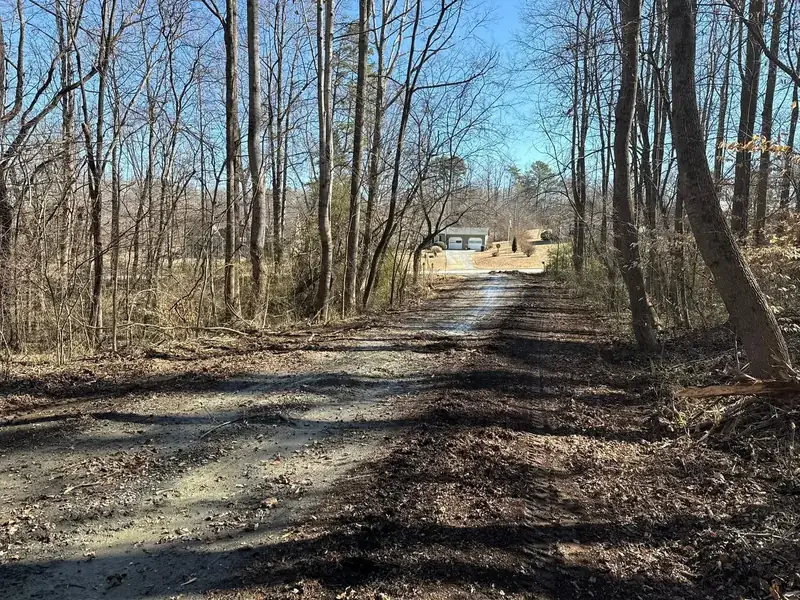
Underbrush clearing is for the property owner who likes their trees and hates what's growing under them. The oaks, hickories and poplars stay. The privet, honeysuckle, briars, sapling sweetgum and dead limbs that have turned the woods into a wall come out. What's left is a stand of mature trees over a clean mulch floor — the kind of woods you can walk through, see through, and actually use.
It's some of the most satisfying work we do because the change is immediate and the trees look better for it. A hardwood lot that's been closed in by privet for fifteen years reads as neglected. The same lot with the understory mulched looks like a park that's been maintained for decades. Around Greensboro that's a common request for wooded homesites, the back acres of a subdivision lot, church grounds, and the buffer strip between a house and the road.
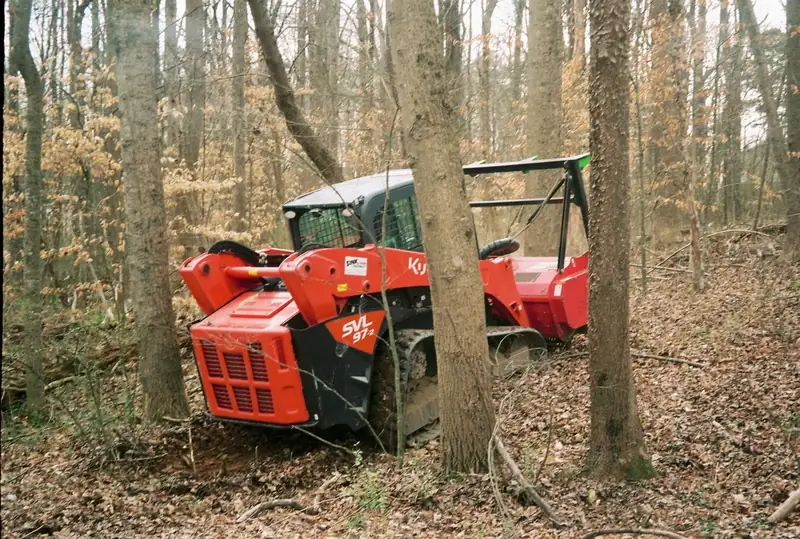
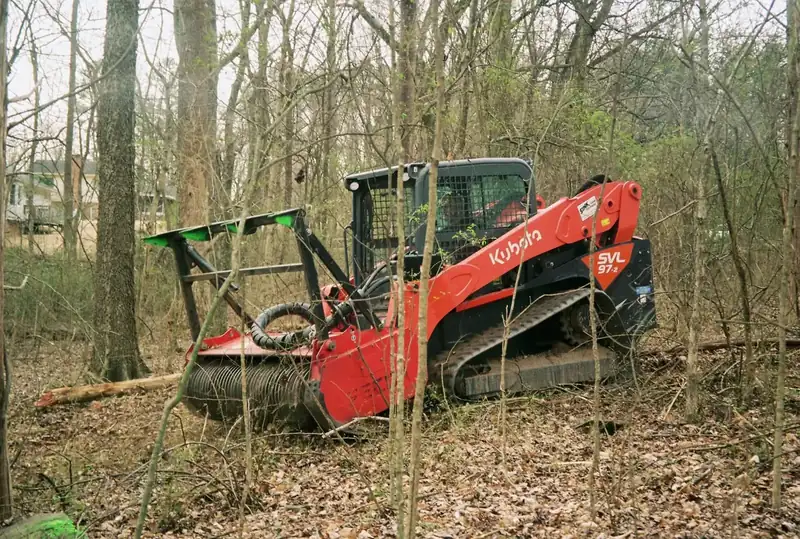
We do it with a forestry mulcher on a compact track loader, working carefully between the trunks. Clark runs the machine himself — he's a veteran and a working firefighter — and he's particular about not scarring the keepers. The walk-through and the estimate are free.
How underbrush clearing works on Piedmont ground
The difference between underbrush clearing and a general brush job is that here the trees are the point. We're working inside an existing canopy, which means the mulcher head has to thread between trunks, surface roots have to be respected, and low limbs that are in the way get cut rather than pushed through. We flag every tree staying before the machine starts, and on tight stands we'll tell you which ones are too close together for the head to fit between cleanly.
The understory in the Piedmont is mostly the same four things: Chinese privet, Japanese honeysuckle, sapling sweetgum, and whatever briars and wild rose can find the light. Privet is the real problem — it forms a solid wall, shades out everything native, and spreads by bird-carried seed. Mulching knocks it flat and the chip layer buys you a season, but it will resprout from the roots. If you want the privet gone for good, plan on either a follow-up pass the next year or treating the resprouts, and we'll be straight with you about that during the walk.
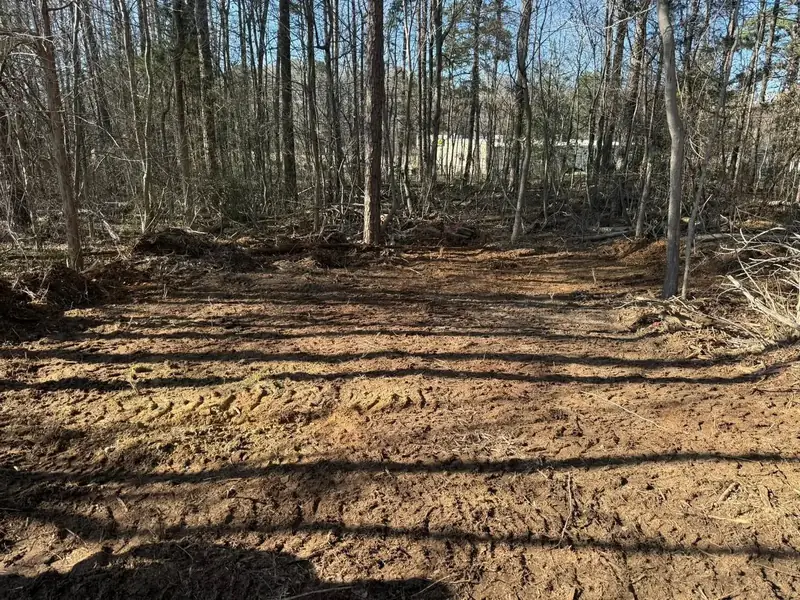
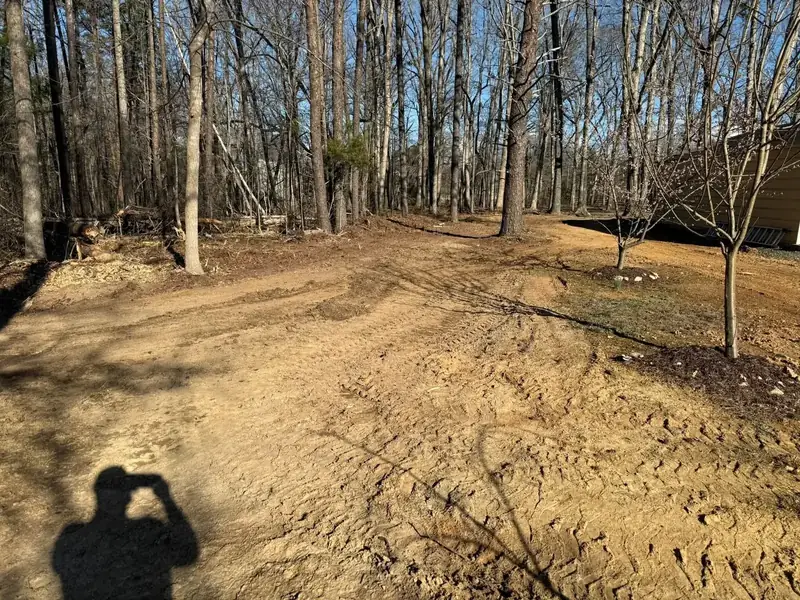
What you end up with depends on how far you want to go. The lightest version takes everything under about two inches and leaves the small native trees — dogwoods, redbuds, young oaks — so the woods keep some structure. The cleaner version takes everything but the flagged keepers, which is what most people picture when they say they want it to look like a park. Either way, the mulch stays on the ground as a floor, which keeps the clay from washing and makes the regrowth easier to manage with a mower or string trimmer.
What the job looks like
Walk the woods
We go through the stand with you, flag the trees that stay, note any dead or hazard trees worth dropping while we're there, and decide how clean you want the floor — native saplings kept or everything mulched.
Estimate
A written scope that names the trees staying, how low the understory is being taken, and where the mulch is left. Underbrush work is priced by the job after the walk, not from a chart.
Mulch the understory
The mulcher works between the trunks, taking privet, honeysuckle, saplings and dead material to the ground. Low limbs in the way are cut cleanly. We leave a clean margin around every keeper tree.
Refine and walk through
A second pass to break the chips down fine and knock any stubs flush, then a walk with you. If a spot needs another pass it gets it before we leave.
Best fit for
- Wooded homesites where the owner wants to keep the canopy
- The back acres of subdivision lots that have closed in with privet
- Church, camp and school grounds with mature trees and a thicket under them
- Creating sight lines through woods to a road, pond or neighbor's field
- Reducing tick, snake and fire fuel around a house in the woods
- Opening up walking trails and picnic areas under existing trees
- Hardwood stands being prepped for a cabin or outbuilding
What drives the price
We don't quote underbrush clearing from a chart. These are the things that move the number, and we'll walk through each one with you on site:
- Acreage and how dense the understory is
- Tree spacing — tight stands take longer to work between
- Whether native saplings are being kept or everything goes
- Dead or hazard trees that need dropping and handling
- Slope and how wet the ground is under the canopy
- Access — can the machine reach the stand without cutting a path
Equipment we bring
- Compact track loader with a high-flow forestry mulching head
- Brush cutter / rotary mower attachment for light growth between tight trunks
- Grapple for dead trees and fallen limbs pulled from the stand
- Root rake for cleaning out old wire and debris found under the brush
Underbrush Clearing questions
How much does it cost to clear underbrush from wooded property?
It runs higher per acre than open brush clearing because the machine has to work carefully between trunks instead of mowing straight lines, but far less than clearing the trees themselves. Density of the privet, tree spacing and how clean you want the finish are the main drivers. We walk it and give you a written price — the estimate is free.
Will clearing underbrush hurt my trees?
Done carefully, no. We flag the keepers, keep a margin around each trunk, and cut low limbs rather than push through them. Mature oaks and poplars have deep enough roots that a track machine passing over the mulch layer doesn't bother them. We avoid running directly over the root flare of the biggest trees.
Does underbrush clearing get rid of ticks and snakes?
It helps a lot. Ticks live in the leaf litter and tall understory where deer and mice travel, and copperheads like the cover. Opening the floor to a mulch layer and sunlight takes away most of that habitat. It won't make the woods sterile, but it makes them a lot more comfortable to walk.
Will the privet grow back after mulching?
It'll try. Privet resprouts from the root crown within a season. The mulch layer slows it and makes the resprouts easy to see and mow or treat. Most customers do a light follow-up the next year and are ahead of it from then on. We'll talk through what that looks like on your property.
Can you take out dead trees while you're clearing the understory?
Yes. Standing dead pines and hardwoods are the hazard most people don't notice until the brush is gone. We'll point them out during the walk, and dropping and grappling them off is easy to add to the scope while the machine's already there.
What areas do you cover for underbrush clearing?
Greensboro and roughly an hour and twenty minutes around it — all of the Triad, up to the Virginia line, out to Mount Airy and Elkin, down to Salisbury, Albemarle and Sanford, and over to Durham, Chapel Hill and Raleigh.