

A trail turns a wooded piece of property from something you own into something you use. Walking loops behind the house, a side-by-side path to the back forty, a route to the deer stand that doesn't cross the bedding area, a lane wide enough to get a tractor or a hay wagon to a field you haven't been able to reach — the work is the same. We cut a corridor through the woods with a forestry mulcher and leave it floored with chips that you can walk, ride or drive the same day.
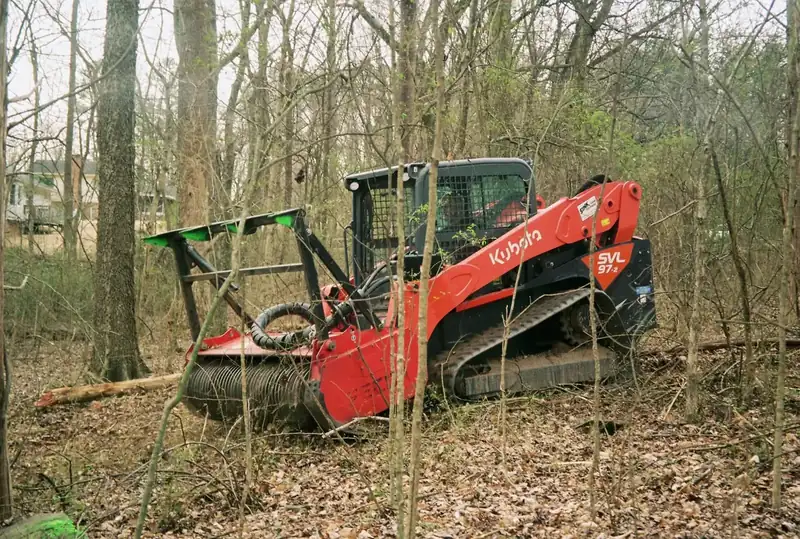
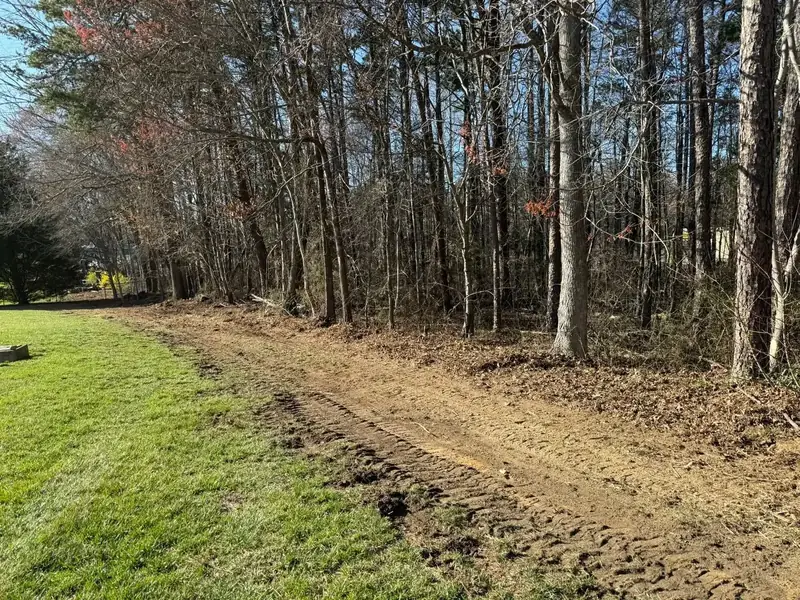
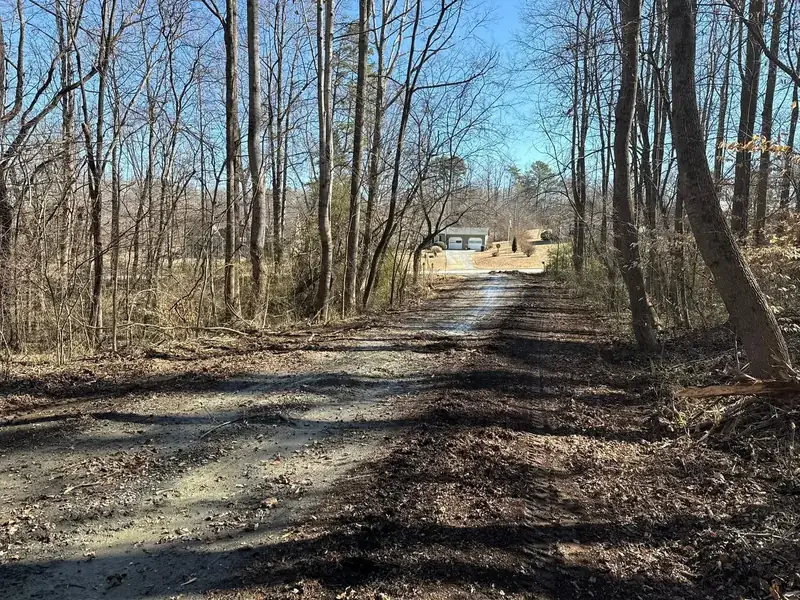
The mulcher is the right tool for trails because it doesn't leave a mess beside the path. Everything that was in the corridor is on the ground as mulch; nothing is piled at the edge, nothing needs burning, and the roots stay in the soil holding the path together on Piedmont clay. We route around the trees worth keeping, cut through the privet and saplings, and shape the trail to the ground — following contours on slopes, crossing creeks where the banks are low, and avoiding the wet bottoms that turn into mud with the first ATV.
Clark cuts every trail himself. He's a veteran and a working firefighter, and he's walked enough Triad woods to lay out a route that drains, rides well and doesn't fight the land. The walk-through and estimate are free, and the walk-through is where the trail really gets designed.
How trail cutting works on Piedmont ground
Trail width is set by what's using it. A walking path is four to six feet and can wind between trees. A UTV or ATV loop wants eight to ten feet with gentler turns. Equipment access for a tractor, a skid steer or a truck needs twelve feet or more with room on the corners and no low limbs. We cut each one to its purpose, and we'll tell you if the route you have in mind has a pinch point — two big oaks too close together, a bank too steep for a side-by-side — before the machine starts.
Routing matters more than cutting. On the slopes common across Rockingham, Stokes and Randolph counties a trail that runs straight downhill becomes a gully in a year. We lay trails along the contour where we can, cross slopes at an angle, and put the climbs where the ground is firmest. Creek crossings get placed where the banks are low and the bottom is rock or gravel, not mud — and inside the creek buffer we keep the clearing to the minimum width and leave the mulch on the approaches. If a crossing needs a culvert or stone to be drivable in the wet, the mini excavator and the dump trailer handle it in the same trip.
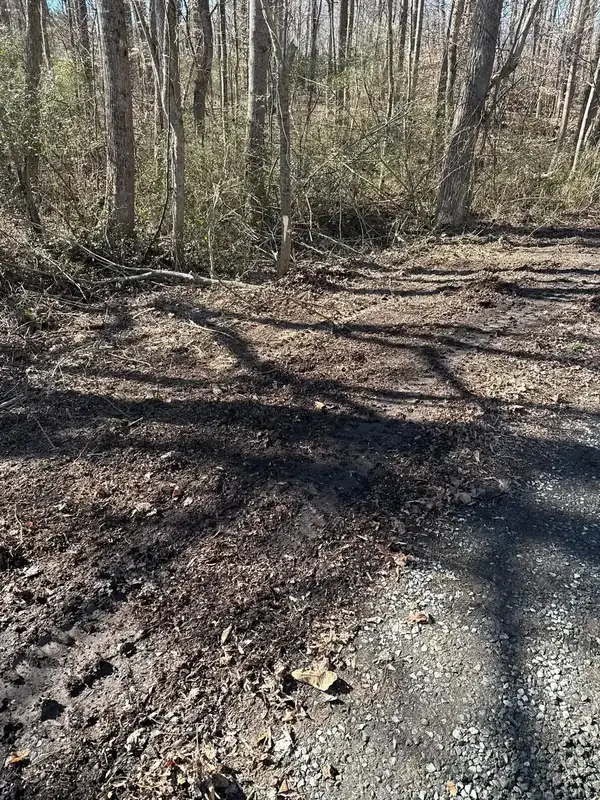
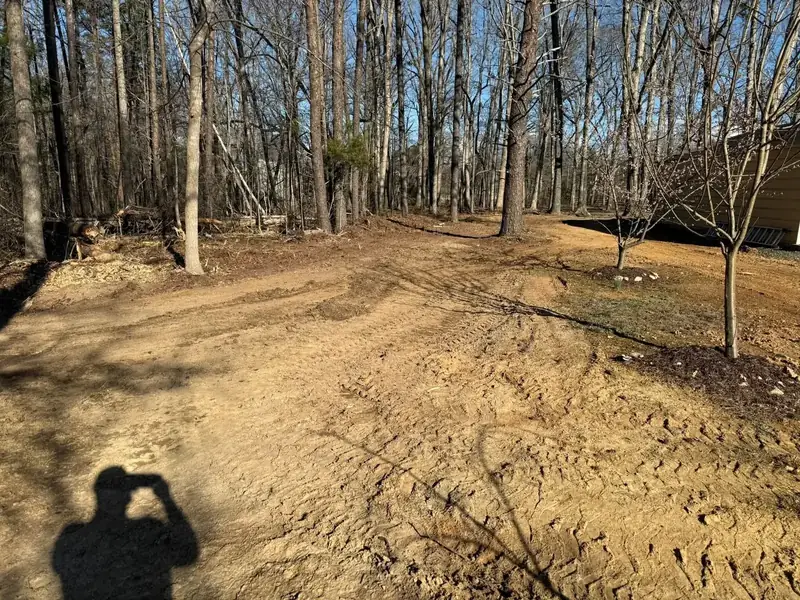
The finish on a mulched trail is a layer of chips a few inches deep. It's firm enough to walk and ride immediately, and over a season it packs into a surface that sheds water and stays clean. Trails that get vehicle traffic may want gravel on the wet stretches or the climbs, which we can grade and spread. Stumps inside the corridor are mulched to grade — low enough that they won't catch a tire or a boot — and the few that sit on a route where you need bare ground get pulled.
What the job looks like
Walk the route
We walk the woods with you, lay out the trail with flagging tape, and adjust it for slope, drainage, keeper trees and creek crossings. If you want a loop, access to a stand or a lane to a field, that shapes the route.
Scope and estimate
A written plan with the trail's length and width, where crossings are, any gravel or culvert work included, and the price. Trails are quoted by the job after the walk.
Cut the corridor
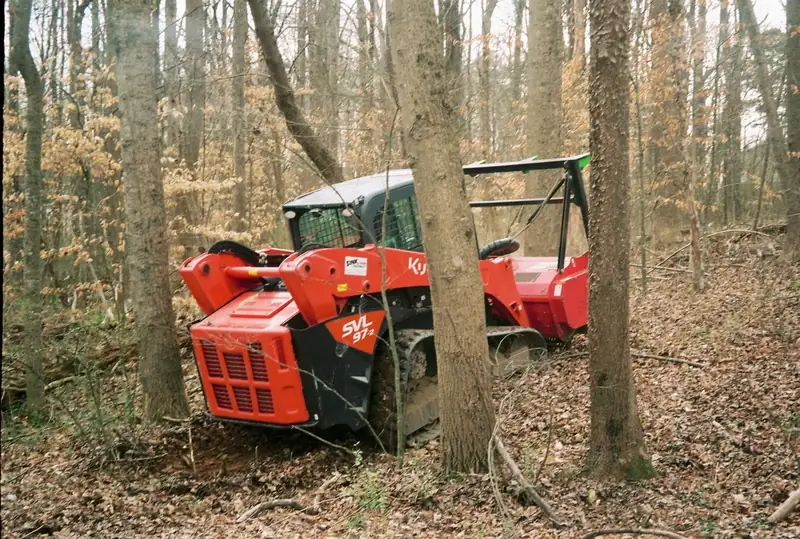
The mulcher follows the flags, taking brush and saplings to grade and working around the trees you're keeping. Low limbs that would catch a rider get cut. Larger trees on the route get a decision — route around or fell and grapple off.
Crossings and finish
Creek crossings get stone or a culvert if scoped. Wet stretches and climbs get gravel if you want them drivable year-round. We make a final pass to knock stubs flush and leave a clean mulch floor.
Ride it with you
We walk or ride the trail end to end before we leave. If a turn is tight or a stub stands up, it gets fixed on the spot.
Best fit for
- Walking and running loops on wooded homesites
- UTV, ATV and dirt bike trails on recreational land
- Access routes to deer stands, food plots and hunting blinds
- Equipment lanes to back fields, timber and ponds
- Horse trails and riding paths on farm property
- Connecting a house to a creek, pond or picnic spot through the woods
- Fire and emergency access through dense acreage
What drives the price
We don't quote trail cutting from a chart. These are the things that move the number, and we'll walk through each one with you on site:
- Total trail length and width
- Growth density along the route — privet versus open hardwoods
- Slope and how much routing work the terrain needs
- Creek and wet crossings and whether they get stone or a culvert
- Gravel on climbs, wet stretches or the whole trail
- Trees on the route that need felling and handling
- Access to the start of the trail from where we can unload
Equipment we bring
- Compact track loader with a high-flow forestry mulching head
- Grapple for trees that need to come off the route
- Grading blade and box blade for shaping climbs and drivable stretches
- Mini excavator with thumb for culverts and creek crossings
- Dump trailer for gravel on wet sections and crossings
Trail Cutting questions
How much does it cost to cut a trail through the woods?
Trails are priced by length, width and how thick the woods are, with creek crossings and gravel as the add-ons. A quarter mile of walking path through open hardwoods is a short day. A mile of ten-foot UTV loop through privet with two creek crossings and gravel on the climbs is a multi-day job. We flag the route with you and give a written number. Estimates are free.
How wide should an ATV or UTV trail be?
Eight feet is the minimum for a side-by-side to pass comfortably, and ten feet gives you room on turns and lets two riders meet. Walking trails are fine at four to six feet. Equipment access for a tractor or truck wants twelve or more. We cut to the use and keep the turns gentle enough for whatever's riding it.
Will the trail turn into mud?
Not if it's routed right. A trail that runs straight down a slope on Piedmont clay becomes a gully; one that follows the contour and crosses slopes at an angle sheds water. We route for drainage, keep the mulch layer on the path, and put gravel on any stretch that's going to be wet no matter what — usually creek approaches and the bottom of climbs.
Can you cut a trail across a creek?
Yes. We pick the crossing where the banks are low and the bottom is firm, keep the clearing narrow inside the buffer, and either set stone for a ford or install a culvert with fill over it, depending on how much water runs and how often you need to cross it in the wet. The excavator and the dump trailer handle it on the same visit.
Do you remove the stumps on the trail?
Stumps inside the corridor get mulched to grade — low enough that they won't catch a tire, a hoof or a boot. On stretches where you want bare dirt for gravel we pull them with the excavator. Most trail customers are fine with mulched stumps and a chip floor.
What areas do you cut trails in?
Greensboro and roughly an hour and twenty minutes out — the Triad, north to the Virginia line, west to Mount Airy and Elkin, south to Salisbury, Albemarle and Sanford, and east to Durham, Chapel Hill and Raleigh. Most of our trail work is on recreational and hunting land in the rural counties around that ring.