

The Triad gets its storm damage in a few flavors: hurricane remnants rolling up from the coast and laying over loblolly pines by the hundred, ice storms that load oaks and poplars until the limbs come down, and the summer thunderstorms that drop a single big tree across a driveway or onto a fence. The result is the same — timber on the ground that's too big to drag, too heavy to lift and too much to cut up by hand. We bring the equipment that moves it.
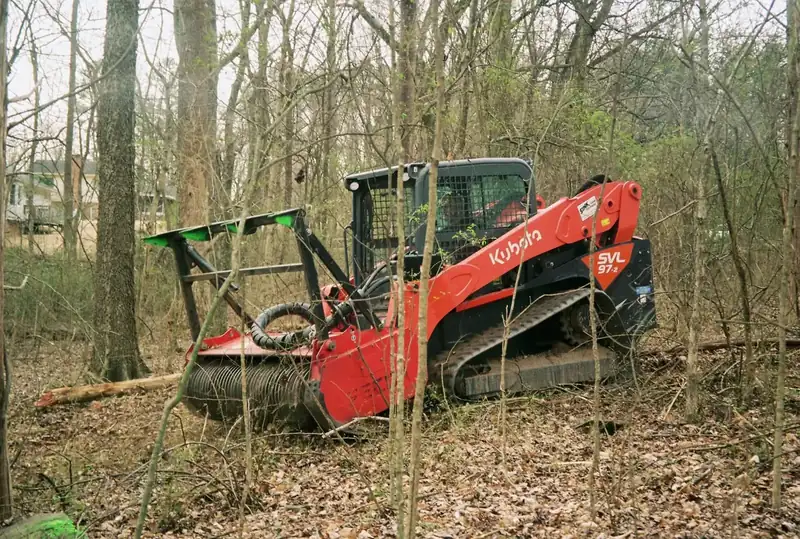
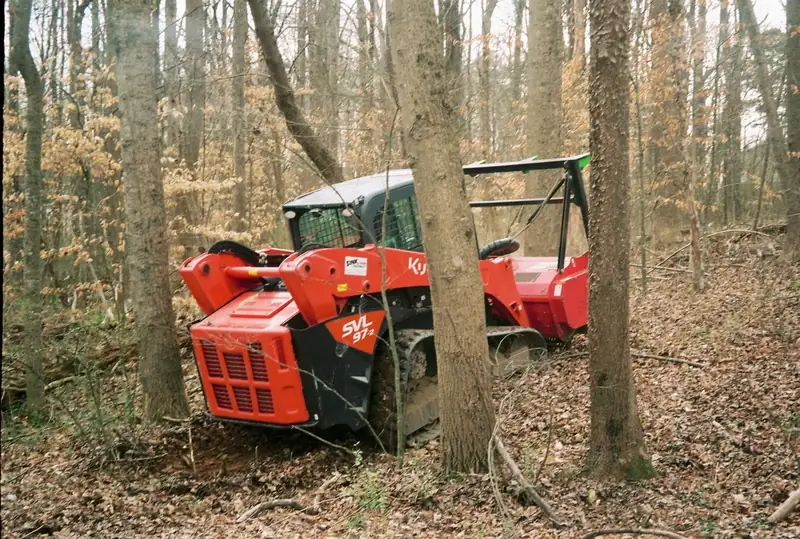
We clean up storm damage across the Triad with a track loader and a grapple, a mini excavator, a mulcher for the brush and a dump trailer for what has to leave. Fallen trees get bucked into sections and grappled into a pile, to the road, or onto the trailer. Root balls get pushed back into the hole or pulled and removed. Broken limbs and brush get mulched where they lie or piled for burning. Driveways and access get opened first, then the rest of the property.
Clark is a veteran and a working firefighter, which means he's spent plenty of nights dealing with storm damage before it was his business. After a storm we respond quickly during business hours and fit emergencies in where we can. We're not a 24/7 service and we won't pretend to be, but if a tree is across your driveway and you can't get out, call — we'll do what we can to get you open.
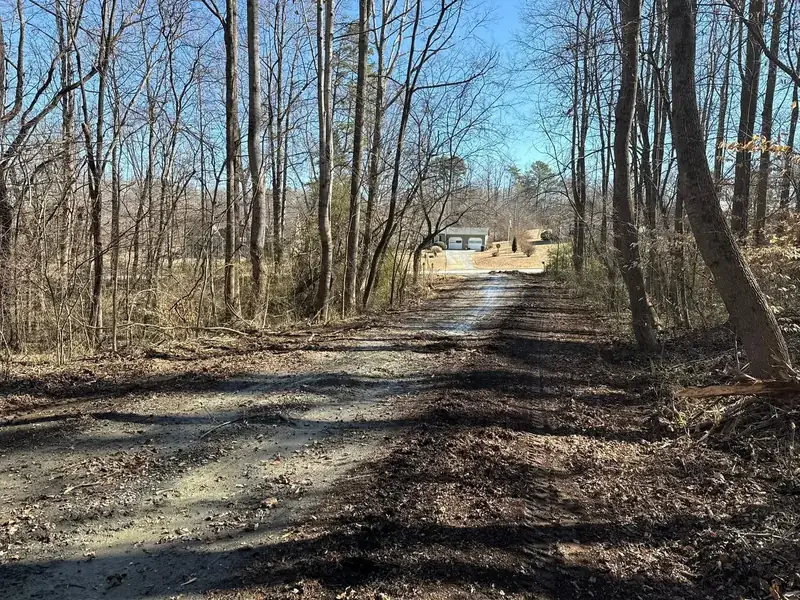
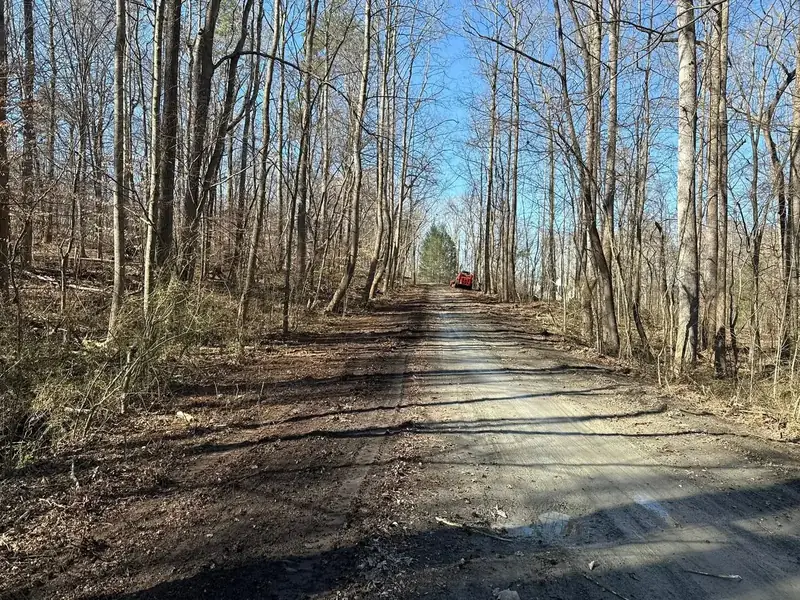
How storm cleanup works on Piedmont ground
Storm cleanup is mostly a moving problem. A 24-inch oak on the ground weighs several tons and a mature pine isn't far behind. Cutting it into pieces with a saw is the easy part; moving the pieces is what takes equipment. The grapple on the track loader picks up logs and brush that would take a crew all day to drag, and the mini excavator with a thumb handles root balls, leaners and anything in a position that isn't safe to approach with a saw. Trees hung up in other trees, trees under tension, trees on structures — those get handled with the machine doing the dangerous part.
What happens to the wood is up to you. Firewood-sized rounds can be stacked where you want them. Logs can be piled at the road for a timber buyer if there's enough of them, piled on the property for a burn, or hauled off on the trailer. Brush and tops get mulched with the forestry head, which is far faster than chipping and leaves nothing to haul, or piled for burning. Stumps and root balls get set back in the hole and tamped, or pulled and the hole filled and graded. If the tree took a fence, a shed or part of the yard with it, we clear the debris and rough-grade the damage so repairs can start.
Cleanup after a big regional storm is also a timing problem. Everybody has damage at once, tree services are booked for weeks, and the people who need their driveway open can't wait that long. Our track machines mobilize quickly and don't need a bucket truck or a crane for ground work, so we can get a lot of properties opened and cleaned in the days after a storm. We can also work with your insurance adjuster's documentation needs — photos before and after, an itemized scope — if the damage is a claim.
What the job looks like
Call and describe it
Tell us what's down, whether anything is blocked, and whether a tree is on a structure or a power line. Photos help. We'll tell you when we can be there and what to stay away from until then.
Assess on site
We look at what's down, what's hung up or under tension, what's safe to cut and what needs the machine. Access and blocked drives get priority. You get a scope and price before we start.
Open access first
Driveways, lanes and anything blocking the house get cut and grappled clear first so you can get in and out. Then we work through the rest of the property.
Buck, grapple, mulch
Trees cut into movable sections, logs grappled into piles or onto the trailer, brush and tops mulched or piled, root balls set back or pulled. Hazard trees and leaners taken down.
Clean up and grade
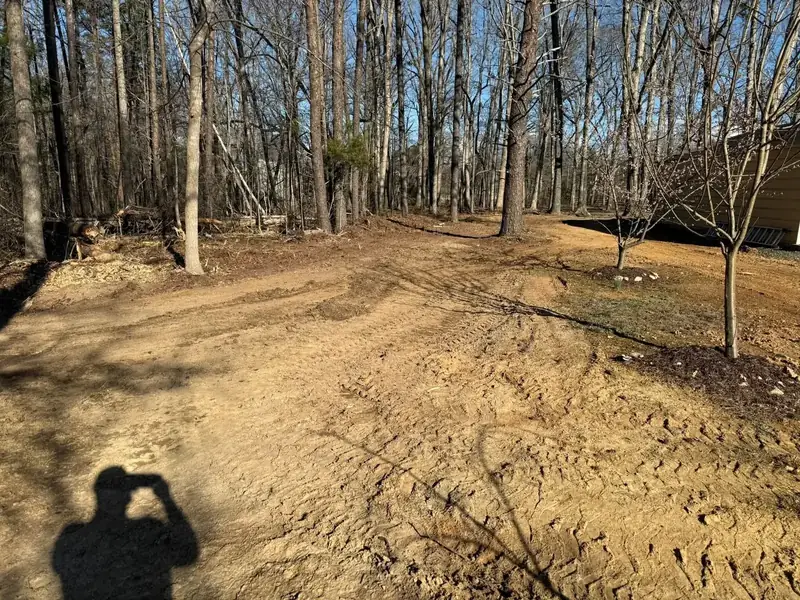
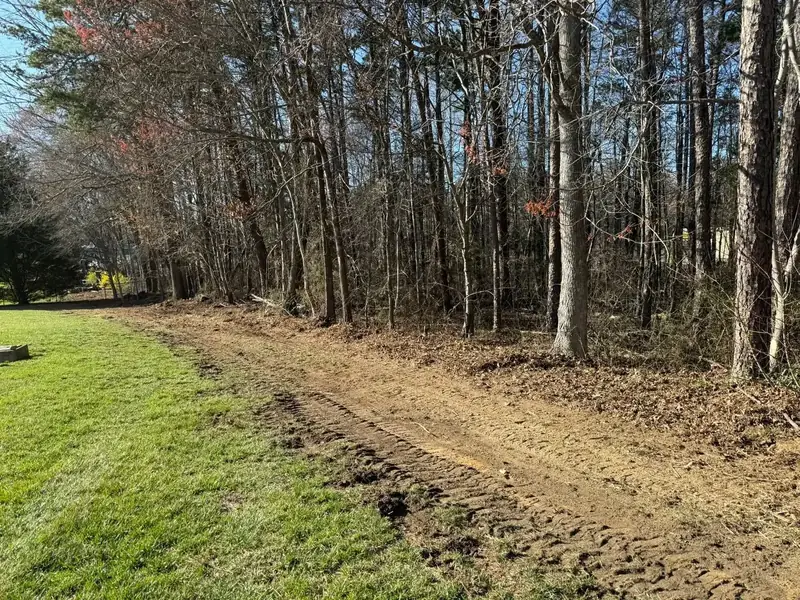
Holes filled, ruts repaired, debris gone or piled where you want it. We walk the property with you before we leave and provide photos if you need them for a claim.
Best fit for
- Trees down across driveways, lanes and access roads
- Pines laid over by hurricane remnants and high wind
- Oak and poplar limbs brought down by ice storms
- Trees on fences, sheds, outbuildings and yards
- Root balls and craters left by uprooted trees
- Properties with dozens of trees down after a regional storm
- Leaners and hazard trees that didn't quite come down
What drives the price
We don't quote storm cleanup from a chart. These are the things that move the number, and we'll walk through each one with you on site:
- Number and size of trees down
- Whether trees are on structures, fences or in hazardous positions
- What's done with the wood — stacked, piled, mulched or hauled
- Root balls pulled and holes graded vs. set back in place
- Access for equipment and ground conditions after the storm
- Hazard trees and leaners that need to be brought down safely
- Distance from Greensboro and how much is competing for scheduling after a regional storm
Equipment we bring
- Compact track loader with hydraulic grapple for logs, brush and root balls
- Mini excavator with thumb for root balls, leaners and trees under tension
- Forestry mulcher for brush, tops and limbs
- Root rake and grading blade for cleanup and repairing craters and ruts
- Dump trailer for hauling wood and debris off site
Storm Cleanup questions
How much does storm tree cleanup cost?
The main factors are how many trees are down, how big they are, whether any are on structures or in dangerous positions, and what you want done with the wood. A single pine across a driveway that gets bucked and pushed aside is a quick job. Twenty trees down across five acres with root balls pulled and everything hauled is days of work. We quote after seeing it, free, and we'll prioritize getting you access over doing the whole job at once if that's what you need.
Do you do emergency storm cleanup?
We respond as quickly as we can during business hours after a storm and we'll fit genuine emergencies — a blocked driveway, a tree on a house — in ahead of other work where possible. We're not a 24-hour service and we don't claim to be. If a tree is on a power line, call the utility first; nobody should touch it until the line is confirmed dead.
Can you remove a tree that fell on my house or shed?
We handle trees on sheds, outbuildings, fences and decks regularly. A tree on an occupied house with structural damage is often a job that needs a crane and a tree company with the rigging for it; we'll tell you honestly which situation you're in. Once the tree is off, we clear the debris and the root ball and get the yard back in order.
What do you do with the wood and debris?
Whatever you want. Firewood rounds stacked where you say. Logs piled for a timber buyer, piled to burn, or hauled off on the dump trailer. Brush and tops mulched on the spot with the forestry head, which leaves nothing to deal with, or piled for a burn. Most customers go with mulching the brush and keeping or hauling the logs.
Will you fix the hole where the tree uprooted?
Yes. A root ball on a big oak or pine can leave a crater several feet across. We either push the root ball back into the hole and tamp it down, or pull the root ball out, haul it or pile it, and fill and grade the hole so it's safe to mow. Either way the yard ends up flat.
What areas do you cover for storm cleanup?
Greensboro and the whole Triad, plus roughly an hour and twenty minutes out — north to the Virginia line, west to Mount Airy and Elkin, south to Salisbury, Albemarle and Sanford, and east to Durham, Chapel Hill and Raleigh. After a regional storm we work the closest calls first and move outward.