

A gravel driveway in the Piedmont is a structure, not a pile of rock. The ones that last were cut to grade through the clay, built on a compacted base of ABC crushed stone, crowned so water runs off the middle, ditched so it has somewhere to go, and piped where the ditch crosses. The ones that turn into mud and ruts in two years skipped most of that and just spread gravel on dirt. We build the first kind, from the road entrance to the garage or barn door.
We install new gravel driveways across the Triad for new homes, shops, barns, hunting cabins and rural lots that have never had an entrance. That includes cutting the route through brush and trees, grading the roadbed, installing the culvert at the road, laying and compacting the stone base, building the crown and ditches, and finishing with the surface stone you want. If the driveway is on a state road, we'll walk you through the NCDOT driveway permit before anything is built.
Clark is a veteran and a working firefighter and he runs the equipment on every driveway. The owner is the operator, the estimate is written and free, and the driveway you get is the one that was quoted. We'll walk the route with you first and tell you honestly where the water is going to be a problem and what it takes to handle it.
How gravel driveways works on Piedmont ground
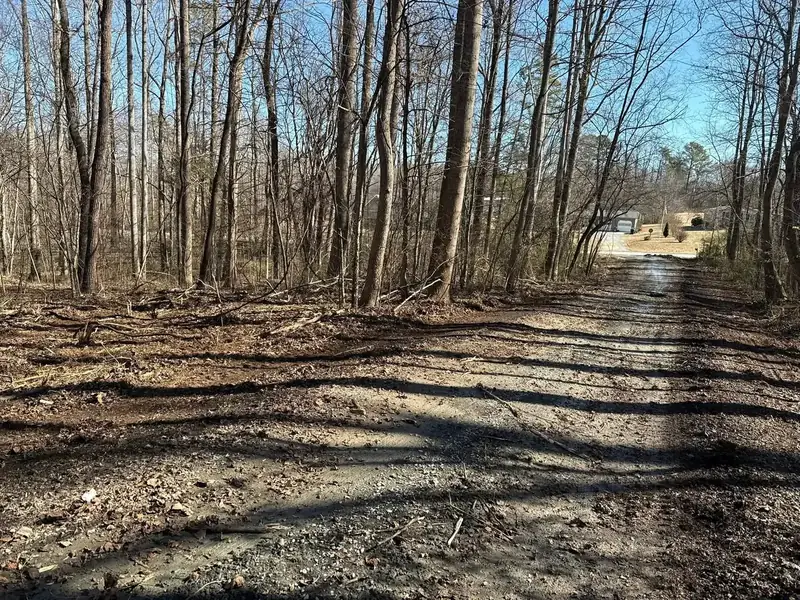
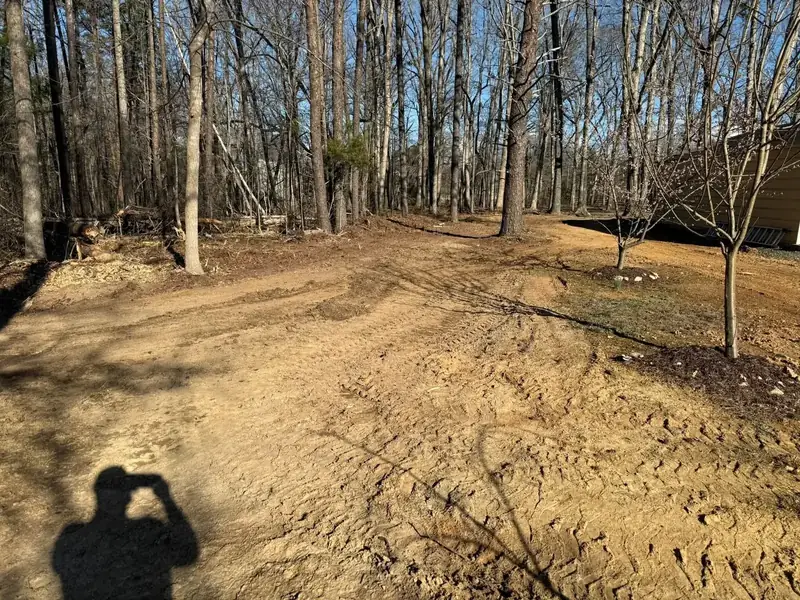
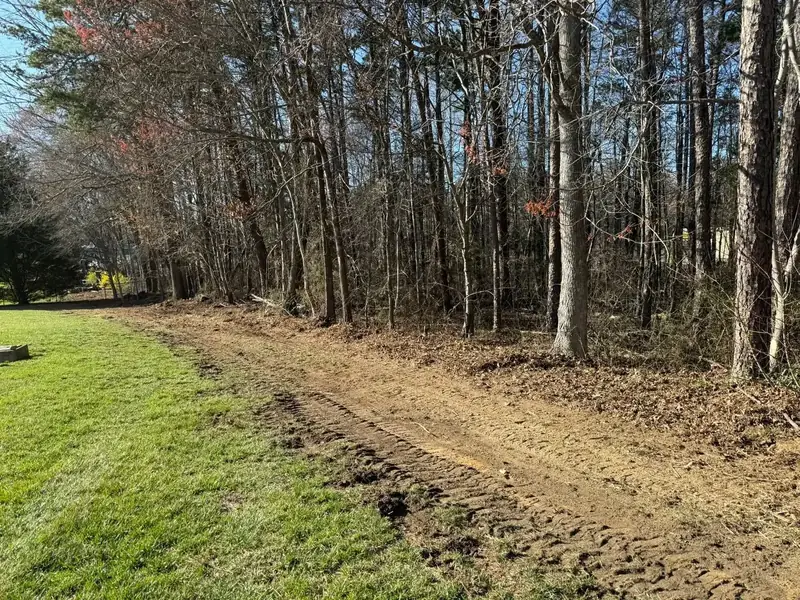
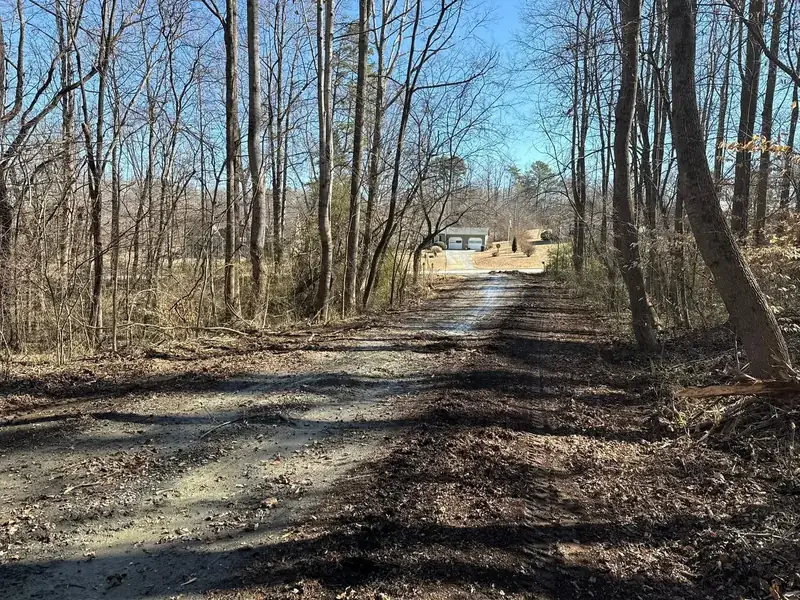
A good gravel driveway starts underneath. We strip the topsoil and organic matter off the route down to firm clay, because stone laid on topsoil sinks into it the first wet winter. The roadbed is graded with fall along its length and a crown across it — higher in the middle by a few inches so rain runs to the edges instead of pooling and softening the base. Where the driveway runs through a cut or along a slope, a ditch on the uphill side catches runoff before it crosses the drive. Where the ditch has to cross, a culvert carries it. Soft spots in the subgrade get dug out and replaced with stone or fabric and stone.
The base is where the money goes. ABC crushed stone — the crusher-run mix of fines and angular rock from the local quarries — is laid in lifts and compacted until it locks together into a surface that sheds water and carries weight. On a typical residential drive that's four to six inches compacted; on a drive that will see concrete trucks, delivery trucks or farm equipment, more. Over a very soft subgrade we'll lay geotextile fabric first and sometimes a layer of #4 or larger stone to bridge it before the ABC goes down. The surface can stay ABC, which packs hard and drives smooth, or get a top course of #57 for a cleaner look at the cost of a looser surface.
Then it has to be kept. A gravel driveway in red clay country wants to be regraded every year or two to restore the crown, with a fresh load of stone every few years in the wheel paths. Build it right the first time and that maintenance is cheap. Build it as a pile of gravel on dirt and you'll be rebuilding it instead. We call 811 before cutting any new route and we'll tell you up front if the entrance needs a state permit.
What the job looks like
Walk the route
We look at where the drive enters, how it climbs or crosses the property, where water will cross it and where it needs to end up. If the entrance is on a state road, we talk through the NCDOT permit.
Written estimate
Clearing, grading, culvert, fabric if needed, base stone depth, surface stone, ditches and length. A clear scope and price, with options if you want to phase it.
Clear and cut
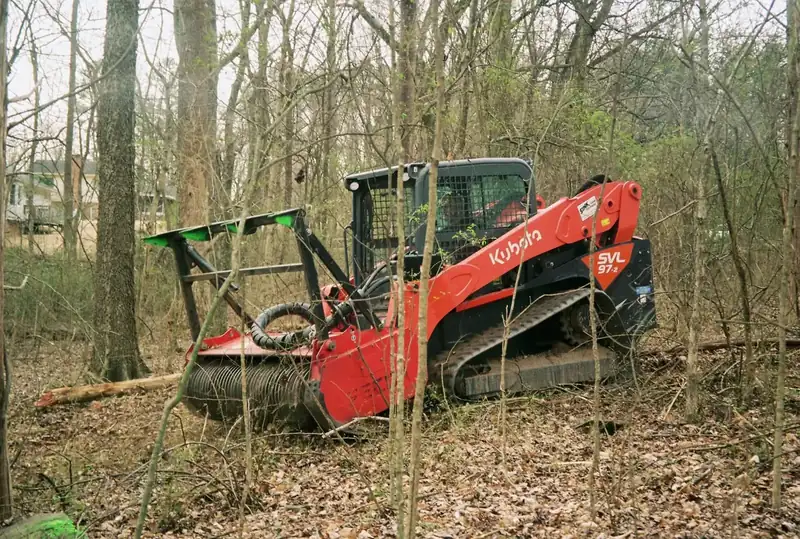
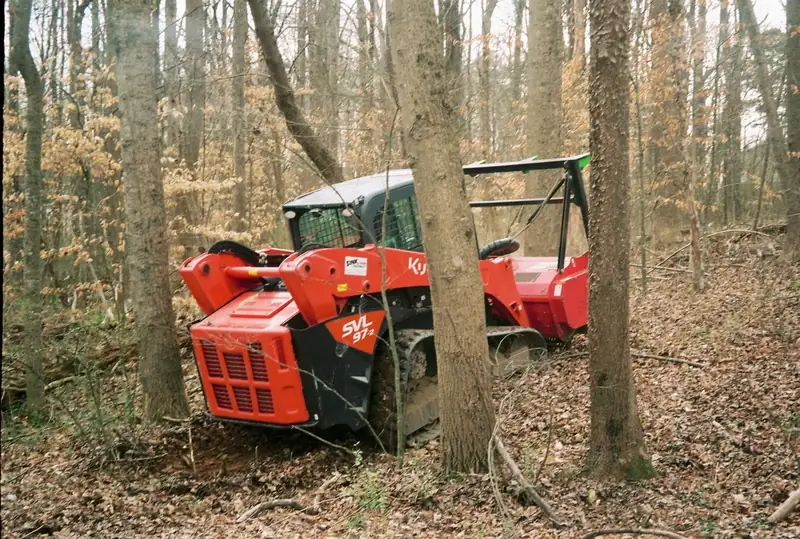
Trees and brush on the route get mulched or grappled, stumps come out, and the roadbed is cut to grade with crown and ditches. Soft spots are excavated and fixed.
Base and compaction
ABC stone laid in lifts and compacted, culvert set at the entrance, ditches shaped and outlets established. The drive is checked for crown and drainage before the top goes on.
Surface and finish
Final stone course spread and graded, edges feathered, entrance tied cleanly into the road, disturbed ground seeded. Drive it the same day.
Best fit for
- New homes, shops and barns on rural lots
- Hunting cabins and recreational property that need a reliable entrance
- Lots with no driveway at all being prepared for a build or sale
- Replacing a mud track with a drive that works in winter
- Long driveways that cross a draw, a slope or a wet spot
- Second entrances and access lanes to outbuildings
- Driveways that have to carry concrete and delivery trucks during construction
What drives the price
We don't quote gravel driveways from a chart. These are the things that move the number, and we'll walk through each one with you on site:
- Length and width of the driveway
- How much clearing and stump removal the route needs
- Depth of ABC base — heavier traffic needs more stone
- Soft subgrade requiring fabric or oversized stone to bridge
- Culvert size and whether an NCDOT permit is required
- Ditch length and how much cut-and-fill it takes to get the grade
- Surface course choice and distance from the quarry and from Greensboro
Equipment we bring
- Compact track loader with grading blade, box blade and dozer blade for cutting and shaping the roadbed
- Forestry mulcher and grapple for clearing the route
- Mini excavator with thumb for stumps, soft-spot repair, ditches and culvert setting
- Stump bucket and root rake for cleaning the route before grading
- Dump trailer for hauling ABC and #57 stone
Gravel Driveways questions
How much does a gravel driveway cost in NC?
Length and base depth drive it. A short, flat driveway on firm ground with a modest base is the least expensive; a long drive through woods with a cut-and-fill grade, a culvert, fabric over soft ground and a thick base for truck traffic costs several times as much per foot. Stone is sold by the ton and a driveway takes a lot of it, so distance from the quarry matters too. We quote per job after walking the route — the estimate is free.
What kind of gravel is best for a driveway in North Carolina?
ABC crushed stone, also called crusher run, for the base and often for the whole driveway. It's a mix of angular rock and stone dust from the local quarries that compacts into a hard, water-shedding surface. #57 stone on top gives a cleaner look but stays loose and rolls underfoot. Pea gravel and river rock look nice and don't lock together at all — avoid them on anything with a slope.
How thick should the gravel be on a new driveway?
Four to six inches of compacted ABC for a residential driveway on firm clay, more where trucks will run or the subgrade is soft. The thickness matters less than compaction and crown — six inches of loose stone on a flat, soft base will fail faster than four inches compacted on a crowned, firm one.
Do I need a permit for a new driveway in NC?
If the driveway connects to a state-maintained road, yes — NCDOT requires a driveway permit for a new entrance, and they'll specify the culvert size and sight-distance requirements. Driveways off private roads generally don't need a state permit, though some towns and counties have their own rules. We'll tell you what applies to your property.
Why does my gravel driveway keep turning to mud?
Because the stone is sitting on clay or topsoil with no compacted base, no crown and no ditch. Water soaks in, the clay turns to pudding and the stone sinks into it. The fix is to rebuild the base properly — strip the soft material, fabric if needed, compacted ABC, crown and drainage. Adding more gravel on top of the mud just feeds it more gravel.
How long does it take to build a gravel driveway?
A short residential drive on open ground can be done in a day. A long drive through timber with a culvert, grading and multiple stone lifts is two to four days depending on how much clearing and cut-and-fill is involved. Weather matters — we don't build base on saturated clay.