

Site prep is everything that has to happen to a piece of land before the builder can start. On a wooded lot that's clearing and stumps, then rough grading, then the building pad, the driveway cut, the drainage, and usually the staging area and construction entrance so the concrete trucks don't sink. On a lot that's already open it's a shorter list, but the order and the standards are the same. Get it right and the whole build goes smoother. Get it wrong and every trade after you is working around a problem.
We do site prep for owner-builders, custom home builders, metal building dealers and people putting up a shop or a barn on family land. Across the Triad that means working with Cecil red clay that compacts hard, holds water, and sits under a thin layer of topsoil that's worth saving. It means watching the one-acre disturbance threshold for North Carolina sediment and erosion control rules, calling 811 before anything is trenched, and shaping the site so water leaves the pad and the drive from the first day.
Clark runs the equipment and coordinates with your builder. He's a veteran and a working firefighter, and the site you get is the site he'd want to build on himself. We aren't a general contractor — we're the dirt crew that gets the ground ready for one. Free estimates across the Triad and about an hour and twenty minutes out from Greensboro.
How site prep works on Piedmont ground
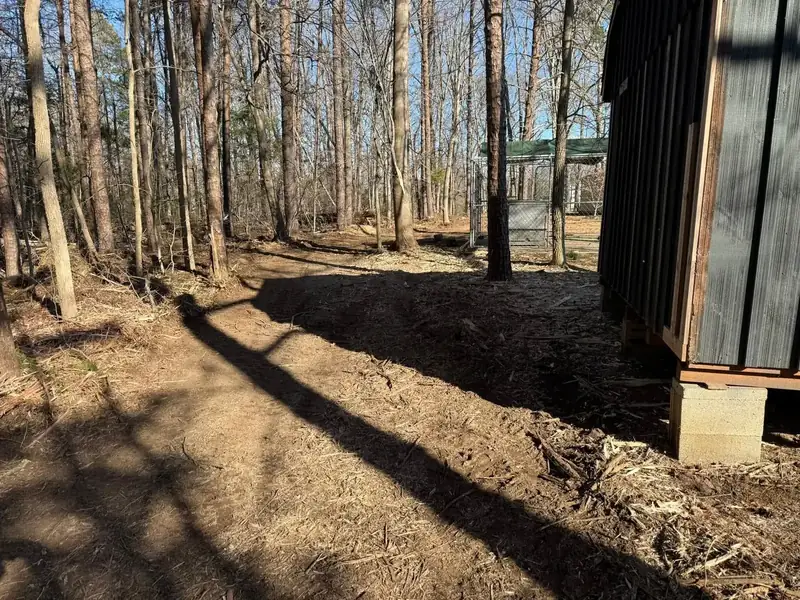
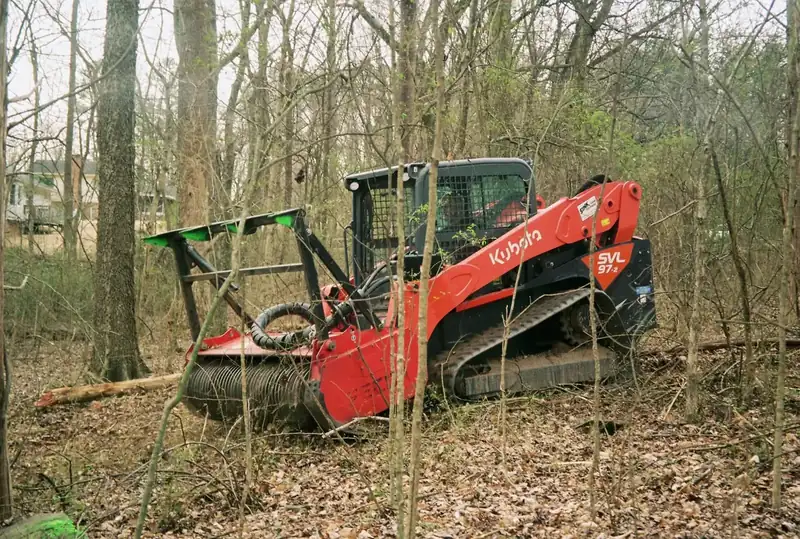
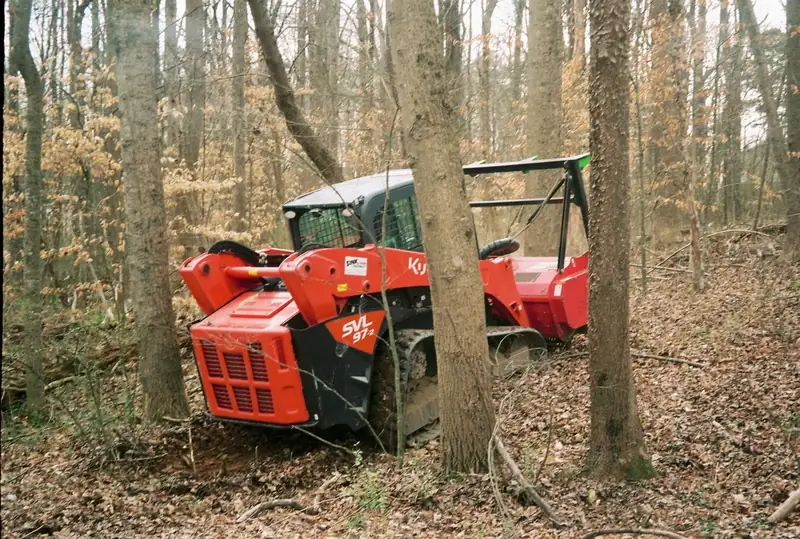
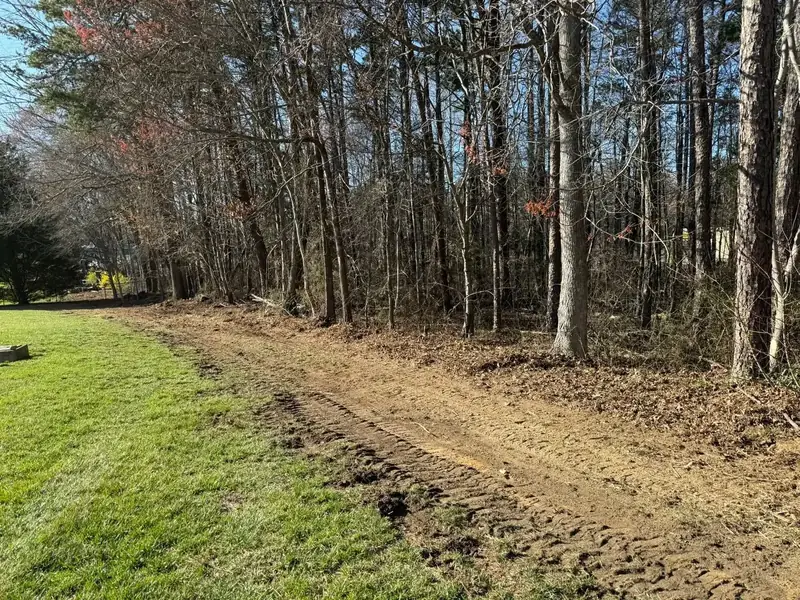
A site prep job starts with the site plan and a walk. We confirm where the house or building sits, where the drive comes in, where the septic area or sewer tap is, where the water currently goes, and what's standing in the way. From that we build a sequence. Clearing comes first — forestry mulching for the brush and smaller trees, felling and grapple work for the big ones, stump removal across the pad, drive and septic areas. Mulch stays on the ground where nothing is being built; it's the best erosion control on the lot until grass goes in.
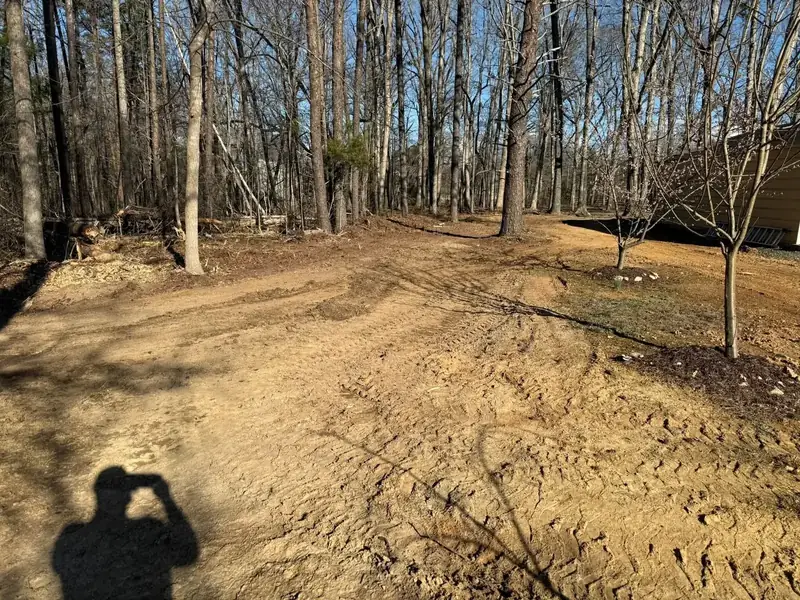
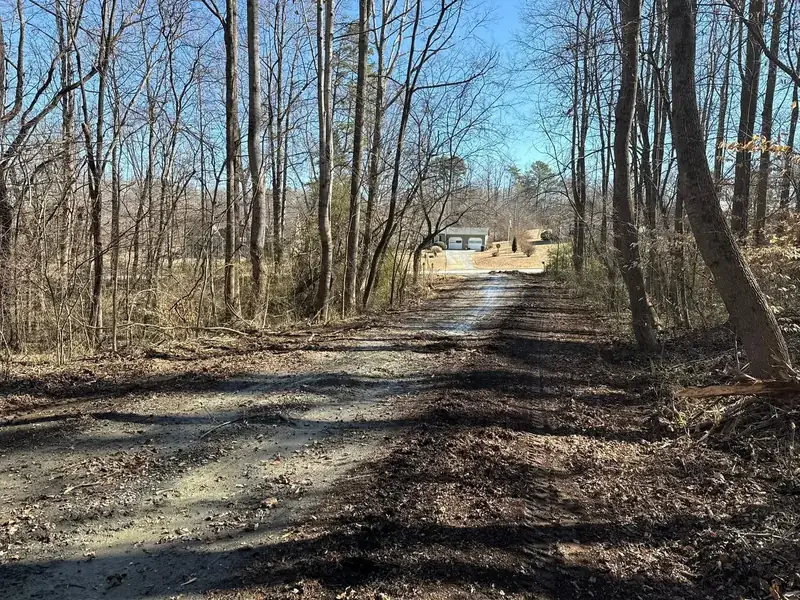
Then the dirt. Topsoil gets stripped from the pad and drive and piled for the final grade. Rough grading sets the site's shape and its drainage: swales where runoff needs a path, a crowned driveway bed, positive fall away from the building footprint. The pad is built in compacted lifts to the finished floor elevation and laser-checked. The driveway gets cut, graded and based with stone so trucks can get in during the build, and a construction entrance of coarse stone goes at the road so mud stays on site. If the project disturbs more than an acre, silt fence and the rest of the approved erosion plan go in before any of this.
What we hand off is a lot where the builder can set footings, the concrete truck can reach the pad, the septic installer has a cleared drain field area, and the rain runs somewhere sensible. If the project also needs a culvert at the road, a trench for water or power, or a staging pad for materials, we do those while the equipment is on site. We'll flag anything that needs a licensed trade — the septic system itself, the foundation, anything structural — so you can line those up on the right schedule.
What the job looks like
Site plan review and walk-through
We go over the plans with you or your builder, confirm building location, drive, septic area and utilities, walk the drainage, and check the disturbance area against the one-acre permit threshold.
Sequence and written estimate
A scope laying out clearing, stumps, grading, pad, drive and drainage in order, with how debris is handled and what's hauled in or out. One price for the package.
Clear and stump
Mulch the brush, fell and handle the big timber, pull stumps from the pad, drive and septic areas. Mulch stays where nothing is being built.
Grade, pad and drive
Topsoil stripped and saved, site rough graded with drainage shaped, pad built in compacted lifts to elevation, drive cut and based with stone, construction entrance set at the road.
Hand off to the builder
We walk it with your builder, confirm corners and elevations, and leave the site ready for footings, trucks and the trades that follow.
Best fit for
- Wooded lots being prepared for a custom or owner-built home
- Family land getting a shop, barn or second residence
- Metal building and pole barn sites
- Manufactured and modular home sites
- Infill lots in town that need clearing and grading before permits
- Small commercial sites — a shop, a storage building, a church addition
- Lots where a previous site prep was left half-done
What drives the price
We don't quote site prep from a chart. These are the things that move the number, and we'll walk through each one with you on site:
- Lot size and how much of it is being cleared vs. left wooded
- Tree size and density on the cleared area
- Cut and fill volume for the pad and drive
- Length and base depth of the driveway and stone delivered
- Whether fill or topsoil has to be imported
- Erosion control and permit requirements over an acre
- Access, slope and ground conditions
Equipment we bring
- Compact track loader with forestry mulcher, grapple and root rake
- Dozer blade, box blade and grading blade attachments
- Mini excavator with thumb for stumps, cuts and trenching
- Stump bucket for pulling stumps on the pad and drive
- Laser-guided grade checking
- Dump trailer for stone, topsoil and haul-off
Site Prep questions
How much does site prep cost for a new house in North Carolina?
It ranges widely because site prep is really five or six jobs rolled together. An open, fairly flat lot with a short driveway is the low end — mostly grading and a pad. A wooded, sloped lot with a long drive, big trees and imported fill is the high end. Clearing and the driveway are usually the two biggest line items. We walk it, sequence it, and give you one written price for the package.
What does site prep include?
Typically clearing and stump removal where the building, drive and septic go, stripping and saving topsoil, rough grading with drainage shaped in, a compacted pad built to the finished floor elevation, a driveway cut and based with stone, and a construction entrance. Culverts, utility trenches and a staging pad get added when the project needs them. The septic system and the foundation itself are licensed trades we prep for but don't perform.
Do I need a permit for site prep in NC?
Your building permit comes through the county inspections office and covers the structure. The site work itself needs a state sediment and erosion control plan if you disturb more than an acre, and some towns have stormwater or tree ordinances on smaller lots. A septic permit comes from the county Environmental Health office and should be in hand before we clear the drain field area. We'll help you sort out what applies.
Should the lot be cleared before or after the septic permit?
Get the septic evaluation done first if you can. Environmental Health needs to see the soil where the drain field will go, and they'll mark the approved area. Then we know what to clear and, just as important, what to keep heavy equipment off of. Clearing the whole lot before the soil evaluation can cost you the best drain field spot.
How long does site prep take?
An open lot with a pad and a short drive can be done in two or three days. A wooded lot with heavy clearing, stumps, a long driveway and a sloped pad can run a week or more, and wet weather adds to that because clay can't be graded or compacted when it's saturated. We give a realistic schedule in the estimate and keep your builder informed.
Where do you do site prep?
Greensboro and the Triad, plus about an hour and twenty minutes out — Reidsville and Eden up to the Virginia line, Mount Airy and Elkin to the west, Salisbury, Albemarle and Sanford to the south, and Durham, Chapel Hill and Raleigh to the east.