

Trenching is digging a narrow, controlled ditch so something can be buried in it — a water line from the meter to the house, power out to a shop or a well, a drain line carrying downspouts to daylight, conduit for a gate or a pool, or a gravity line a septic installer is about to lay. The trench has to be the right depth, the right width, straight enough to lay pipe in, and backfilled so it doesn't settle into a ditch across the yard a year later.
In the Piedmont the frost line is shallow — around a foot in most of the Triad — so water lines don't have to go as deep as they would up north, but they still need to be below frost and below where a tiller or a fence post will find them. Power to an outbuilding generally goes deeper depending on the conduit and what the electrician specifies. Red clay holds a trench wall well, which makes the digging clean, but it also holds water in the trench after a rain, so we time the work and don't leave trenches open longer than needed.
Every trench starts with an 811 call and ends with a proper backfill. Clark is on the mini excavator — veteran, working firefighter, owner. We trench for homeowners, electricians, plumbers, well drillers and septic installers all over the Triad and about an hour and twenty minutes out from Greensboro.
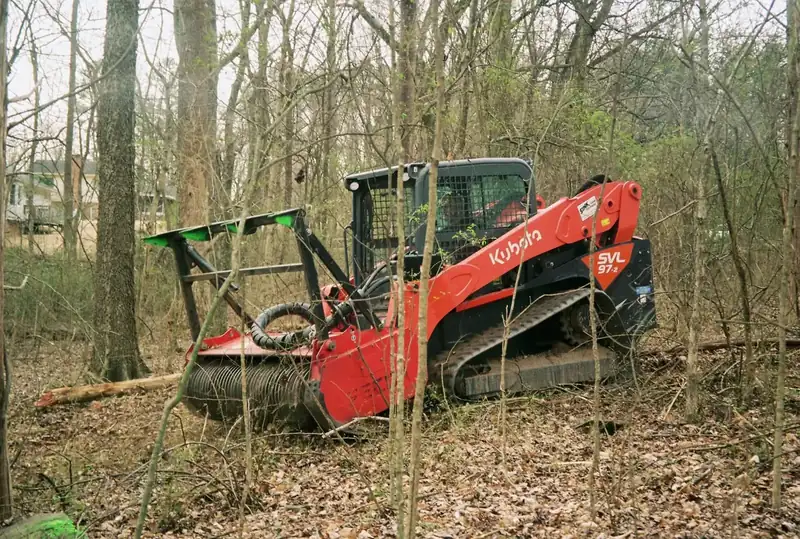
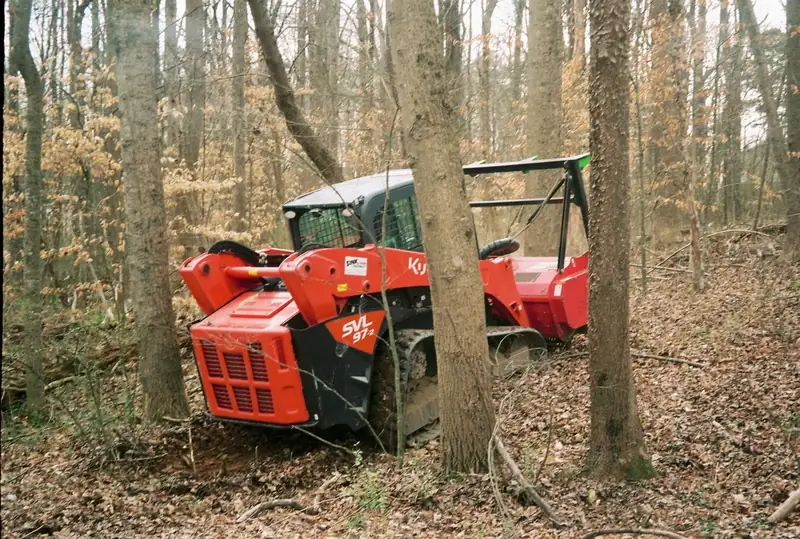
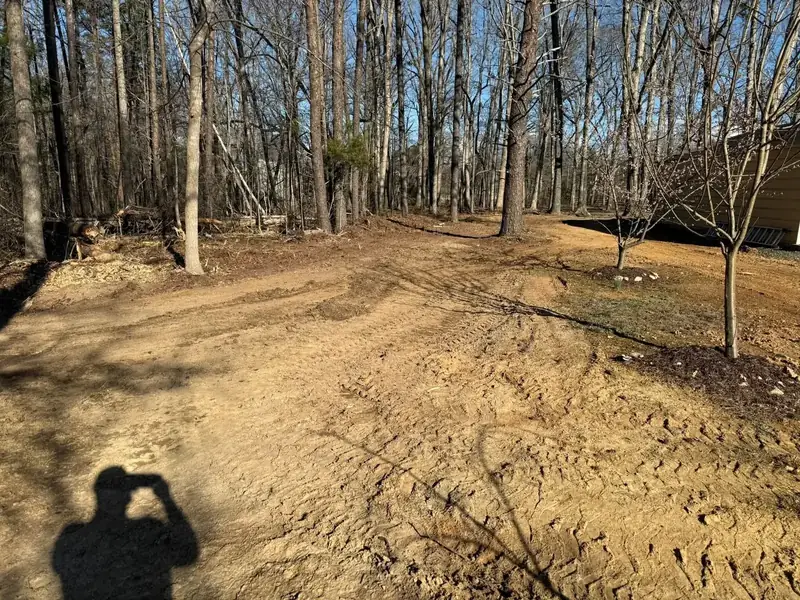
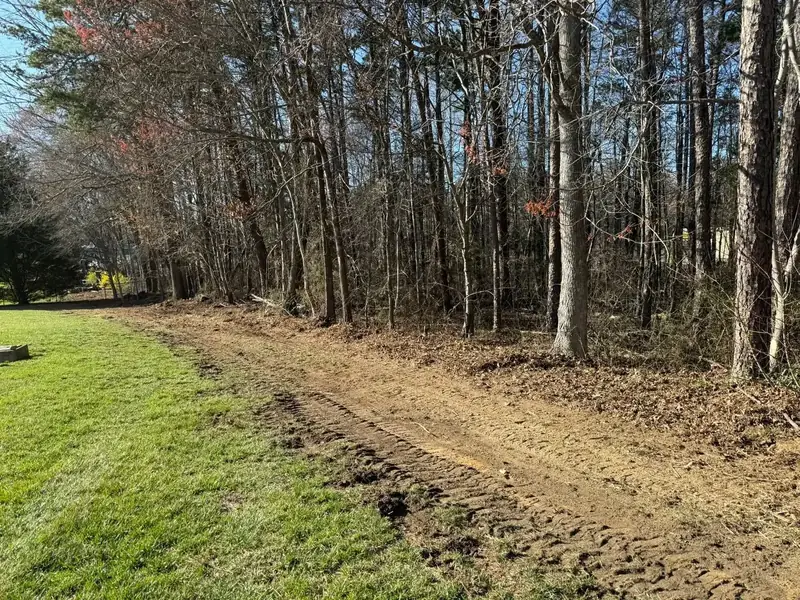
How trenching works on Piedmont ground
The job begins before the machine arrives. We call 811 and the utilities mark their lines, usually within three business days. We ask you about anything private that 811 won't mark: a well line, an old drain, a line to a shed, invisible dog fence, irrigation. Then we walk the route with you or the trade who's laying the pipe and agree on depth, width and where the trench starts and stops. For a water line that's typically a narrow trench around eighteen inches deep. For electrical it's whatever the electrician calls for — usually deeper for direct burial than for conduit. For drain lines it's a trench cut on a consistent fall so the water actually runs.
The mini excavator does the digging with a narrow bucket. We keep the spoil to one side so the pipe crew has a clean side to work from, pull roots and rocks out of the bottom with the thumb, and keep the floor as level or as consistently sloped as the line requires. On drain lines we check the fall with a laser; a drain trench that's flat in one spot is a drain that won't work. On longer runs across a lawn we keep the trench as narrow as the bucket allows to limit the scar.
Backfill is where trenches go wrong. Dump the spoil back in loose and the yard gets a sunken stripe within a season. We backfill in layers, compact each one with the bucket or the tracks, and leave the top slightly crowned so it settles flush. If the trench crosses a drive or a path, the top gets stone instead of clay. If the pipe needs a sand or gravel bed, we place that before the line goes in. We dig for the trades and backfill after them; the pipe, wire and connections are theirs.
What the job looks like
Locates and route walk
811 called, utilities marked, private lines discussed. We walk the route with you or the installer and set depth, width, start and end points.
Written estimate
Length, depth and width of the trench, spoil handling, bedding if needed, and backfill approach. Priced by the job with any haul-off called out.
Dig
Mini excavator with a narrow bucket, spoil kept to one side, roots and rock pulled from the floor, fall checked with a laser on drain lines.
Backfill and finish
After the line is in and inspected, we backfill in compacted layers and crown the top so it settles flush. Stone at drive crossings, topsoil on lawns.
Best fit for
- Water service lines from the meter or well to the house
- Power to a shop, barn, well pump, gate or pool
- Downspout and yard drain lines running to daylight
- Conduit for low-voltage, fiber or irrigation mains
- Gravity sewer and septic lines dug for a licensed installer
- Gas line trenches dug for a licensed plumber
- Replacing an old line that's failed under the yard
What drives the price
We don't quote trenching from a chart. These are the things that move the number, and we'll walk through each one with you on site:
- Length of the trench
- Depth and width required by the line being buried
- Roots, rock and hard clay along the route
- Whether bedding stone or sand is needed under the pipe
- Backfill method and whether the surface gets stone or topsoil
- Crossings — driveways, walks, existing lines
- Access and distance from the trailer to the route
Equipment we bring
- Mini excavator with narrow trenching bucket and thumb
- Compact track loader for spoil handling and backfill
- Laser-guided grade checking for drain line fall
- Dump trailer for bedding stone delivery and spoils
Trenching questions
How much does it cost to trench a water line or power line?
Trenching is usually priced by the job based on length, depth and what's in the way. A short, clean run across a lawn for a water line is a few hours. A long run to a shop through roots and a drive crossing, dug deeper for power, takes most of a day plus backfill. We walk the route and give a written price. The pipe, wire and connections are priced separately by the trade installing them.
How deep does a water line need to be buried in North Carolina?
The frost line in the Piedmont is shallow, roughly twelve inches, so water lines are commonly set around eighteen inches deep to clear frost with margin and stay below tillers and fence posts. Your plumber or the county may have a specific requirement, and we dig to it. Power and gas have their own depths set by code and the installing trade.
Do you call 811 before trenching?
Always. It's North Carolina law and it's free. Utilities have three business days to mark, so a little lead time on scheduling helps. 811 doesn't mark private lines — well lines, old septic, lines to outbuildings — so we ask about those and probe carefully where they might cross.
Can you trench for a septic line?
We dig the trench; the licensed septic installer lays the pipe and the county inspects it. Same with gas, electrical and water — we do the dirt work for the licensed trade. If you don't have an installer yet, we can usually recommend a couple we've worked with.
Will the trench leave a scar across my yard?
There'll be a visible stripe for a season. We minimize it by keeping the trench as narrow as the bucket allows, backfilling in compacted layers so it doesn't sink, crowning the top slightly, and putting topsoil back on the surface. Reseeding the strip in the next seeding window finishes it.
Where do you trench?
Greensboro and the Triad, plus about an hour and twenty minutes out in every direction — up to the Virginia line, Mount Airy and Elkin, Salisbury, Albemarle, Sanford, Durham, Chapel Hill and Raleigh.