

A culvert is the pipe under your driveway that lets the roadside ditch keep flowing. When it's sized right and set right, you never think about it. When it's too small, laid too high, crushed by a delivery truck or buried in silt, the ditch backs up, water goes over the drive, the gravel washes into the road and the entrance turns into a trench after every big storm. Either way, the culvert decides whether your driveway survives the wet season.
We install and replace driveway culverts across the Triad: new entrances on state roads and private roads, replacement of crushed or rusted-out pipe, crossings for farm lanes and trails, and pipe under low spots in long driveways where a ditch or draw has to pass. We set the pipe with the mini excavator, bed and backfill with stone, build the end treatments so they don't erode, and tie the gravel back into the drive so the crossing is solid the day we leave.
Clark is a veteran and a working firefighter and he runs the excavator on every culvert job. He'll also tell you up front whether your entrance needs an NCDOT driveway permit, what size pipe the state will require, and whether what you've got now is fixable or needs to come out. Free estimates on site.
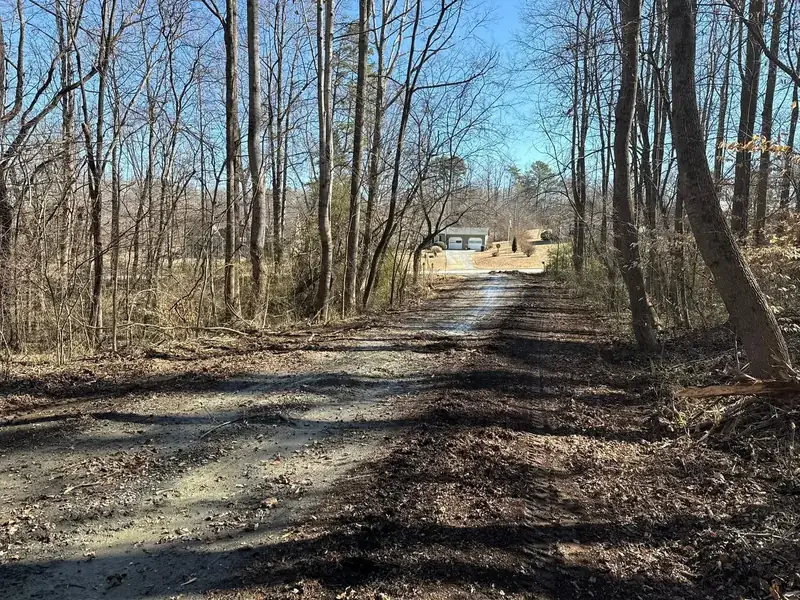
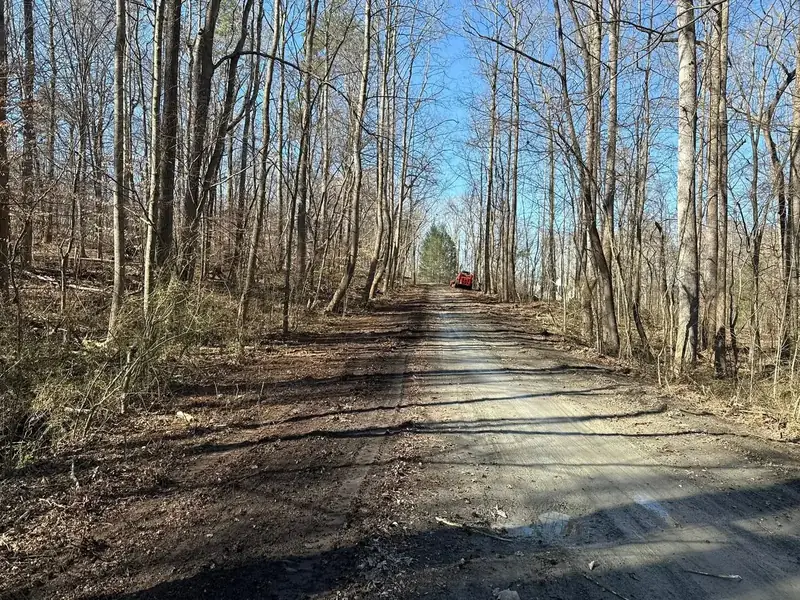
How culverts works on Piedmont ground
Culvert sizing starts with the drainage area. A roadside ditch that only carries runoff from a few hundred feet of road can get by with a 15-inch pipe. A ditch that collects water from a hillside pasture and a wooded draw above it needs 18, 24 or larger, and undersizing it is the number one reason driveway entrances in this area wash out. On a state-maintained road, NCDOT's district office sets the minimum size and length when they issue the driveway permit, and it's usually bigger than people expect. On private roads and farm lanes we size to the drainage area and to the worst storm you'd reasonably want the crossing to survive.
Material depends on cover and load. Corrugated HDPE plastic pipe is what most residential driveways get today — it doesn't rust, it's light to set, and with 12 or more inches of compacted cover it carries normal vehicle loads. Corrugated metal is still common and fine where cover is shallow and traffic is light. Reinforced concrete pipe is the answer when the pipe will sit under heavy truck traffic or with minimal cover. The pipe is bedded on a few inches of crushed stone, set with fall that matches the ditch, and backfilled in lifts with ABC stone so it won't settle and crack the drive.
The ends matter as much as the pipe. A bare pipe end in red clay erodes into a scour hole the first wet year. We finish the inlet and outlet with riprap stone, a flared end or a headwall as the site calls for, and we reshape the ditch upstream and downstream so water enters and leaves straight. If the existing ditch has silted up, cleaning it out is part of the job — a new pipe in a full ditch still doesn't flow. We call 811 before every dig because roadside right-of-way is where the utilities live.
What the job looks like
Site check and permit question
We look at the ditch, estimate the drainage area, check for utilities and figure out whether the road is state-maintained. If it is, we'll walk you through the NCDOT driveway permit and what size pipe they'll require.
Written estimate
Pipe size and material, length, end treatment, stone quantity and how the drive gets tied back in. If an old pipe is coming out, the estimate covers removal and disposal too.
Locate and excavate
811 marks come first. Then the mini excavator removes the old pipe or cuts the new trench to grade, matching the fall of the ditch so water doesn't pond at the inlet.
Set and backfill
Stone bedding, pipe set and checked for fall, then ABC stone backfilled in lifts and compacted around and over the pipe. Riprap or headwalls at the ends, ditch reshaped on both sides.
Finish the drive
Gravel surface rebuilt over the crossing with a slight crown, edges feathered into the existing drive, and the road shoulder cleaned up. We'll check it after the first heavy rain.
Best fit for
- New driveway entrances on state roads and private roads
- Crushed, rusted or collapsed driveway pipe replacement
- Entrances that flood or wash out every big storm
- Farm lane and trail crossings over ditches and draws
- Long driveways that cross a low spot or seasonal stream
- Upsizing an undersized pipe that backs the ditch up
- Culverts buried in silt that need cleaning or resetting
What drives the price
We don't quote culverts from a chart. These are the things that move the number, and we'll walk through each one with you on site:
- Pipe diameter and length — larger pipe costs more and moves more dirt
- Material: HDPE, corrugated metal or reinforced concrete
- Whether an old pipe has to be removed and hauled off
- Depth of cover and how much ABC stone the backfill takes
- End treatments — riprap, flared ends or headwalls
- Ditch cleaning and reshaping needed upstream and downstream
- Permit requirements and distance from Greensboro
Equipment we bring
- Mini excavator with thumb for removing old pipe, trenching and setting new pipe
- Compact track loader for moving stone, backfilling and rebuilding the drive
- Grading blade and box blade for ditch reshaping and finishing the crossing
- Dump trailer for hauling pipe, ABC stone and riprap in and old pipe out
Culverts questions
How much does it cost to install a driveway culvert in NC?
The main drivers are pipe size and length, whether an old pipe has to come out, and how much stone the backfill and end treatments take. A short 15-inch HDPE pipe on a private drive is a half-day job. A 24-inch, 40-foot pipe on a state road with riprap ends and a full ditch reshape is a bigger day with a lot more material. We give a free written estimate after seeing the site.
Do I need a permit to put a culvert in my driveway?
If your driveway connects to a state-maintained road, yes — NCDOT requires a driveway permit for a new entrance or a changed one, and the district office will specify the pipe size and length. There's generally no state permit for culverts on private roads or interior farm lanes, though stream crossings can trigger buffer rules. We'll tell you which situation you're in.
What size culvert do I need for my driveway?
It depends on how much water the ditch carries, which depends on the drainage area above it. 15 inches is a common minimum on quiet roads; 18 and 24 inches are common where the ditch drains a larger area. On state roads NCDOT decides. On private property we size to the drainage area with a margin, because an undersized pipe is the most common reason an entrance washes out.
Can you replace a crushed culvert pipe?
Yes, and it's one of the most common jobs we do. The excavator pulls the old pipe, we clean out the silt, cut the trench to the right grade, set new pipe on stone bedding and rebuild the drive over it. If the old pipe was undersized or set too high, we fix that at the same time.
Why does my driveway wash out at the road every time it rains?
Usually one of three things: the culvert is too small for the ditch, it's set higher than the ditch bottom so water backs up and goes over the drive, or it's silted shut. Sometimes it's all three. A correctly sized pipe set at ditch grade with the ditch cleaned on both sides fixes it, and the gravel stays where it belongs.
What areas do you install culverts in?
We work out of Greensboro and cover the whole Triad plus roughly an hour and twenty minutes out — north to the Virginia line, west to Mount Airy and Elkin, south to Salisbury, Albemarle and Sanford, and east to Durham, Chapel Hill and Raleigh. Rural roads in every direction are where most of our culvert work is.