

A farm road has a different job than a driveway. It has to carry a loaded truck and trailer, a tractor with a bush hog, a skidder or a log truck, through ground that may be wet half the year, across draws and along slopes, with nobody maintaining it but you. We build access lanes across the Triad for working farms, timber tracts, hunting land and large rural properties — roads that are cut to grade, drained with ditches and water bars, piped at the crossings and based with stone where the ground won't carry weight on its own.
The work ranges from reopening an old logging road that's grown up in sweetgum and pine, to cutting a new lane from the road to the back forty, to building a crossing over a draw so you can get equipment to the far field. Some lanes need stone the whole way; most need it only at the entrance, the crossings and the soft spots, with the rest cut to grade and drained so the clay stays firm. We'll walk the route with you and tell you which sections need what.
Clark is a veteran and a working firefighter and he runs the machines himself. He grew up around this kind of ground and he builds farm roads the way a farmer wants them — practical, drained, and not a dollar more stone than the road needs. Free estimates on site, and we'll flag the route with you before we cut anything.
How farm roads works on Piedmont ground
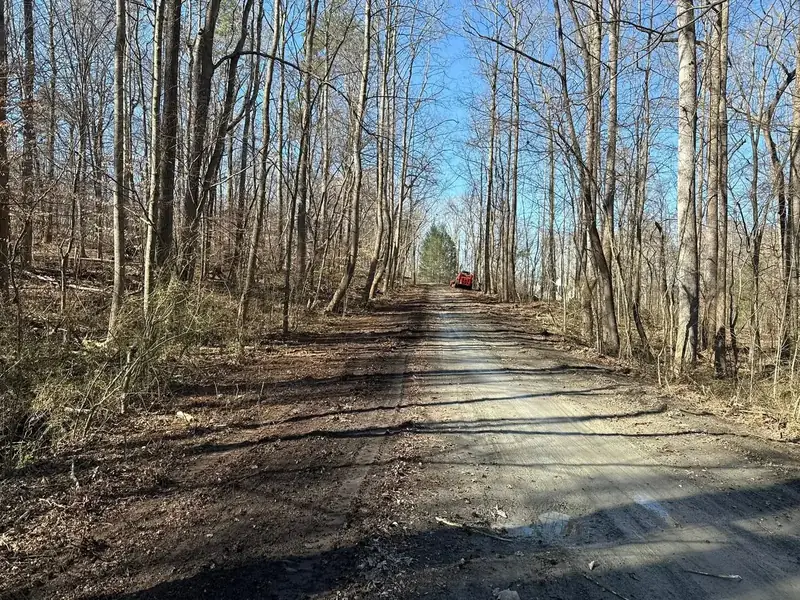
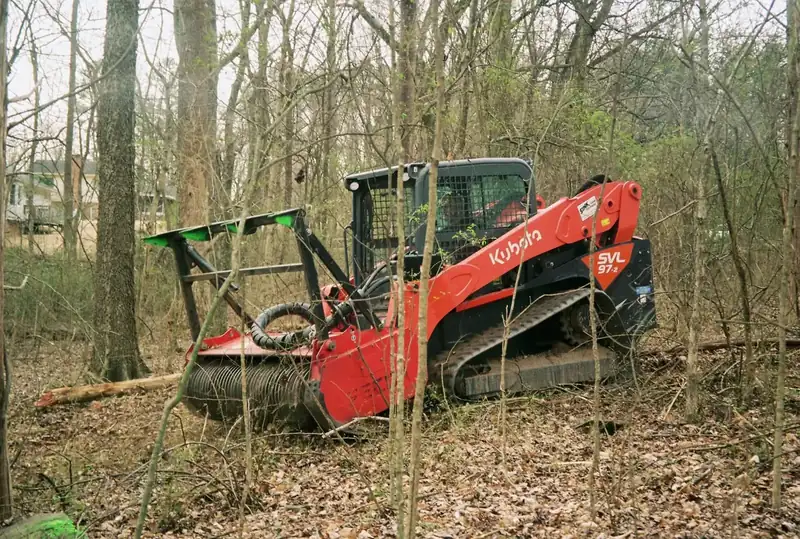
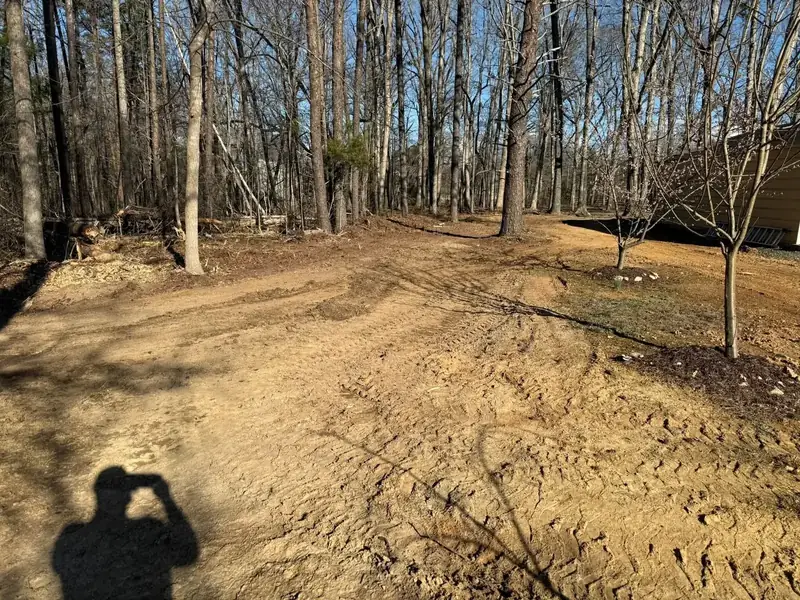
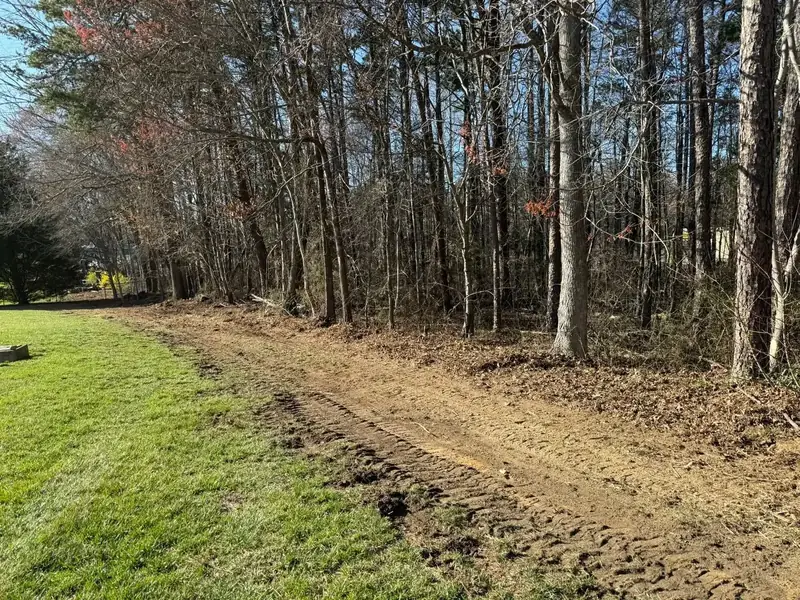
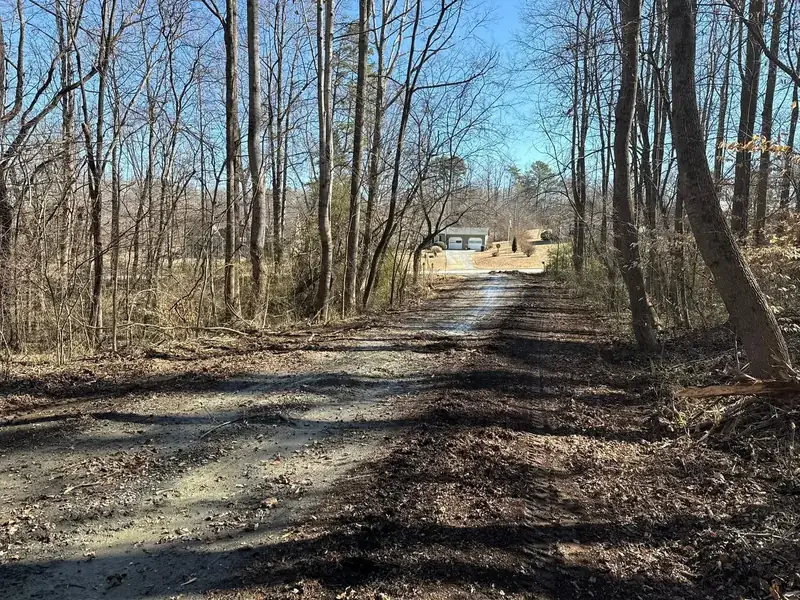
Farm and logging road construction is grading and drainage first, stone second. The route gets cleared — mulched where it's brush and small trees, grappled where it's bigger — and stumps pulled from the roadbed. Then the lane is cut to grade with the blade: crowned on flat ground, outsloped or insloped on a hillside, with ditches on the uphill side where it runs along a slope. Water bars — shallow diagonal humps across the road — are cut on grades steep enough that water would otherwise run down the road and wash it. Every draw and ditch the road crosses gets a culvert sized to the drainage area above it, bedded in stone and armored at the ends.
Stone goes where it earns its keep. The entrance at the public road gets a solid ABC base because it sees the most traffic and the most mud. Crossings get stone over the pipe. Soft spots and seasonal wet areas get excavated and based, sometimes over fabric or a layer of #4 stone to bridge the mud. Firm, well-drained sections of clay often need no stone at all, just grade and crown — a farm lane on good clay with proper drainage will carry a tractor all year. Where the whole road needs to carry heavy trucks in wet weather, we base the full length.
Reopening an old road is usually cheaper than cutting a new one because the grade and the crossings are already there, buried under twenty years of growth. We mulch the lane back open, pull the blowdowns off with the grapple, clean the old ditches and culverts, and regrade. If you're cutting a road for a timber sale, the logging crew will tell you what they need for truck access; we can build to that. Roads crossing a stream need to respect the buffer and use a proper culvert or ford, and we'll tell you where the lines are.
What the job looks like
Walk and flag the route
We follow the lane with you, look at grade, wet spots, crossings and what the road has to carry. On a new route we flag it together so it follows the ground instead of fighting it.
Estimate
Clearing, grading, culverts, water bars, stone by section, and seed on the cut banks. Written and priced by section so you can phase it if you want.
Clear and cut
Mulch the route, pull stumps and blowdowns, cut the roadbed to grade with crown or outslope, and shape the ditches. Water bars go in on the steep sections.
Pipe the crossings
Culverts set at every ditch or draw the road crosses, sized to the drainage area, bedded on stone and armored at the ends with riprap.
Stone and finish
ABC at the entrance, crossings, soft spots and anywhere the road has to carry weight in the wet. Cut banks seeded and strawed. Drive it with you before we leave.
Best fit for
- Access lanes from the road to back fields, barns and ponds
- Reopening old logging roads grown up in brush and blowdowns
- Haul roads for timber sales and firewood cutting
- Hunting land access and roads to stands and food plots
- Lanes that cross a draw, creek bottom or seasonal wet area
- Interior farm roads that have to carry trucks, trailers and equipment year-round
- Perimeter roads along fence lines and property boundaries
What drives the price
We don't quote farm roads from a chart. These are the things that move the number, and we'll walk through each one with you on site:
- Length of road and how much of it needs clearing
- Terrain — flat ground cuts fast, side slopes take more shaping and ditching
- Number and size of culverts at crossings
- How many sections need stone and how deep
- Soft ground requiring excavation, fabric or bridging stone
- Whether it's a new cut or reopening an existing roadbed
- Haul distance for stone and distance from Greensboro
Equipment we bring
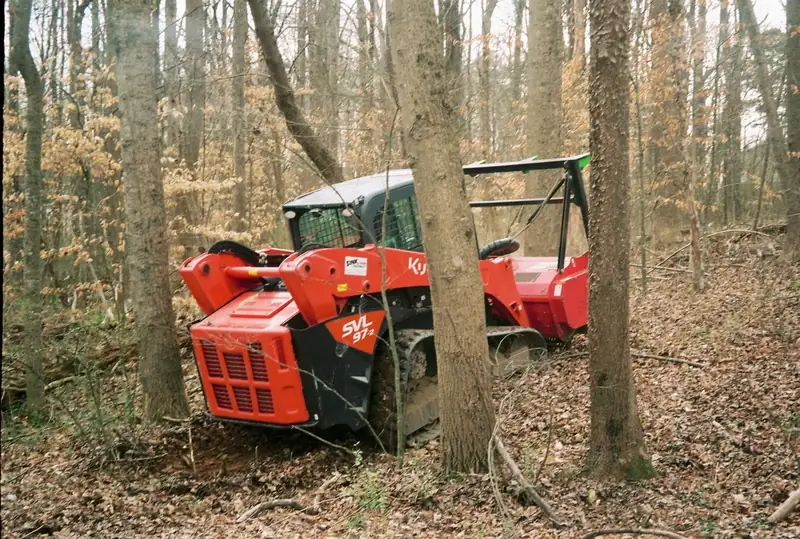
- Compact track loader with forestry mulcher for opening the route
- Grapple and root rake for blowdowns, stumps and debris
- Grading blade, box blade and dozer blade for cutting and crowning the roadbed
- Mini excavator with thumb for stumps, ditches, soft spots and culvert setting
- Dump trailer for ABC, #4 stone and riprap
Farm Roads questions
How much does it cost to build a farm road?
It comes down to length, how much clearing is in the way, how many crossings need pipe and how much of the road needs stone. A lane across firm, open pasture with no crossings is mostly blade work and costs little per foot. A road cut through timber with two culverts, water bars on a hillside and stone at the crossings costs much more per foot. We quote by section after walking it, so you can see where the money goes. Estimates are free.
Do farm roads need gravel the whole length?
Usually not. Firm, well-drained Piedmont clay with a proper crown and ditches will carry a tractor and a pickup most of the year without stone. Stone goes where the road sees the most traffic and the most water — the entrance, crossings and wet spots — and on the full length only if the road has to carry heavy trucks through the winter.
Can you reopen an old logging road?
Yes, and it's one of our favorite jobs. The grade and the crossings are already there under the growth. We mulch the lane open, pull the blowdowns and stumps, clean or replace the old culverts, regrade and put water bars back on the steep sections. It's almost always cheaper than cutting a new road.
Do I need a permit to build a road on my farm?
Interior farm roads on your own land generally don't need a permit, and agricultural and forestry activities have exemptions from some state rules. Where you need to be careful is crossing a stream — buffer rules and sometimes a permit apply — and disturbing more than an acre outside an agricultural exemption. A new entrance on a state road needs an NCDOT driveway permit. We'll walk you through what applies.
How do you keep a farm road from washing out on a hill?
Water bars, outslope and ditches. Water bars are diagonal humps cut across the road every so often on a grade that shed water to the downhill side before it builds speed. Outsloping tilts the road surface slightly downhill so water sheets off. A ditch on the uphill side catches what comes down the slope. Stone at the bottom of the grade handles what still collects.
What areas do you build farm roads in?
Out of Greensboro, we cover the Triad and about an hour and twenty minutes in every direction — up to the Virginia line, west to Mount Airy and Elkin, south to Salisbury, Albemarle and Sanford, and east to Durham, Chapel Hill and Raleigh. Farm and timber country in every one of those directions is where this work is.