

Brush is the stuff that takes over a piece of ground between the time you stop mowing it and the time the trees close in — blackberry briars, honeysuckle, Chinese privet, sumac, sweetgum and pine saplings, wild rose, young cedar. In the Piedmont that transition happens fast. Three growing seasons without a mower and a field is chest-high; seven or eight and you can't push through it on foot. Brush clearing is the job of knocking that back to open ground before it becomes a forestry job.
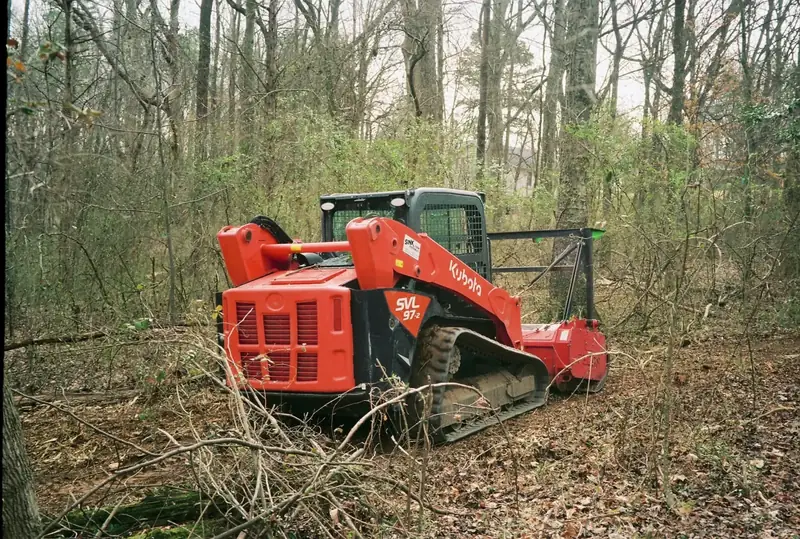
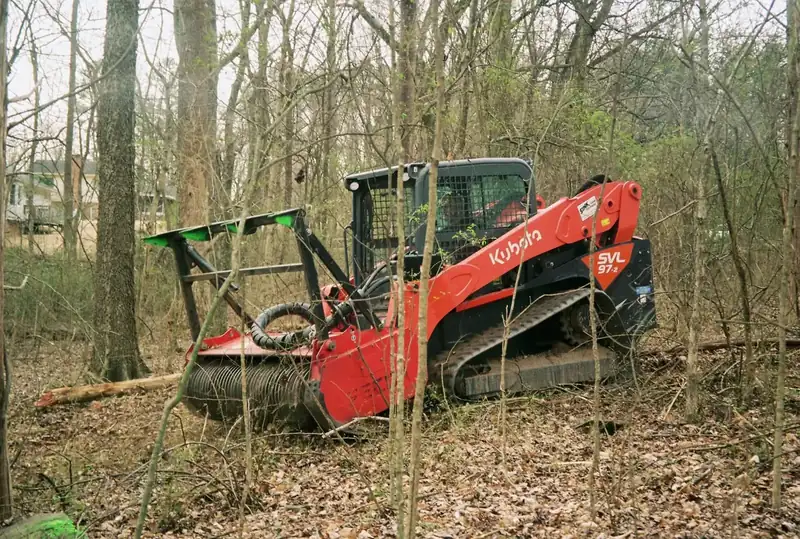
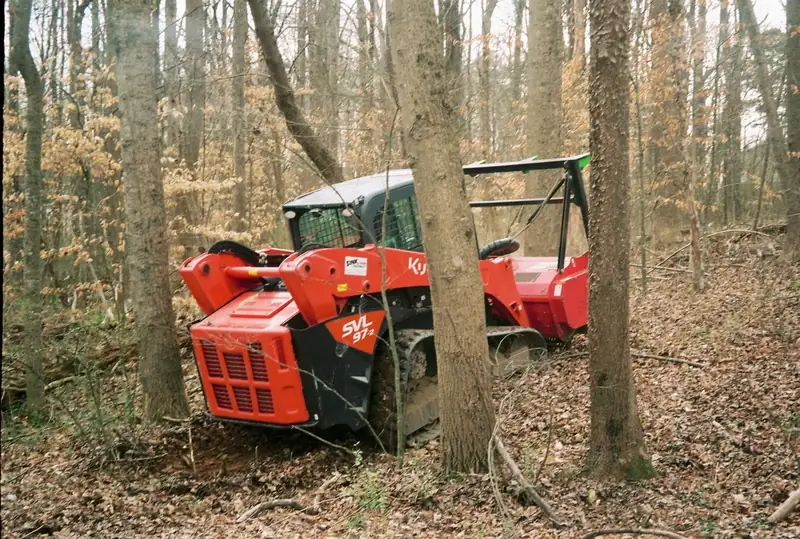
We clear brush with a forestry mulcher on a compact track loader. The head grinds everything from briars to saplings up to eight or ten inches into chips that stay on the ground, so there's nothing to rake, pile or burn when we're done. On a dense acre it's a few hours of work. On a property that's been let go for a decade and has real trees mixed in, we mulch what fits and grapple the rest.
Clark is the owner and the operator — a veteran and a working firefighter who runs the machine on every job. You deal with him from the first walk-through to the last pass, and the estimate is free.
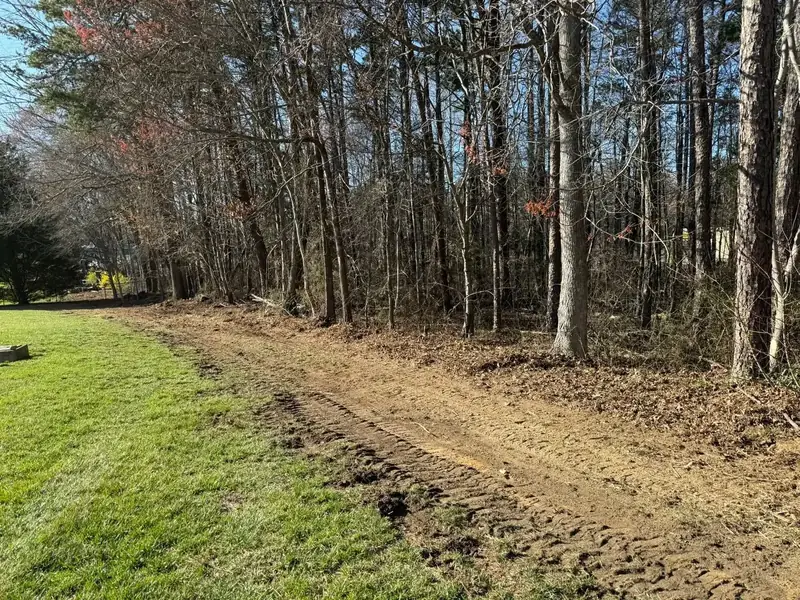
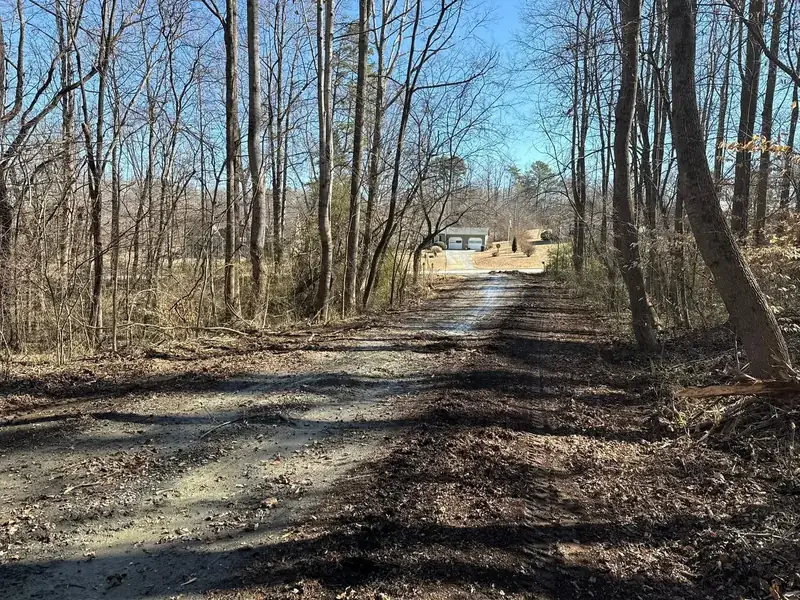
How brush clearing works on Piedmont ground
Brush clearing is lighter and faster than land clearing, and the pricing reflects it. The material is small — mostly under four inches — so the mulcher runs at near full travel speed and the chip layer it leaves is fine enough to walk through the same afternoon. We work from the edges in, keeping a clean line along driveways, fences and the trees you want left, then make a second pass over the thickest spots so no stubs stand up out of the mulch.
What's growing matters. Privet and honeysuckle are the two we fight most across Guilford, Forsyth and Alamance counties, and both will push back from the roots within a season of being mulched. The mulch layer slows them down, and a follow-up mowing or a second light pass the next year usually gets you ahead of it. Blackberry and multiflora rose mulch easily and come back thinner. Sweetgum saplings are the stubborn one — they'll resprout from the stump, so if you want a sweetgum stand gone for good, mowing it regularly afterward is part of the plan.
Brush clearing also exposes what the brush has been hiding. Old fence wire, dumped tires, a forgotten culvert, a wet spot that's been a drainage problem for years. We see it as we go and we'll point it out, because the time to deal with a wire-wrapped fence post or a washed-out ditch is while the machine's already on site, not after the grass comes in.
What the job looks like
Walk it and mark it
We look at what's growing, how tall and how thick, whether there are trees mixed in that need separate handling, and where you want the clean edges. Keeper trees and fence lines get flagged.
Estimate
A written price and scope based on the walk. Brush clearing is usually a single-day job, and we tell you up front whether anything on the property is beyond what the mulcher handles in one pass.
Mulch
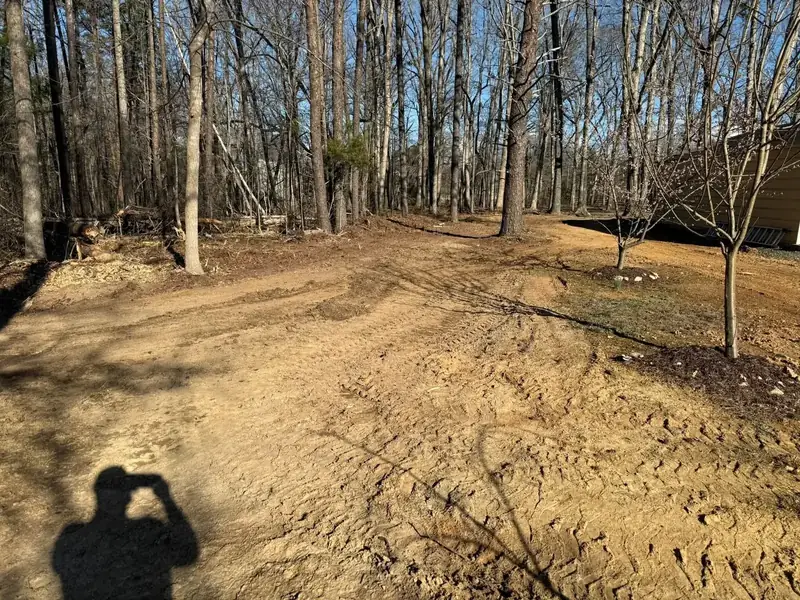
Perimeter first, then the interior in passes, then back over the heavy spots. The chips stay where they fall unless you want them raked into windrows or pushed into a pile.
Clean up and walk through
Driveway and road frontage swept of chips, fences checked, and a walk with you before we load up. If you want the stand mowed or mulched again the next season to keep it down, we'll put that on the calendar.
Best fit for
- Back yards and lots that have gone to briars and honeysuckle
- Old fields and pastures in the early stages of growing up
- Fence rows and property edges that have turned into hedgerows
- Thickets around outbuildings, barns and well heads
- Opening sight lines along driveways and road frontage
- Pre-sale cleanup so buyers can walk the property
- Ground being readied for a garden, orchard or chicken yard
What drives the price
We don't quote brush clearing from a chart. These are the things that move the number, and we'll walk through each one with you on site:
- Acreage and how dense the brush has gotten
- Whether there are saplings or trees mixed in that need separate handling
- What's growing — privet and sweetgum take more passes than briars
- Slope, rock and how wet the ground is
- How clean you want the finish — single pass versus refined mulch layer
- Access and distance from the nearest place we can unload
Equipment we bring
- Compact track loader with a high-flow forestry mulching head
- Brush cutter / rotary mower attachment for lighter growth
- Grapple for any trees or debris too big for the mulcher
- Root rake for pulling out old wire, roots and trash the brush was hiding
Brush Clearing questions
How much does brush clearing cost per acre in NC?
Brush clearing is the least expensive clearing we do because the material is small and the machine moves fast. Light briars and honeysuckle on flat, dry ground go quickly; a decade-old thicket with saplings mixed in takes longer and costs more. We quote after walking the property rather than from a flat per-acre rate, and the estimate is free.
What's the difference between brush clearing and land clearing?
Size of the material. Brush clearing is briars, vines, shrubs and saplings — generally under four to six inches. Land clearing involves real trees, stumps and usually some grading. If your property has both, we mulch the brush and handle the trees with a grapple or saw in the same visit.
Will the brush just grow back?
Some of it, yes. Mulching cuts the plant off at the ground but doesn't kill the roots, so privet, honeysuckle and sweetgum will try to come back. The mulch layer suppresses it for a season, and regular mowing or a second light pass the next year keeps you ahead. For bad privet or kudzu we'll talk through a longer plan.
Do you need to burn or haul the brush?
No. The mulcher grinds it into chips that stay on the ground, which means no burn permit, no smoke complaints and no dump trailer loads. If you specifically want the ground bare, we can rake and haul the chips, but most people prefer to leave them.
Can you clear brush around my fence without tearing it up?
Yes. The mulcher runs tight to a fence line and we work the far side by hand or with the rotary cutter where the head won't fit. If the fence is already down inside the brush, we'll find it before we hit it — that's part of the walk-through.
What areas do you clear brush in?
We're based in Greensboro and work about an hour and twenty minutes out — the whole Triad, north to the Virginia line, west to Mount Airy and Elkin, south to Salisbury, Albemarle and Sanford, and east to Durham, Chapel Hill and Raleigh.