

Fence lines are where brush goes to hide. Nobody mows them, birds sit on the wire and drop privet and cherry seed, and in a few years the fence is inside a hedgerow ten feet wide that's pushing posts over and shorting out the electric. Property line clearing is the same job without the fence — opening a boundary so a surveyor can shoot it, a fence crew can build on it, or you can finally tell where your ground ends and the neighbor's starts.
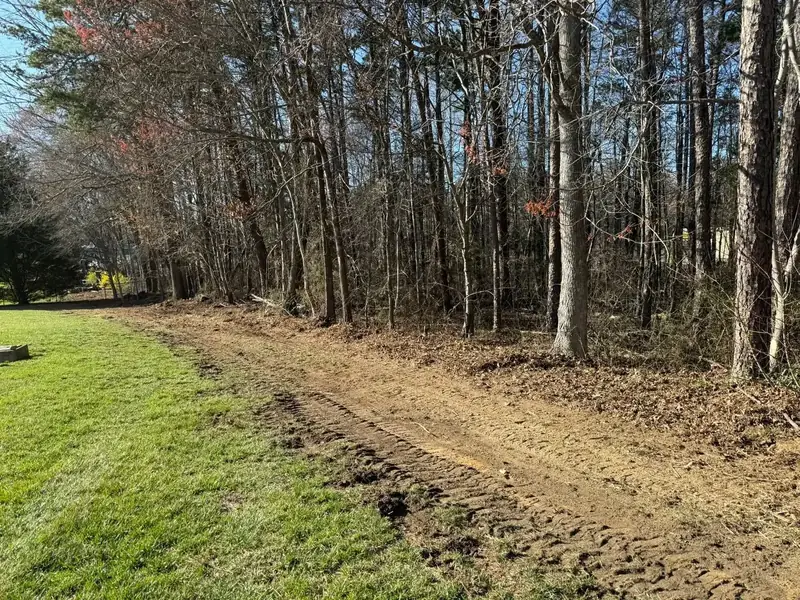
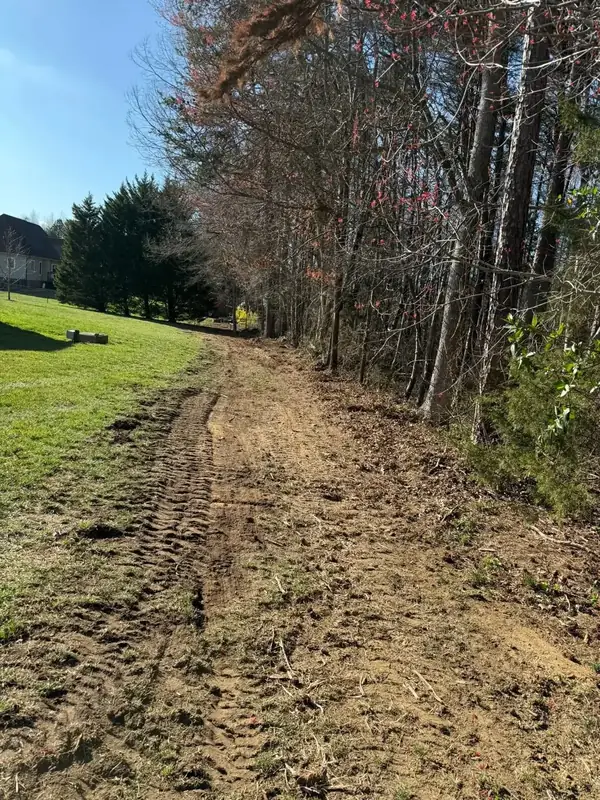
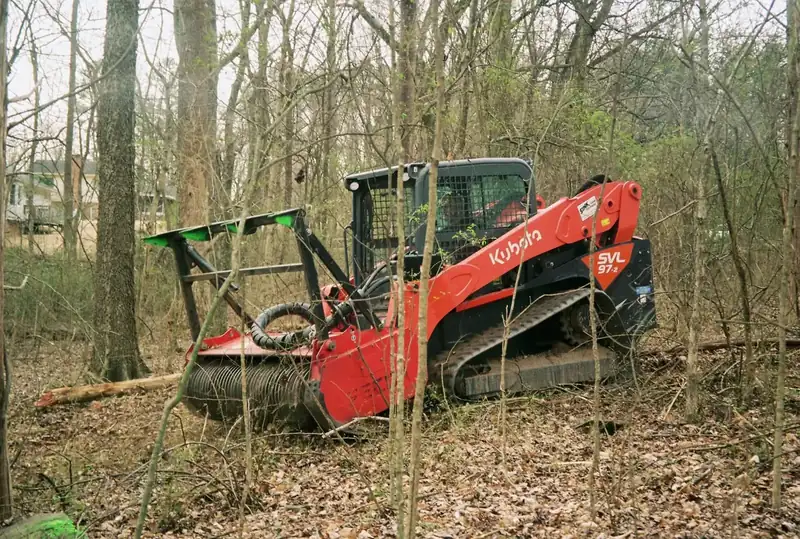
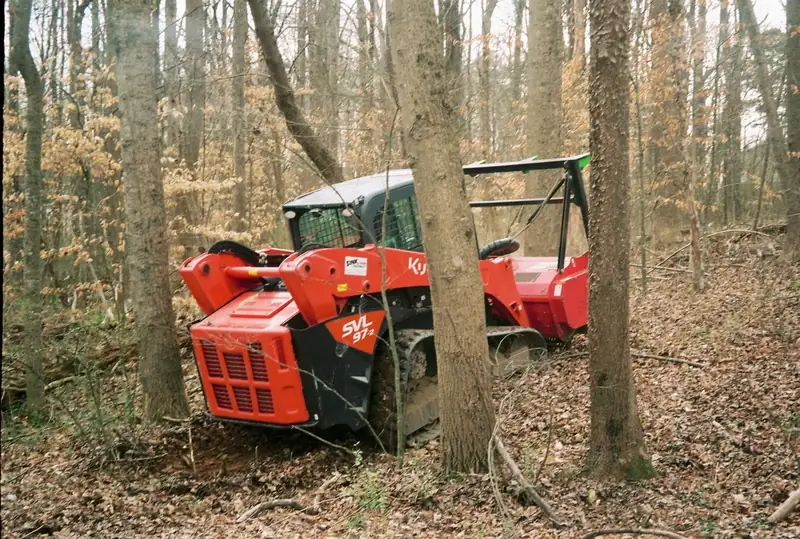
We run a forestry mulcher straight down the line, taking privet, honeysuckle, briars and saplings to the ground while working around the posts and wire. Where the fence is already down inside the growth, we find it before the machine does. Where there's no fence yet, we clear a corridor wide enough to set posts and string wire without fighting the woods. Around Greensboro that's a steady part of our work for horse farms, cattle pasture, rural homesites and anybody whose survey came back with a line they couldn't walk.
Clark runs the machine himself. He's a veteran and a working firefighter, and he's careful about the things that matter on a line job — the neighbor's trees, the corner pins, the wire. Walk-through and estimate are free.
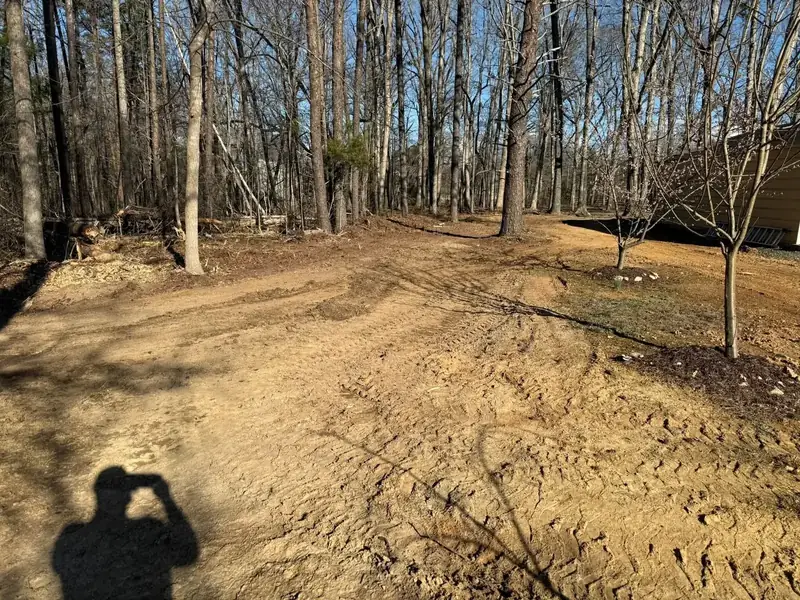
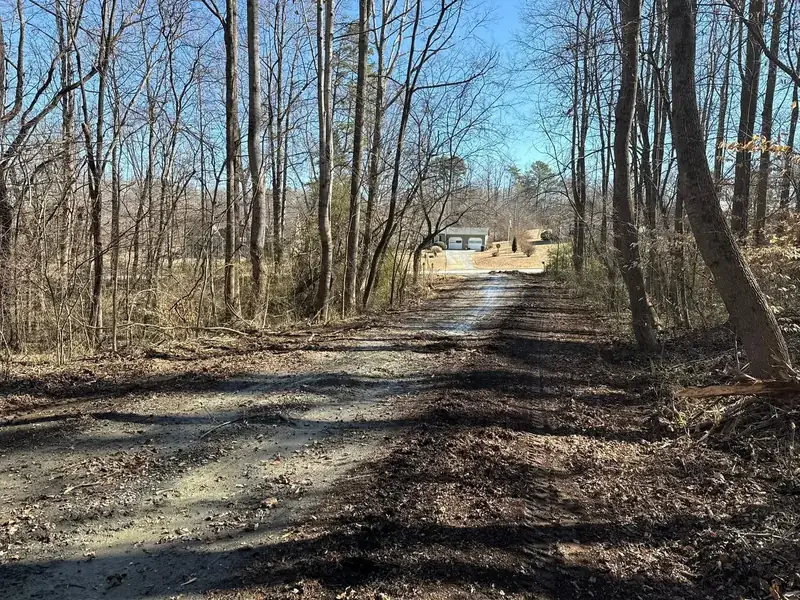
How fence line clearing works on Piedmont ground
The first question on any line job is where the line actually is. A fence is evidence, not proof — plenty of Piedmont fences were built a few feet off the boundary decades ago and nobody noticed until a survey. We ask for the plat, find the corner pins or the surveyor's flags, and clear to those. If you don't have a recent survey and the line matters, we'll suggest getting one before we start, because mulching the neighbor's side of an unmarked line is a problem no amount of apologizing fixes.
On an existing fence, the work is about taking the growth off without taking the fence with it. The mulcher clears the near side right to the posts, and we work the wire itself with a rotary cutter or by hand where the head won't fit. Old woven wire and barbed wire that's been grown into trees gets pulled and piled rather than mulched, because wire in a mulcher head is a bad day. Posts that are rotted or leaning get noted so you can replace them while the line is open.
For a new fence or a clean survey line, we clear a corridor — usually eight to fifteen feet depending on what's going in — and mulch it flat so the fence crew can drive the line with a post driver or auger. The mulch layer keeps the red clay from washing out along the corridor, which matters on the sloped, creek-crossed boundaries common across Rockingham, Randolph and Alamance counties. If the line crosses a wet-weather branch, we'll keep the clearing light inside the buffer and talk about where the fence needs a water gap.
What the job looks like
Locate the line
Plat, pins, survey flags or the existing fence — we figure out which one is the actual boundary before anything gets cut. If it's not clear, we'll tell you that and suggest a survey first.
Walk and estimate
We walk the length of the line, note the fence condition, wire in trees, trees on the line that need a decision, and how wide the corridor should be. You get a written scope and price.
Clear the corridor
Mulcher down the line taking brush and saplings to grade, grapple for anything oversized, hand or rotary work on the wire itself. Old wire is pulled and piled, not mulched.
Finish and flag
Corners and any line trees get flagged so they're obvious. Mulch is left in place along the corridor. We walk the line with you end to end before we leave.
Best fit for
- Cattle and horse fences swallowed by hedgerow
- Electric fence lines shorting out on growth
- New fence corridors on wooded property
- Boundaries opened up for a survey or a sale
- Property line disputes where both owners want the line visible
- Road frontage and driveway edges that have closed in
- Pasture perimeters before new woven wire goes up
What drives the price
We don't quote fence line clearing from a chart. These are the things that move the number, and we'll walk through each one with you on site:
- Length of the line and how wide the corridor needs to be
- How thick the growth is — a five-year hedgerow versus a thirty-year one
- Whether there's an existing fence to work around or wire grown into trees
- Trees on or near the line that need felling and a decision about ownership
- Terrain — slopes, creek crossings and wet bottoms along the boundary
- Access points along the line and how far the machine has to travel between them
Equipment we bring
- Compact track loader with a high-flow forestry mulching head
- Brush cutter / rotary mower attachment for work tight to the wire
- Grapple for pulling old wire, posts and oversized trees
- Root rake for cleaning the corridor before a fence crew arrives
- Auger for setting corner and brace posts if you want them in while we're there
Fence Line Clearing questions
How much does it cost to clear a fence line?
Line work is priced by the length and the thickness of the growth, with the existing fence condition as the big wildcard — clearing beside a sound fence is faster than untangling thirty years of wire from trees. A few hundred feet of light hedgerow is a short morning. A half mile of grown-over perimeter with wire in the trees is a couple of days. We walk it first and give you a written number.
Can you clear a fence line without damaging the fence?
Yes, if the fence is in decent shape. The mulcher works to within a foot or so of the posts, and we finish right at the wire with a rotary cutter or by hand. Rotten posts and sagging wire will get flagged — sometimes the fence is held up by the brush and comes down when the brush does, and we'll tell you that before we start.
Who owns the trees on the property line?
In North Carolina, a tree with its trunk on the line is generally considered jointly owned, and cutting it without the neighbor's agreement can be a problem. We flag line trees during the walk and leave them unless you've worked it out with the neighbor. Trees clearly on your side are yours to decide on.
Do I need a survey before you clear the property line?
If the pins are findable and the line is clear, no. If the boundary is uncertain, the neighbor is particular, or you're about to build a fence on it, a survey is cheap insurance. We'll clear to whatever the surveyor flags and nothing past it.
Can you put in the new fence posts too?
We can auger holes and set corner and brace posts while the machine is on site, which saves the fence crew a trip. We don't build the full fence, but we can leave the corridor mulched, the corners set, and the line ready for wire.
What areas do you clear fence lines in?
Everything within about an hour and twenty minutes of Greensboro — the Triad, up to the Virginia line, out to Mount Airy and Elkin, down to Salisbury, Albemarle and Sanford, and east to Durham, Chapel Hill and Raleigh. Most of our line work is on farms and rural homesites in that ring.