
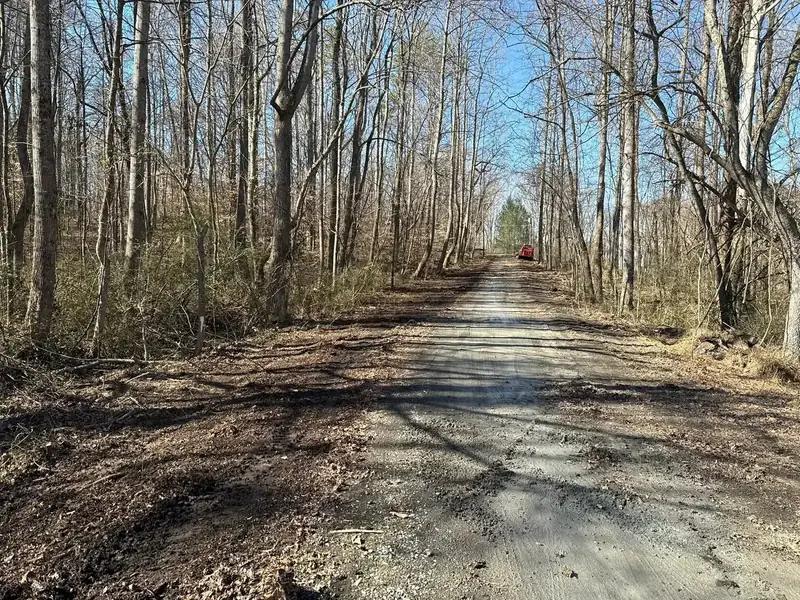
A right-of-way is a strip of ground that has to stay open — an access easement to a landlocked parcel, the corridor under a power line, the path a water or sewer line follows, a drainage easement the county expects to flow. When those strips grow up, somebody eventually gets a letter: the utility wants its line accessible, the neighbor can't get to their property, or the ditch that's supposed to carry stormwater is a privet thicket backing water onto a road. Right-of-way clearing is getting that strip back to its platted width and leaving it in a condition that's easy to maintain.
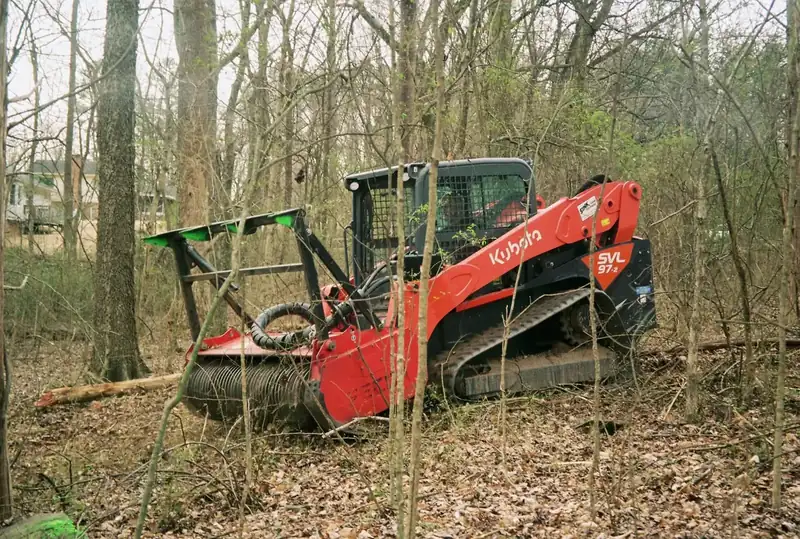
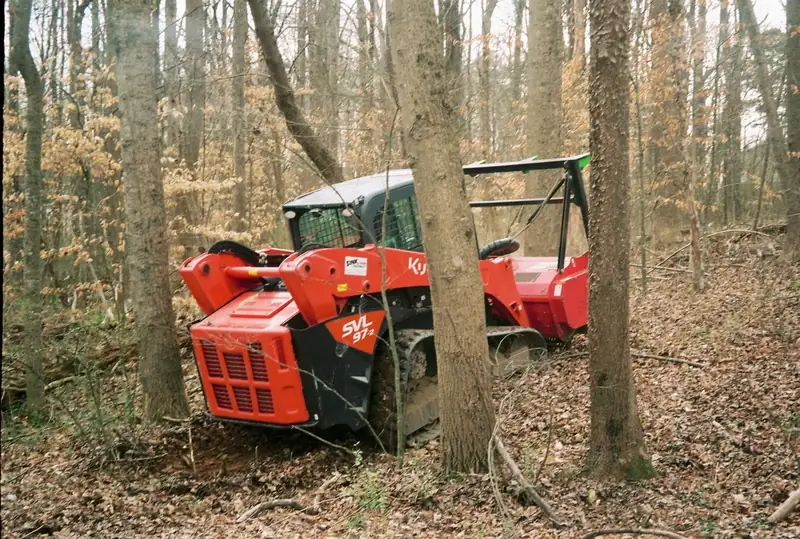
We clear easements across the Triad with a forestry mulcher, which is the right tool for a long, narrow corridor — it runs the width in passes, grinds everything to chips that stay on the ground, and doesn't leave a windrow of debris along the edge for somebody to deal with later. For deeded access roads we'll follow the mulching with a grading blade and gravel if the owner wants a drivable surface. For drainage easements we'll clean the ditch with the mini excavator once the brush is off it.
Clark is the owner and the operator — a veteran and a working firefighter — and he's the one who reads the easement language, walks the corridor and runs the machine. Estimates are free, and we'll tell you up front if a corridor is one that a utility or the county has its own rules about.
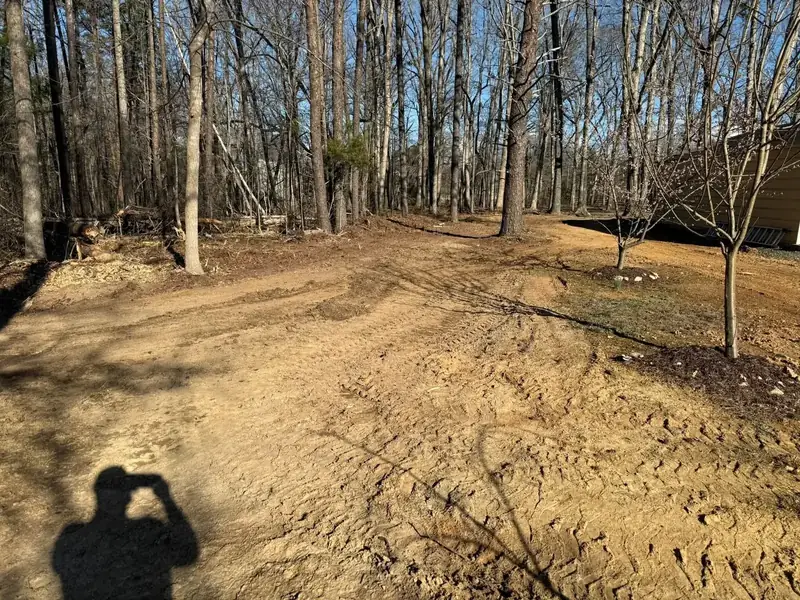
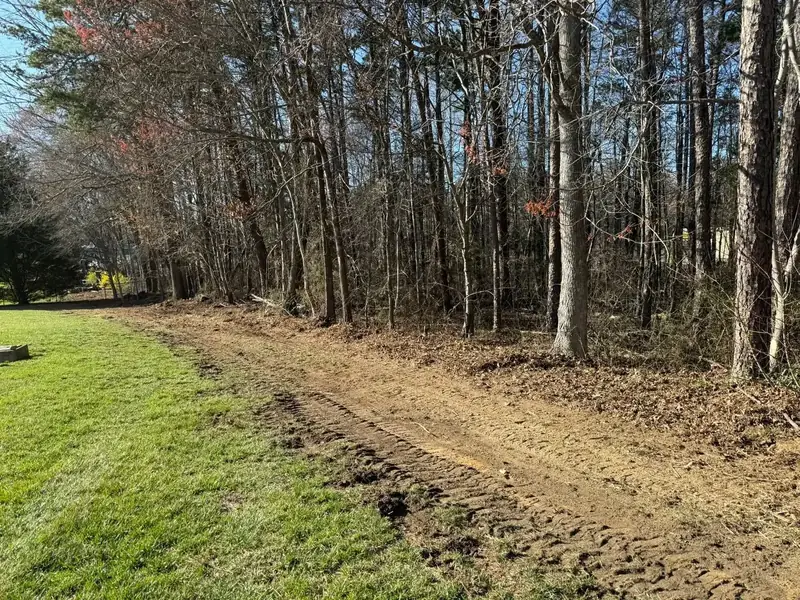
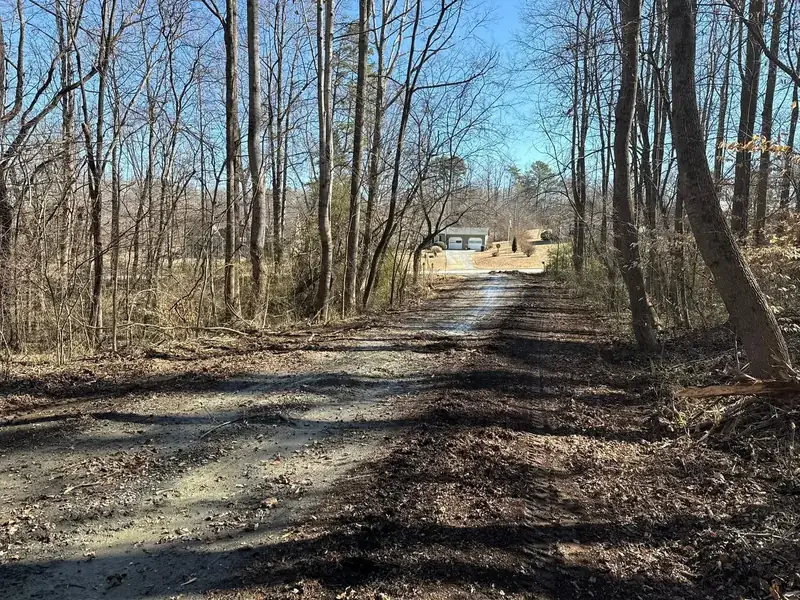
How right-of-way clearing works on Piedmont ground
Easements come with paper. The deed or plat says how wide the strip is, where it runs, and usually who's responsible for keeping it open. Before we clear one we want to see that language, because a fifteen-foot access easement and a thirty-foot utility easement are different jobs, and clearing outside the strip puts you onto ground you don't have rights to. On most private easements in Guilford, Rockingham and Alamance counties the width is spelled out and the centerline follows an existing path or pipe. We find the edges, flag them, and clear to the flags.
The growth in a Piedmont right-of-way is predictable: whatever was mulched or mowed last time has resprouted, and sweetgum, pine, privet and honeysuckle have filled the gaps. Under a power line it's often a solid wall of sapling sweetgum that got cut at four feet by a contractor years ago and came back as a multi-stemmed hedge. All of it mulches. Where the corridor has real trees in it — common on old access easements that have been ignored for twenty years — we mulch what fits and fell and grapple the rest.
Different easements want different finishes. An access road needs a drivable surface, so after mulching we grade the crown, cut the drainage, and put down stone if the owner's paying for it. A utility corridor just needs to be open and walkable — mulch layer left in place, no stumps above grade. A drainage easement needs the ditch cleaned to flow, which is excavator work after the brush is gone. We'll tell you which one you have and scope the finish accordingly. If the total disturbed ground crosses an acre, NC erosion rules apply, and on some utility corridors the utility itself has standards we'll work to.
What the job looks like
Read the easement
Deed, plat or recorded easement — we confirm the width, the route and who's allowed to clear it. If the language is unclear or the strip serves a utility, we'll say so before the machine moves.
Walk and flag the corridor
We locate the edges, flag them, note trees that will need felling, wet crossings, the existing ditch or pipe, and what the finish needs to be — walkable, drivable or flowing.
Written estimate
Scope and price by the corridor, based on length, width, growth and finish. The estimate says whether grading, gravel or ditch cleaning is included so there's nothing to argue about later.
Mulch and fell
The mulcher runs the corridor edge to edge. Trees too large for the head are dropped and grappled off. Mulch stays in place unless the finish calls for a graded surface.
Finish to purpose
Access roads get crowned and graveled if scoped. Drainage easements get the ditch cleaned with the excavator. Utility corridors get a final pass to knock stubs flush and a walk-through end to end.
Best fit for
- Deeded access easements to landlocked lots and back acreage
- Power line and utility corridors on private land
- Drainage easements and swales the county expects to flow
- Gas, water and sewer line routes that need to stay walkable
- Shared farm roads between neighbors
- Subdivision common-area easements and HOA buffers
- Pipeline and transmission edges where the utility's contractor stops
What drives the price
We don't quote right-of-way clearing from a chart. These are the things that move the number, and we'll walk through each one with you on site:
- Length and width of the corridor
- Growth density and the number of trees that need felling rather than mulching
- Finish required — walkable, drivable with gravel, or ditch cleaned to flow
- Creek and wet-weather crossings along the route
- Access — whether we can enter the corridor from one end or have to cut in
- Utility or county standards that dictate how the strip is left
- Whether the easement needs recurring maintenance on a schedule
Equipment we bring
- Compact track loader with a high-flow forestry mulching head
- Grapple for felled trees and oversized material along the corridor
- Mini excavator with thumb for ditch cleaning and culvert work
- Grading blade and box blade for crowning access roads
- Dump trailer for gravel delivery and spot haul-off
Right-of-Way Clearing questions
How much does right-of-way clearing cost?
Corridors are priced by length, width and growth, with the finish as the other variable. A quarter-mile utility strip in sapling sweetgum that just needs mulching is one price; the same quarter mile as a deeded access road with grading and stone is a bigger job. We walk the route and give a written number. If you want it kept open on a schedule, recurring visits are cheaper than a one-time rescue.
Who is responsible for clearing an easement in North Carolina?
It depends on what the recorded easement says. Many private access easements put maintenance on the party who benefits from it, some split it, and utility easements are usually the utility's responsibility inside the corridor — though they often only clear what their line needs. We'll read the language with you and tell you what we can clear and what somebody else should be paying for.
Can you clear under power lines?
On private land where the easement allows the landowner to maintain the ground, yes — mulching brush and saplings under a line is routine work. We keep the machine well clear of the conductors and don't fell trees toward them. For anything touching the lines or inside the utility's own clearance zone, that's the utility's crew.
Can you make the easement drivable after clearing it?
Yes. For an access easement we mulch it, grade a crown with the blade, cut side drainage, and put down gravel if you want a surface that holds up in the wet. If there's a creek or swale crossing, we'll talk about a culvert while the excavator's there.
Do I need a permit to clear a drainage easement?
Mulching brush off a drainage easement usually doesn't need one, but cleaning a ditch that connects to a stream, or disturbing more than an acre, can trip NC erosion rules or stream buffer protections. Greensboro and some counties also regulate work in floodplain easements. We'll tell you what applies to yours during the walk.
What areas do you serve for easement clearing?
Greensboro and about an hour and twenty minutes in every direction — the Triad, up to the Virginia line, Mount Airy and Elkin to the west, Salisbury, Albemarle and Sanford to the south, and Durham, Chapel Hill and Raleigh to the east.