
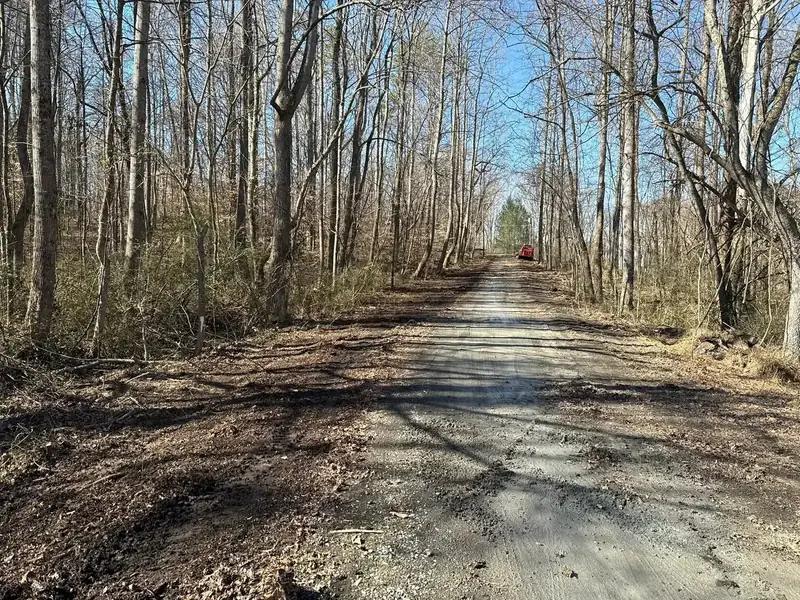
If the deeded road to your Chapel Hill back acreage has closed in, or the ditch along the easement is backing water onto the road, we'll open it. We read the easement first, flag the edges, and clear to exactly that.
Orange County has a lot of landlocked back acreage reached by a deeded strip through somebody else's woods. We've cleared plenty of those for Chapel Hill owners — reading the easement carefully, staying inside the width, and leaving the neighbor's ground untouched.
Chapel Hill ground conditions and how they shape right-of-way clearing
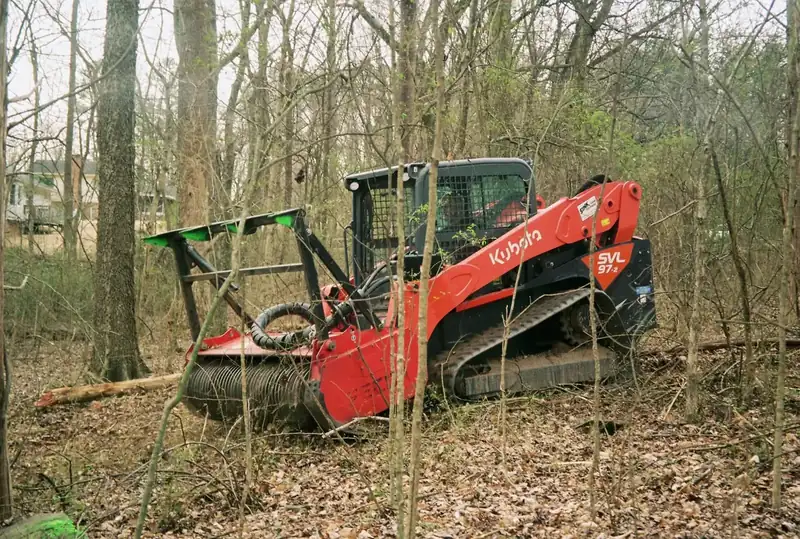
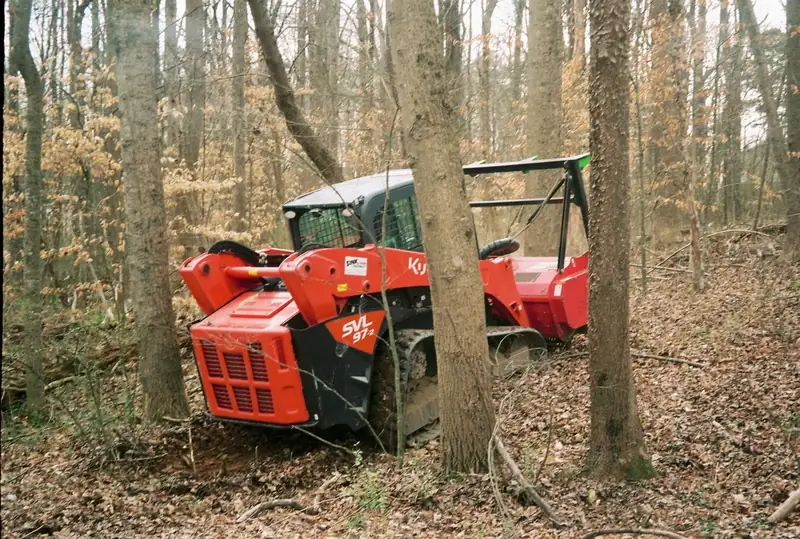
Out past Carrboro toward White Cross, Dairyland Road and the Jordan Lake side of town, the parcels open up to five, ten and twenty acres with real woods: oak and hickory on the high ground, loblolly and sweetgum where it was farmed, and privet, wisteria and English ivy anywhere a homeowner stopped paying attention. Morgan Creek, Bolin Creek and New Hope Creek all run through here on their way to Jordan Lake, and the bottoms along them are where the biggest brush problems live.
Around Governors Club, New Hope Creek and US-15/501, the properties we're usually called to look like this:
- University-area rental properties with overgrown creek frontage on Bolin or Morgan Creek
- Infill lots in Northside and along Rogers Road that have grown up for twenty years and need clearing to the buffer line
- Steep, privet-choked backyards and side lots in older neighborhoods off Mount Carmel Church Road and Smith Level Road
What right-of-way clearing jobs look like around Chapel Hill
One job we see over and over near US-15/501: University-area rental properties with overgrown creek frontage on Bolin or Morgan Creek. That's textbook right-of-way clearing work, and it's usually a one-mobilization job for us.
Out toward Dairyland Road the pattern changes — more Drainage easements and swales the county expects to flow. The approach is the same, the time on site is what moves.
Either way, the first question we ask on a Chapel Hill site walk is what the ground needs to do afterward, because that decides how far we take it.
We also cover right-of-way clearing in Cary, Efland and Durham, so if you've got property in more than one spot we can often batch the work.
Why Chapel Hill property owners call A&R
If the easement needs a crown and gravel, a culvert at the branch, or the ditch cleaned, we do it in the same trip as the clearing. One contractor for the whole Orange County corridor.
Call or text (336) 392-8138 for a free right-of-way clearing estimate in Chapel Hill. Send the easement language and we'll walk the corridor with you.
Right-of-Way Clearing in Chapel Hill: questions
Do I need a permit to clear a drainage easement?
Mulching brush off a drainage easement usually doesn't need one, but cleaning a ditch that connects to a stream, or disturbing more than an acre, can trip NC erosion rules or stream buffer protections. Greensboro and some counties also regulate work in floodplain easements. We'll tell you what applies to yours during the walk.
Can you clear under power lines?
On private land where the easement allows the landowner to maintain the ground, yes — mulching brush and saplings under a line is routine work. We keep the machine well clear of the conductors and don't fell trees toward them. For anything touching the lines or inside the utility's own clearance zone, that's the utility's crew.
How far is A&R Land Services from Chapel Hill?
We're based in Greensboro, about 55 minutes from Chapel Hill. Orange County is inside the radius we work every week, so there's no long-haul mobilization charge built into your estimate.
Do you handle right-of-way clearing near Governors Club and New Hope Creek?
Yes. We work throughout Chapel Hill and the surrounding Orange County area, including properties around Governors Club, New Hope Creek and US-15/501. If you're outside the town limits, send the address and we'll confirm it's in range.
How do you approach right-of-way clearing on Chapel Hill ground?
Shared farm roads between neighbors is the most common version of it around Chapel Hill. Access roads get crowned and graveled if scoped. Drainage easements get the ditch cleaned with the excavator. Utility corridors get a final pass to knock stubs flush and a walk-through end to end. Growth density and the number of trees that need felling rather than mulching is the factor that moves the price most on Orange County jobs, and we'll walk through it with you on site.