
What we see on the ground in Chapel Hill
Most of Chapel Hill proper is built out, so the clearing we do inside town limits is small, tight and heavily regulated — a half-acre of hardwood understory behind a house off Mount Carmel Church Road, or an overgrown lot in the Northside and Rogers Road areas where someone finally wants to build. The soils are a mix of Georgeville silt loam on the ridges and White Store and Creedmoor clays where the Triassic basin pokes in from the south. White Store is the one that gives people trouble — it shrinks, swells, and turns to grease when wet, and it will swallow a skid steer loader if you push it.
Out past Carrboro toward White Cross, Dairyland Road and the Jordan Lake side of town, the parcels open up to five, ten and twenty acres with real woods: oak and hickory on the high ground, loblolly and sweetgum where it was farmed, and privet, wisteria and English ivy anywhere a homeowner stopped paying attention. Morgan Creek, Bolin Creek and New Hope Creek all run through here on their way to Jordan Lake, and the bottoms along them are where the biggest brush problems live.
Chapel Hill and Carrboro both enforce tree-protection ordinances on lots above a certain size, and everything south and west of town sits in the Jordan Lake watershed with 50-foot riparian buffers on perennial streams. We pull the GIS buffer layer before we quote, flag the no-cut zone with the owner, and mulch right up to it. The payoff for the homeowner is that mulching leaves the root mat intact, which is exactly what the town's erosion inspector wants to see on a sloped lot near a creek.
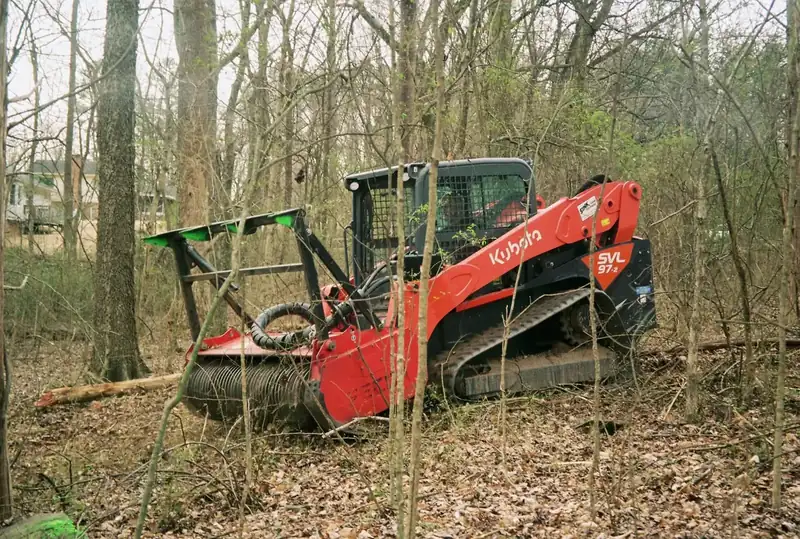
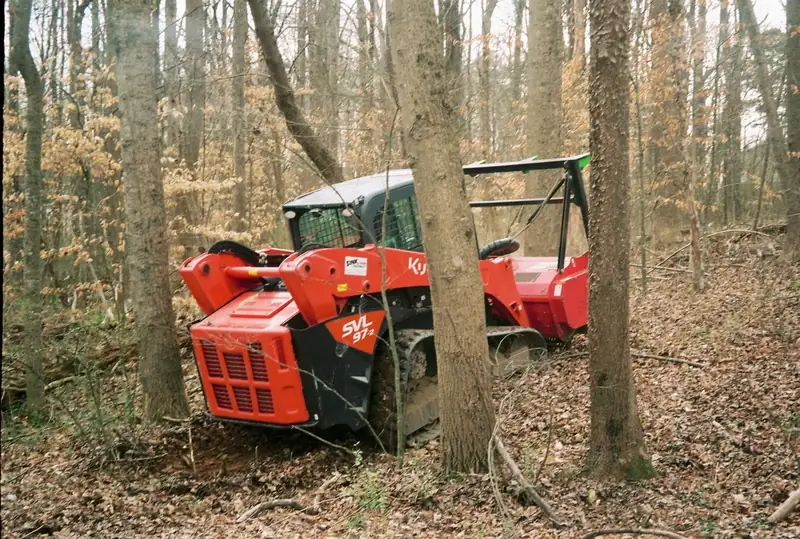
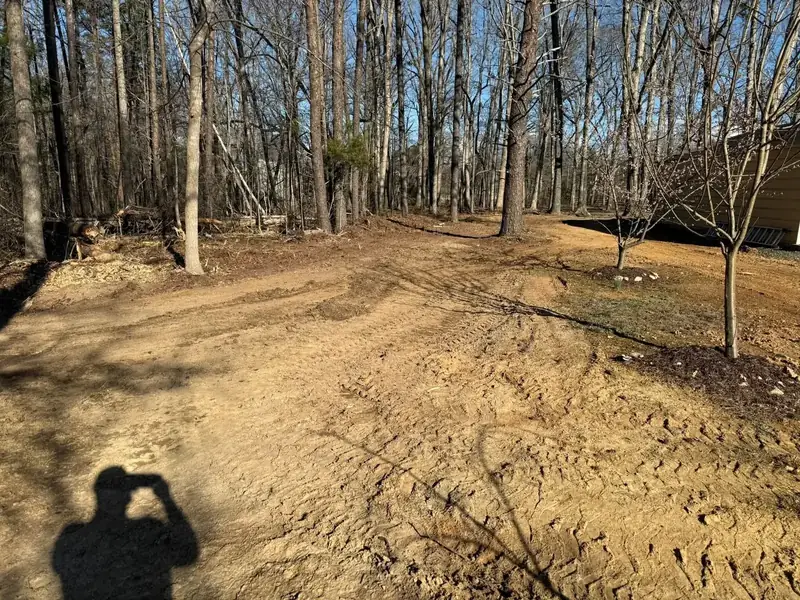
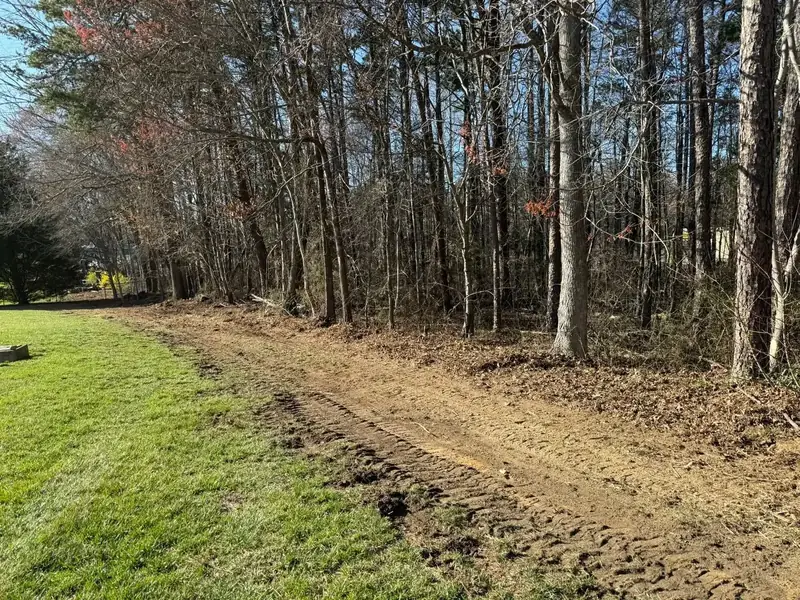
Properties we work around Chapel Hill
- Five- to twenty-acre wooded tracts west of Carrboro along Dairyland Road and Old Greensboro Road being opened up for a home and small pasture
- Steep, privet-choked backyards and side lots in older neighborhoods off Mount Carmel Church Road and Smith Level Road
- Estate lots in Governors Club and the US-15/501 corridor that need understory mulching for views and fire safety
- Infill lots in Northside and along Rogers Road that have grown up for twenty years and need clearing to the buffer line
- University-area rental properties with overgrown creek frontage on Bolin or Morgan Creek
Most-requested services in Chapel Hill
Underbrush Clearing in Chapel Hill
Keep the trees. Lose the thicket underneath them.
Details →Land & Lot ClearingLot Clearing in Chapel Hill
From the road to the back pin — one lot, cleared right, ready for the next step.
Details →Forestry Mulching & Land ManagementForestry Mulching in Chapel Hill
One machine, one pass: brush and trees ground into mulch on the spot.
Details →Forestry Mulching & Land ManagementInvasive Removal in Chapel Hill
Privet, kudzu, honeysuckle and bamboo — mulched to the ground and managed so they stay down.
Details →Drainage & ErosionErosion Control in Chapel Hill
Gullies filled, slopes reshaped, water slowed down — before the clay ends up in the creek.
Details →GradingYard Leveling in Chapel Hill
Smooth out the bumps, fix the low spots, and get a lawn you can mow without losing a wheel.
Details →Skid Steer & Property WorkPre-Sale Lot Cleanup in Chapel Hill
Show buyers the land, not the thicket — cleared, mowed and ready for the listing photos.
Details →Chapel Hill questions
Do you serve Chapel Hill, NC?
Yes. Chapel Hill is about 55 minutes from our Greensboro base and well inside the territory we work every week, along with the rest of Orange County.
What kind of land work do you do most in Chapel Hill?
underbrush clearing, lot clearing, forestry mulching, invasive removal and related site work. Five- to twenty-acre wooded tracts west of Carrboro along Dairyland Road and Old Greensboro Road being opened up for a home and small pasture.
Is there a travel charge for Chapel Hill?
There's no separate line item. Mobilization is factored into the estimate, and because Chapel Hill is inside our regular radius it stays modest compared with a crew hauling from outside the region.
Do you work near Morgan Creek and US-15/501?
Yes — we've worked around Morgan Creek, US-15/501, Southern Village and across the Chapel Hill area. If your property is outside the town limits, send the address and we'll confirm.
Do you need a permit to clear land in Orange County?
For most residential clearing on your own lot, no. Disturbing more than an acre triggers North Carolina's sediment and erosion control rules, and work inside stream buffers or in towns with tree-protection ordinances may need approval. We'll flag any of that during the site walk and point you to the right Orange County office.