
A&R Land Services is a veteran and fireman owned crew preparing building pads throughout Chapel Hill and Orange County. Homes, metal buildings, garages, slabs. Owner on the machine, laser on the grade, and a pad your foundation contractor won't have to fix.
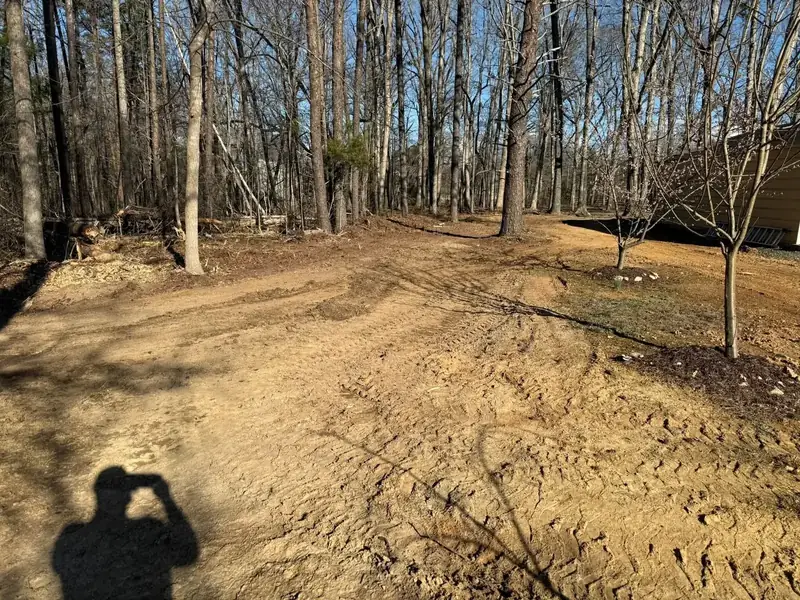
Stripping is the step that gets skipped most often on Orange County pads. Topsoil, roots and old brush rot under the fill and the pad drops. We take all of it off the footprint on every Chapel Hill job and reuse the topsoil elsewhere on the lot.
Chapel Hill ground conditions and how they shape building pads
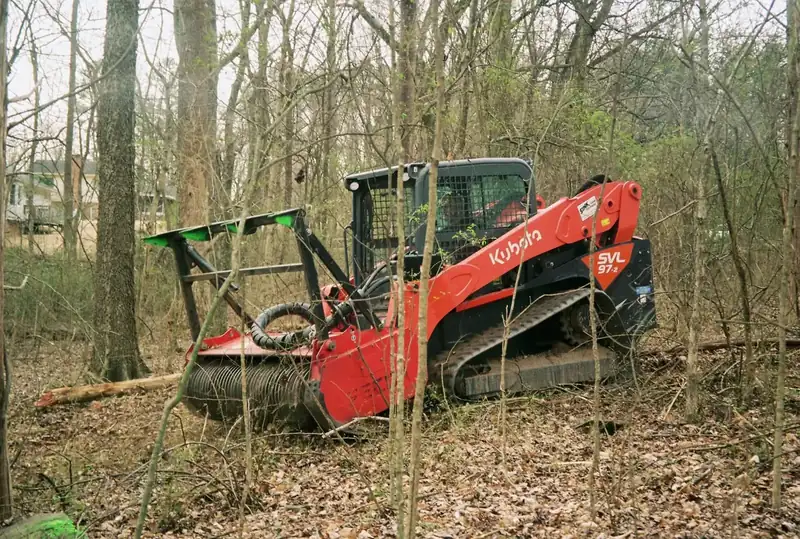
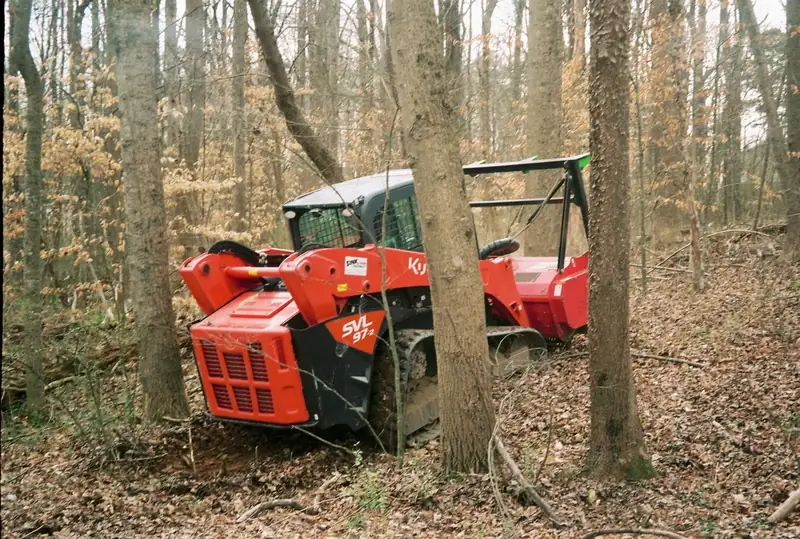
Chapel Hill and Carrboro both enforce tree-protection ordinances on lots above a certain size, and everything south and west of town sits in the Jordan Lake watershed with 50-foot riparian buffers on perennial streams. We pull the GIS buffer layer before we quote, flag the no-cut zone with the owner, and mulch right up to it. The payoff for the homeowner is that mulching leaves the root mat intact, which is exactly what the town's erosion inspector wants to see on a sloped lot near a creek.
Around the Rogers Road and Northside neighborhoods, Mount Carmel Church Road and Dairyland Road, the properties we're usually called to look like this:
- Infill lots in Northside and along Rogers Road that have grown up for twenty years and need clearing to the buffer line
- Five- to twenty-acre wooded tracts west of Carrboro along Dairyland Road and Old Greensboro Road being opened up for a home and small pasture
- University-area rental properties with overgrown creek frontage on Bolin or Morgan Creek
What building pads jobs look like around Chapel Hill
Most of our building pads work in Chapel Hill comes from two directions. First, infill lots in Northside and along Rogers Road that have grown up for twenty years and need clearing to the buffer line. Second, modular and manufactured home pads.
Both show up regularly along Dairyland Road and Governors Club, and both are jobs we can usually walk, quote and schedule inside a couple of weeks.
Neighbors in Efland, Hillsborough and Apex call us for the same work; Chapel Hill sits right in the middle of that route.
Why Chapel Hill property owners call A&R
If the Chapel Hill lot also needs clearing, a driveway cut in, or a septic area opened up, we do it in the same mobilization as the pad. One estimate, one crew, one clean handoff to your builder.
Call or text (336) 392-8138 to get a free building pad estimate in Chapel Hill. Send the site plan if you have it and we'll come stake it.
Building Pads in Chapel Hill: questions
Do you need a permit to build a pad?
The pad itself usually falls under your building permit, which the builder or the owner pulls through the county inspections office. If the total disturbed area on the lot goes over an acre, a state sediment and erosion control plan is required too. We'll help you figure out which applies before we start.
How high should a building pad be above grade?
High enough that water runs off it in every direction. A few inches above surrounding grade with a slight crown is typical for a crawl space home; a slab pad gets set a specific depth below finished floor so the stone and concrete land at the right height. Your builder's finished floor elevation is the number we grade to.
How far is A&R Land Services from Chapel Hill?
We're based in Greensboro, about 55 minutes from Chapel Hill. Orange County is inside the radius we work every week, so there's no long-haul mobilization charge built into your estimate.
Do you handle building pads near the Rogers Road and Northside neighborhoods and Mount Carmel Church Road?
Yes. We work throughout Chapel Hill and the surrounding Orange County area, including properties around the Rogers Road and Northside neighborhoods, Mount Carmel Church Road and Dairyland Road. If you're outside the town limits, send the address and we'll confirm it's in range.
What does building pads typically involve on a Chapel Hill property?
Metal buildings, pole barns, workshops and detached garages is the most common version of it around Chapel Hill. Fill placed in six-to-eight-inch layers and tracked in before the next goes on. Geotech density testing coordinated between lifts if the project requires it. Soil moisture and season is the factor that moves the price most on Orange County jobs, and we'll walk through it with you on site.