
Most land in Orange County was cleared once and maintained for a while, then left. Around Chapel Hill we see the results every week. Our land management work picks up where the last owner stopped, gets the property back under control, and keeps it there.
Fields around Chapel Hill grow back fast. Broomsedge and blackberry show up first, then pine and sweetgum, and within a few years the mower can't keep up. On Orange County pasture we usually plan two or three bush hog passes a year at first, then cut back once the woody growth is beaten down.
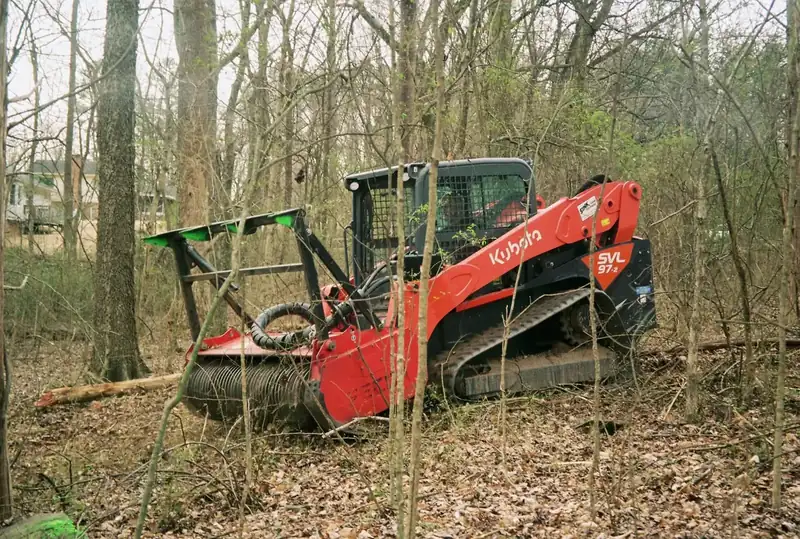
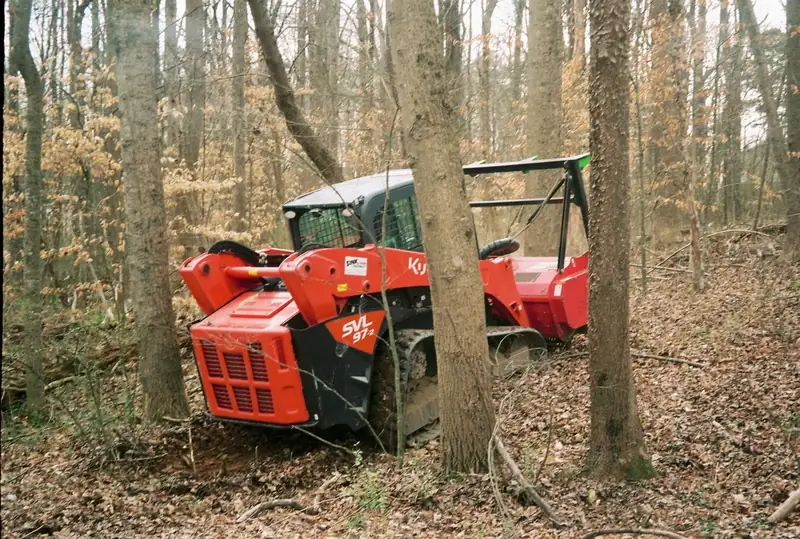
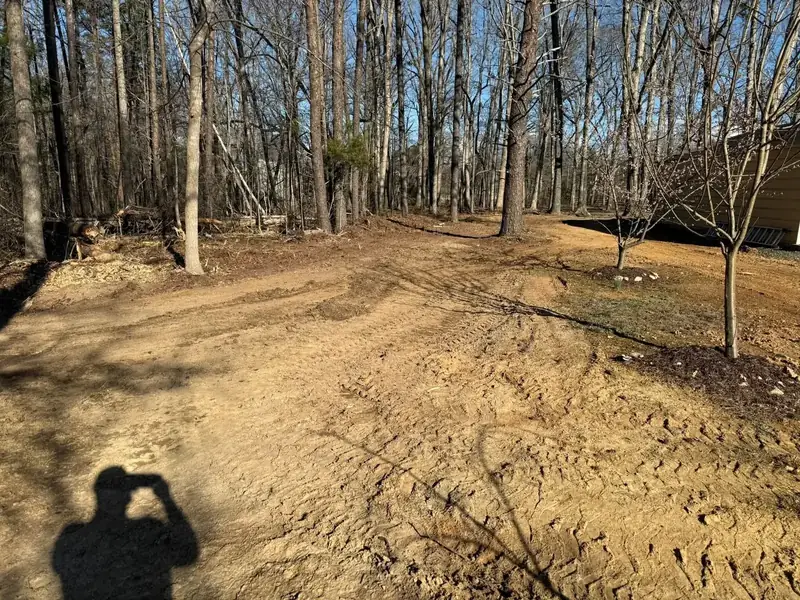
Chapel Hill ground conditions and how they shape land management
Most of Chapel Hill proper is built out, so the clearing we do inside town limits is small, tight and heavily regulated — a half-acre of hardwood understory behind a house off Mount Carmel Church Road, or an overgrown lot in the Northside and Rogers Road areas where someone finally wants to build. The soils are a mix of Georgeville silt loam on the ridges and White Store and Creedmoor clays where the Triassic basin pokes in from the south. White Store is the one that gives people trouble — it shrinks, swells, and turns to grease when wet, and it will swallow a skid steer loader if you push it.
Around Carolina North Forest, Jones Ferry Road and Jordan Lake, the properties we're usually called to look like this:
- Five- to twenty-acre wooded tracts west of Carrboro along Dairyland Road and Old Greensboro Road being opened up for a home and small pasture
- Steep, privet-choked backyards and side lots in older neighborhoods off Mount Carmel Church Road and Smith Level Road
- University-area rental properties with overgrown creek frontage on Bolin or Morgan Creek
What land management jobs look like around Chapel Hill
One job we see over and over near Jordan Lake: Five- to twenty-acre wooded tracts west of Carrboro along Dairyland Road and Old Greensboro Road being opened up for a home and small pasture. That's textbook land management work, and it's usually a one-mobilization job for us.
Out toward Dairyland Road the pattern changes — more Rural homesites with several acres of field and woods to keep tidy. The approach is the same, the time on site is what moves.
Either way, the first question we ask on a Chapel Hill site walk is what the ground needs to do afterward, because that decides how far we take it.
If you're just outside Chapel Hill — Hillsborough, Saxapahaw, Apex or anywhere between — you're still inside our regular range.
Why Chapel Hill property owners call A&R
We're about 55 minutes from Chapel Hill and in Orange County regularly, which makes recurring visits practical and keeps the cost of each one reasonable. Batching your property with other work nearby is part of how we price it.
For field mowing, fence lines, invasives, trails and road upkeep in Chapel Hill, call (336) 392-8138. The owner runs the equipment.
Land Management in Chapel Hill: questions
Is it cheaper to maintain land or to clear it again later?
Maintaining it, almost always. A field that gets mowed twice a year stays a field. A field left for eight years needs a mulcher, more time, and a season or two of follow-up before it looks right again.
What areas do you cover for land management?
Greensboro and about an hour and twenty minutes out in every direction: the Triad, north to the Virginia line, west into the Yadkin Valley, south toward the Uwharries and east toward the Triangle.
How far is A&R Land Services from Chapel Hill?
We're based in Greensboro, about 55 minutes from Chapel Hill. Orange County is inside the radius we work every week, so there's no long-haul mobilization charge built into your estimate.
Do you handle land management near Carolina North Forest and Jones Ferry Road?
Yes. We work throughout Chapel Hill and the surrounding Orange County area, including properties around Carolina North Forest, Jones Ferry Road and Jordan Lake. If you're outside the town limits, send the address and we'll confirm it's in range.
What should I expect from a land management job in Orange County?
Investors and landholders keeping a tract presentable until it sells or gets built on is the most common version of it around Chapel Hill. After each visit you get a short note and photos — especially useful for owners who don't live on the property. Every year we walk it again and adjust the plan: some areas need less once they're under control, and some need more. How often the plan calls for visits each year is the factor that moves the price most on Orange County jobs, and we'll walk through it with you on site.