

Most land in Wake County was cleared once and maintained for a while, then left. Around Cary we see the results every week. Our land management work picks up where the last owner stopped, gets the property back under control, and keeps it there.
Fields around Cary grow back fast. Broomsedge and blackberry show up first, then pine and sweetgum, and within a few years the mower can't keep up. On Wake County pasture we usually plan two or three bush hog passes a year at first, then cut back once the woody growth is beaten down.
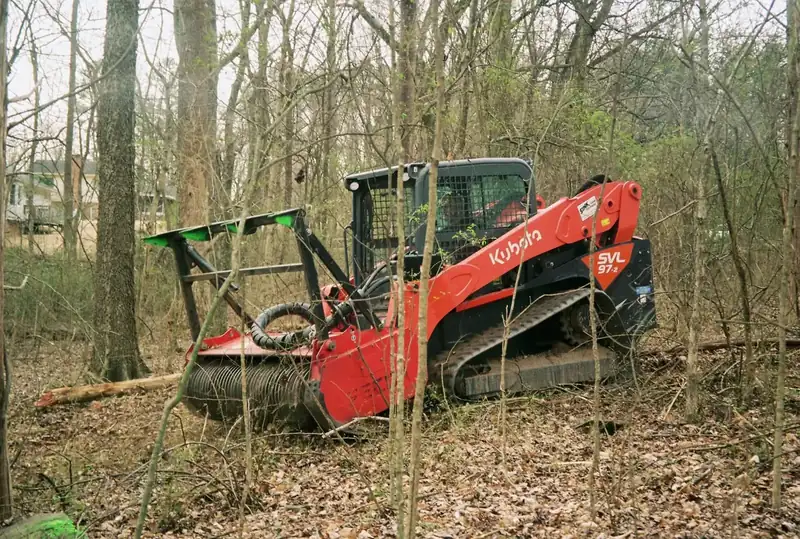
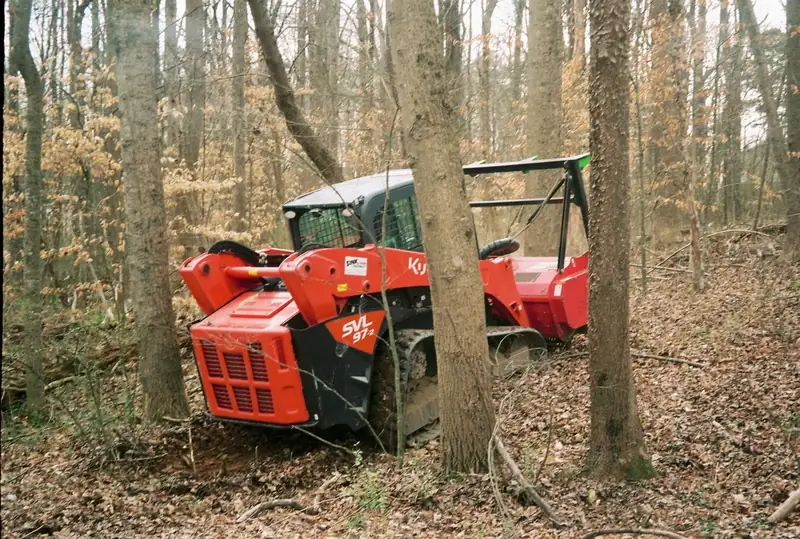
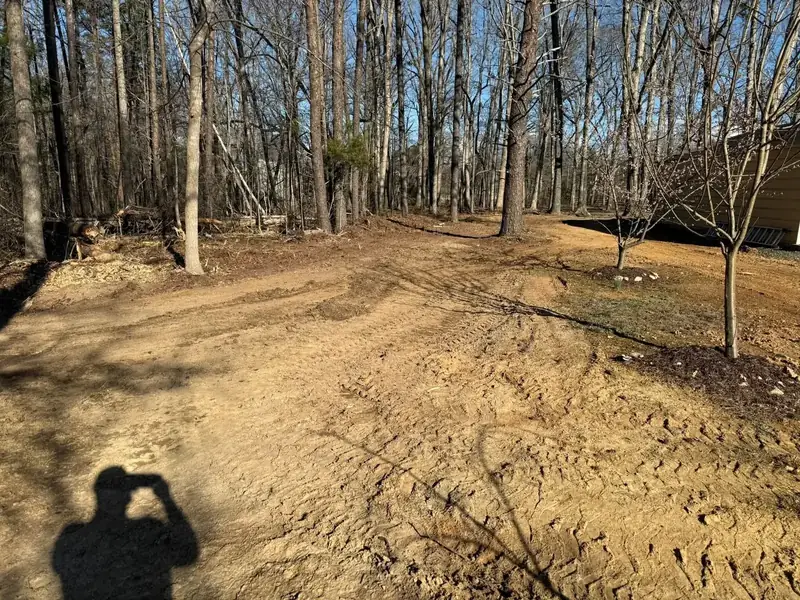
Cary ground conditions and how they shape land management
Cary's tree-preservation ordinance is one of the strictest in the state — champion trees, tree-save areas on any site plan, and a permit before clearing on most lots over a threshold size. Wake County erosion control applies at one disturbed acre, and the west side is in the Jordan Lake watershed with 50-foot buffers while the east drains to the Neuse basin with its own buffer rule. We get the town's land development staff involved early on anything bigger than a backyard. The Triassic clay west of NC-55 waits for dry weather before we grade it.
Around Hemlock Bluffs Nature Preserve, Swift Creek and Green Level Church Road, the properties we're usually called to look like this:
- Backyard reclamation — a half-acre of privet, ivy and sweetgum behind a house turned into usable yard
- Last wooded builder lots out west along Green Level Church Road and Carpenter Fire Station Road needing permitted lot clearing and pad prep
- Estate lots in MacGregor Downs, Lochmere and the Preston area wanting understory mulched and invasive vines removed
What land management jobs look like around Cary
A typical Cary call for land management looks like this: Backyard reclamation — a half-acre of privet, ivy and sweetgum behind a house turned into usable yard. We've handled that exact situation around Green Level Church Road and NC-55 more times than we can count.
The other common one is Horse and cattle properties with pasture edges and fence lines that keep closing in, which usually means a tighter work area and more care around what stays.
If your property is somewhere in between, send the address and we'll tell you which side of the line it falls on.
If you're just outside Cary — Pittsboro, Chapel Hill, Sanford or anywhere between — you're still inside our regular range.
Why Cary property owners call A&R
We're about 1 hour 15 minutes from Cary and in Wake County regularly, which makes recurring visits practical and keeps the cost of each one reasonable. Batching your property with other work nearby is part of how we price it.
For field mowing, fence lines, invasives, trails and road upkeep in Cary, call (336) 392-8138. The owner runs the equipment.
Land Management in Cary: questions
Can you get a property back under control first?
Yes. Most plans start with catch-up work: mulching what has grown in, reopening fence lines and trails, and fixing the road or drainage. After that, the regular visits keep it from happening again.
Is it cheaper to maintain land or to clear it again later?
Maintaining it, almost always. A field that gets mowed twice a year stays a field. A field left for eight years needs a mulcher, more time, and a season or two of follow-up before it looks right again.
How far is A&R Land Services from Cary?
We're based in Greensboro, about 1 hour 15 minutes from Cary. Wake County is inside the radius we work every week, so there's no long-haul mobilization charge built into your estimate.
Do you handle land management near Hemlock Bluffs Nature Preserve and Swift Creek?
Yes. We work throughout Cary and the surrounding Wake County area, including properties around Hemlock Bluffs Nature Preserve, Swift Creek and Green Level Church Road. If you're outside the town limits, send the address and we'll confirm it's in range.
What does land management typically involve on a Cary property?
Hunting land that needs lanes, plots and trails kept open between seasons is the most common version of it around Cary. We go over the acreage with you: fields, edges, fence lines, woods, trails, roads, creeks and drainage. We note what's open, what's slipping, and what's already gone back to woods, and we ask what you want each part of the property to do. How far the property has slipped — catch-up work costs more than upkeep is the factor that moves the price most on Wake County jobs, and we'll walk through it with you on site.