

If the city sent a letter about your Cary lot or the back field got away from you this summer, we'll knock it down. Veteran and fireman owned, based in Greensboro, and bush hogging in Wake County is the fastest-scheduling work we do.
Pasture edges in Wake County — along the creek, under the tree line, around the pond — are where the tractor stops and the brush starts. On Cary farms we mow those strips with the track machine so the pasture stays the size it was fenced to be.
Cary ground conditions and how they shape bush hogging
Cary's tree-preservation ordinance is one of the strictest in the state — champion trees, tree-save areas on any site plan, and a permit before clearing on most lots over a threshold size. Wake County erosion control applies at one disturbed acre, and the west side is in the Jordan Lake watershed with 50-foot buffers while the east drains to the Neuse basin with its own buffer rule. We get the town's land development staff involved early on anything bigger than a backyard. The Triassic clay west of NC-55 waits for dry weather before we grade it.
Around Black Creek Greenway, Jordan Lake (west edge) and I-540, the properties we're usually called to look like this:
- Last wooded builder lots out west along Green Level Church Road and Carpenter Fire Station Road needing permitted lot clearing and pad prep
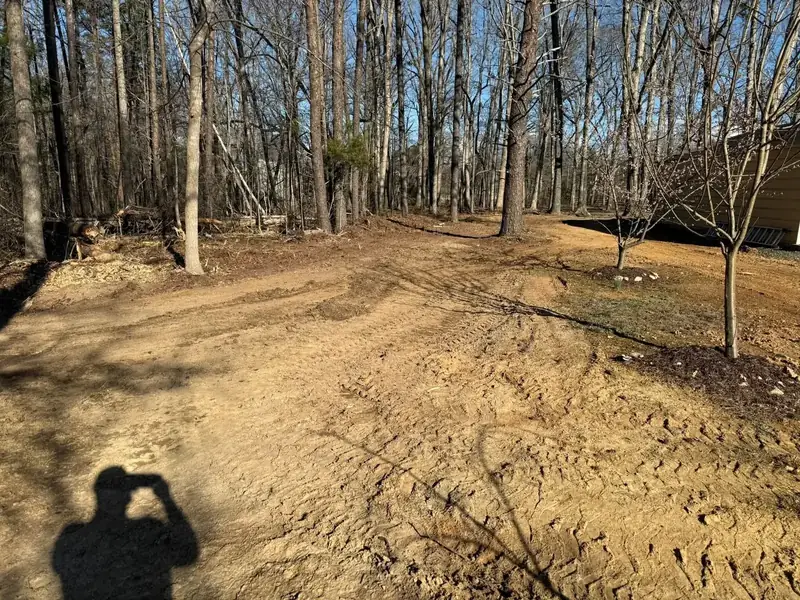
- Backyard reclamation — a half-acre of privet, ivy and sweetgum behind a house turned into usable yard
- Five- to ten-acre tracts on the Jordan Lake side toward New Hill with buffer-limited clearing
What bush hogging jobs look like around Cary
Around I-540, the properties that call us for bush hogging tend to be last wooded builder lots out west along Green Level Church Road and Carpenter Fire Station Road needing permitted lot clearing and pad prep.
Closer to NC-54 it's more often back acreage on rural homesites that's getting away — different layout, same machine, and the estimate reflects the difference honestly.
Cary isn't one kind of ground, and we don't price it like it is.
We also cover bush hogging in Pittsboro, Durham and Sanford, so if you've got property in more than one spot we can often batch the work.
Why Cary property owners call A&R
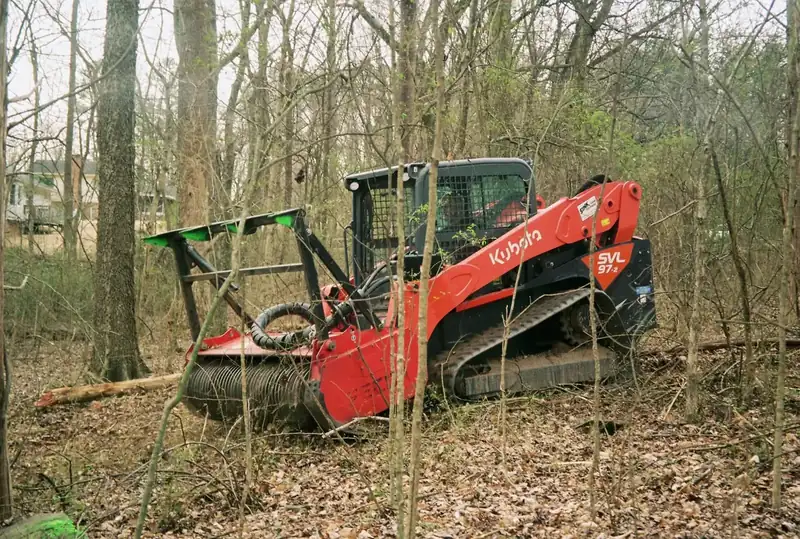
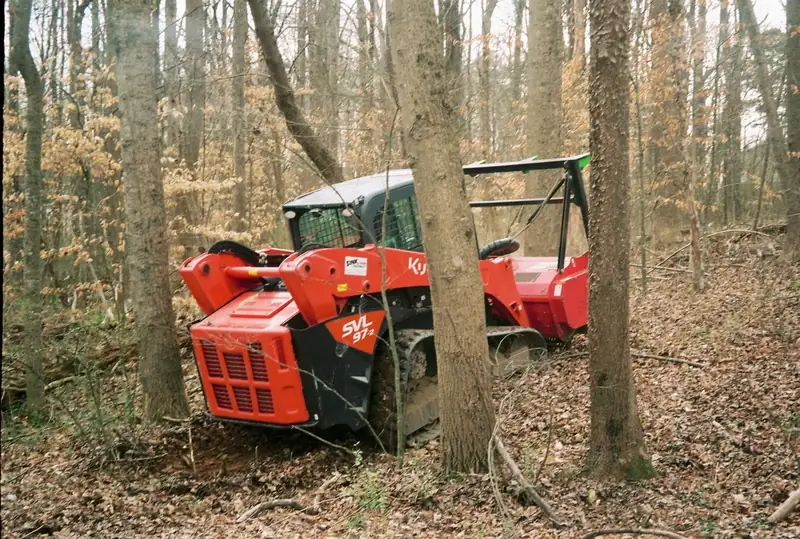
The track machine mows ground in Cary that a tractor-mounted hog can't — steep banks, soft bottoms, tight corners around buildings. You get the whole field cut, not just the part the tractor could reach.
Field mowing in Wake County is easiest on a schedule. Get in touch and we'll set up spring and late-summer cuts.
Bush Hogging in Cary: questions
Can you mow steep or wet ground?
Better than a tractor can. The track machine climbs slopes that would roll a tractor and crosses soft ground without sinking. Saturated bottoms still need to dry some before any machine should be on them, but we can usually mow the rest of the field and come back for the low end.
How often should a field be bush hogged?
Twice a year keeps most Piedmont fields open — once in late spring after the first flush and once in late summer before the sweetgum and pine saplings harden off. Once a year works on fields that are mostly grass. Hay fields and wildlife ground have their own timing, and we'll work around nesting season if it applies.
How far is A&R Land Services from Cary?
We're based in Greensboro, about 1 hour 15 minutes from Cary. Wake County is inside the radius we work every week, so there's no long-haul mobilization charge built into your estimate.
Do you handle bush hogging near Black Creek Greenway and Jordan Lake (west edge)?
Yes. We work throughout Cary and the surrounding Wake County area, including properties around Black Creek Greenway, Jordan Lake (west edge) and I-540. If you're outside the town limits, send the address and we'll confirm it's in range.
What does bush hogging typically involve on a Cary property?
Reclaimed pasture that needs mowing to beat back resprouts is the most common version of it around Cary. Driveway and road edges cleaned of thrown material, fence lines checked, and a walk with you before we leave. If you want it on the schedule for next season, we'll set it then. One-time cut versus a scheduled rotation is the factor that moves the price most on Wake County jobs, and we'll walk through it with you on site.