
Every grown-up lot and field in Wake County started as a skipped mowing. We mow Raleigh ground before it gets to that point, and when it already has, we'll tell you honestly whether it's a cutter job or a mulcher job.
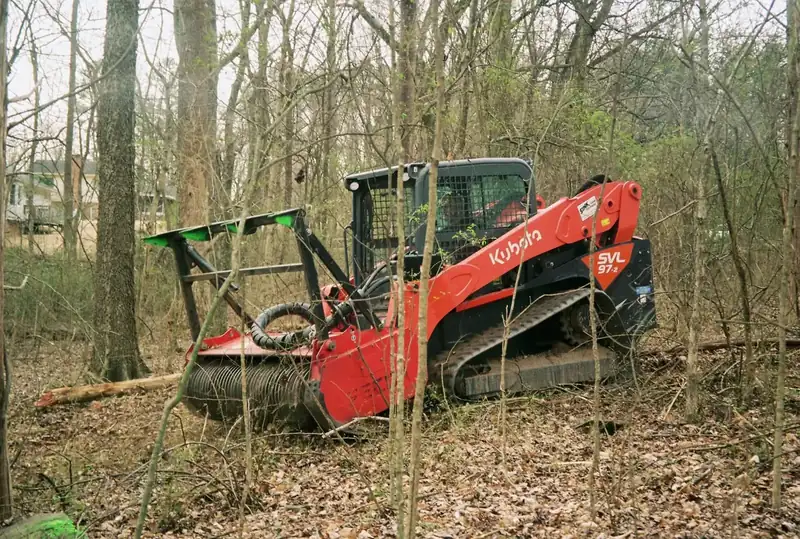
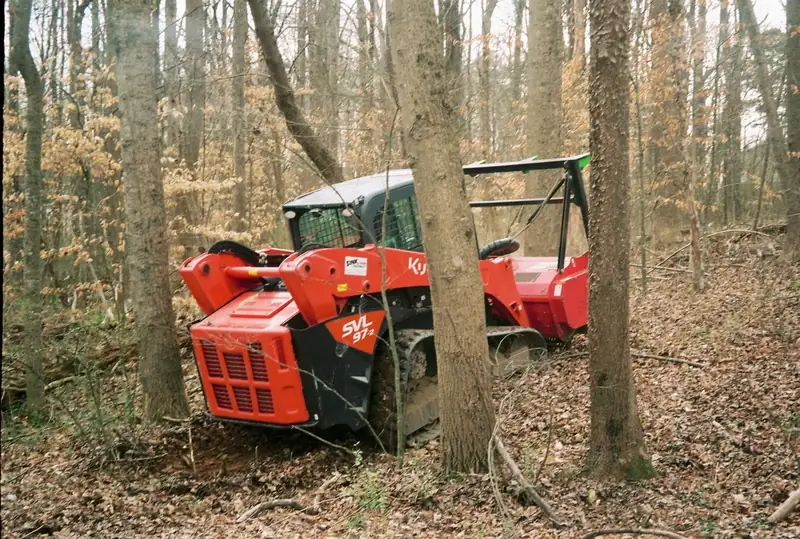
Fields around Raleigh go from fescue to broomsedge to briars to sapling pine in about that order, and the cutter handles everything up through the small saplings. Past that, Wake County fields are a mulching job, and we bring the other head.
Raleigh ground conditions and how they shape bush hogging
Raleigh sits on the eastern edge of the Piedmont where the ground is Cecil, Appling and Wedowee sandy clay loam over granite and gneiss — well drained, workable, and generally kinder than the Triassic clay in Durham to the west. Falls Lake and the Neuse River define the north and east, with Crabtree Creek, Walnut Creek and Swift Creek draining the city. Floodplains along those creeks grow up in sweetgum, box elder, privet and wisteria that hides old fence and trash. Wooded lots that were skipped during the 1980s and 90s booms are now oak-hickory with loblolly and a dense privet and English ivy understory.
Around Falls Lake, US-64 and Crabtree Creek, the properties we're usually called to look like this:
- Former farm and timber tracts on the south and east sides along Rock Quarry Road, Poole Road and Old Stage Road being cleared for infill subdivisions
- Church and school properties with wooded back acreage to open for parking or fields
- Commercial outparcels along US-64, US-401 and US-70 needing stumps pulled and rough grading
What bush hogging jobs look like around Raleigh
A typical Raleigh call for bush hogging looks like this: Former farm and timber tracts on the south and east sides along Rock Quarry Road, Poole Road and Old Stage Road being cleared for infill subdivisions. We've handled that exact situation around Crabtree Creek and William B. Umstead State Park more times than we can count.
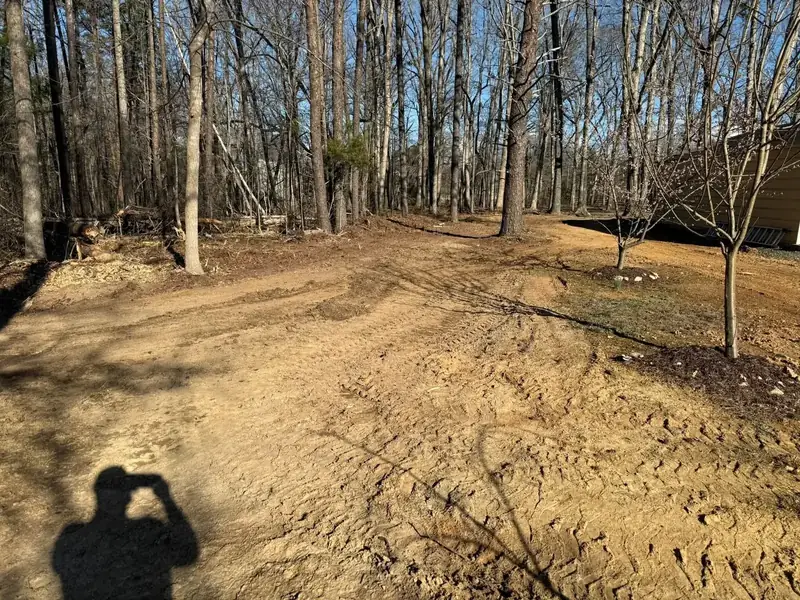
The other common one is Vacant lots facing overgrowth notices from the city or county, which usually means a tighter work area and more care around what stays.
If your property is somewhere in between, send the address and we'll tell you which side of the line it falls on.
Cary, Chapel Hill and Durham are in the same loop as Raleigh for us — same crew, same pricing basis.
Why Raleigh property owners call A&R
We're honest about the line between mowing and mulching. If your Wake County field is past what a cutter should handle, we'll say so rather than leave you with torn-up stubs and a beat-up machine on your bill.
For bush hogging and field mowing in Raleigh, call (336) 392-8138. We can usually get there fast, especially if the county's already sent a letter.
Bush Hogging in Raleigh: questions
Can you mow steep or wet ground?
Better than a tractor can. The track machine climbs slopes that would roll a tractor and crosses soft ground without sinking. Saturated bottoms still need to dry some before any machine should be on them, but we can usually mow the rest of the field and come back for the low end.
Can you mow a lot that got a code violation notice?
Yes, and that's a common call. Greensboro, High Point, Burlington and most Triad towns enforce overgrowth ordinances on vacant lots. We can usually get a lot mowed within a few days of the call, and we'll leave the edges clean enough that the inspector signs off.
How far is A&R Land Services from Raleigh?
We're based in Greensboro, about 1 hour 20 minutes from Raleigh. Wake County is inside the radius we work every week, so there's no long-haul mobilization charge built into your estimate.
Do you handle bush hogging near Falls Lake and US-64?
Yes. We work throughout Raleigh and the surrounding Wake County area, including properties around Falls Lake, US-64 and Crabtree Creek. If you're outside the town limits, send the address and we'll confirm it's in range.
What should I expect from a bush hogging job in Wake County?
Pasture edges, fence rows and corners a tractor can't reach is the most common version of it around Raleigh. We look at the growth height and type, check for hidden fence, rock, wire and junk, and find the wet spots. If the growth is past what a cutter should handle, we'll tell you it's a mulching job. Access and how far the field is from where we can unload is the factor that moves the price most on Wake County jobs, and we'll walk through it with you on site.