
Bush hogging is the maintenance that keeps a field a field. A rotary cutter on the front of a track loader knocks down grass, weeds, briars and saplings up to a couple of inches, and done once or twice a year it keeps the Piedmont from turning your open ground back into a pine thicket. Skip it for three seasons and you've got a brush clearing job. Skip it for ten and you need a forestry mulcher. We do all three, which means we'll tell you honestly which one your field needs.
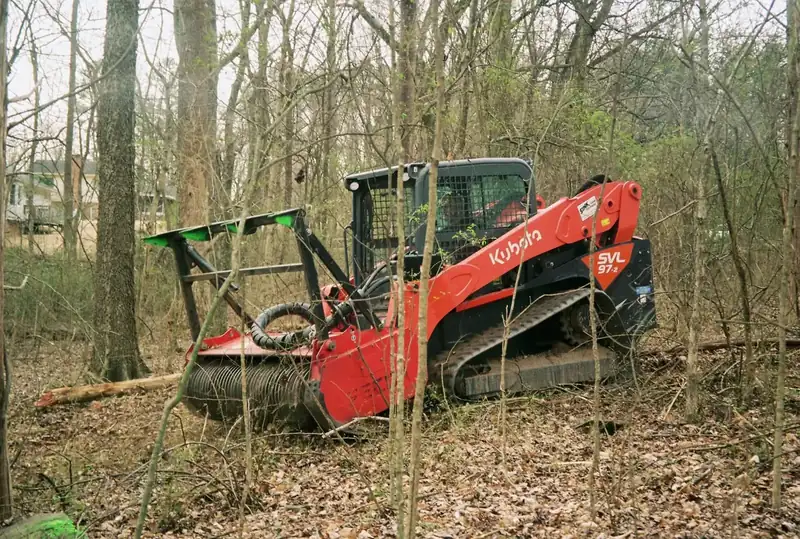
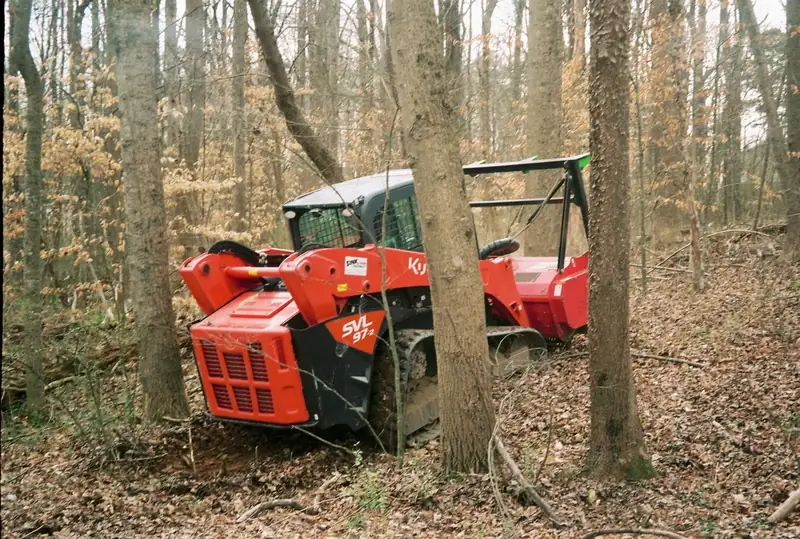
Around Greensboro, bush hogging calls come from a few directions: the vacant lot the city sent a notice about, the hay field that didn't get cut this year, the pasture edges the tractor can't reach, the back acreage on a homesite that's getting away, and the farm that needs a cutting between the tenant leaving and the new one arriving. We run a brush cutter attachment on a compact track machine, which handles heavier growth and rougher ground than a tractor-mounted bush hog and gets into places a tractor won't.
Clark runs the machine himself. He's a veteran and a working firefighter, and he treats a mowing job with the same attention as a clearing job — fence posts and hidden junk found before the blade hits them, edges cut clean, nothing left torn up. Estimates are free, and we offer scheduled cuts if you'd rather not think about it.
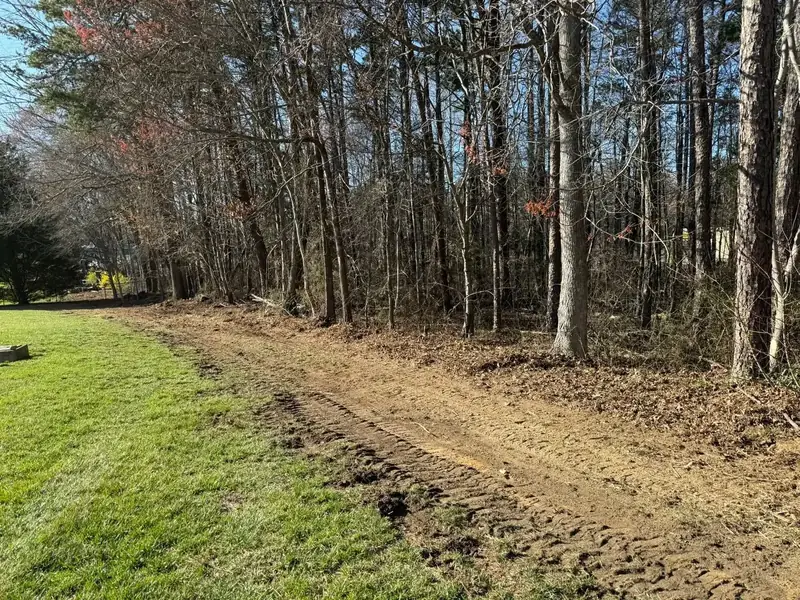
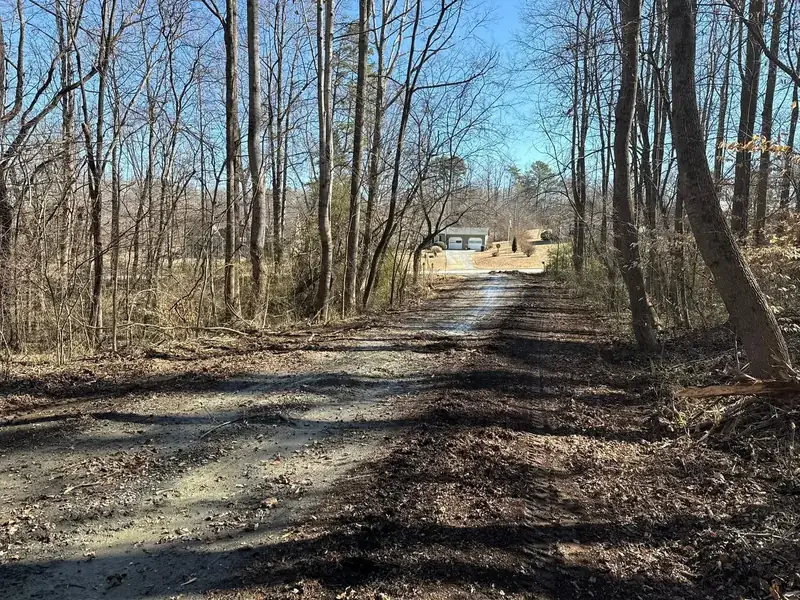
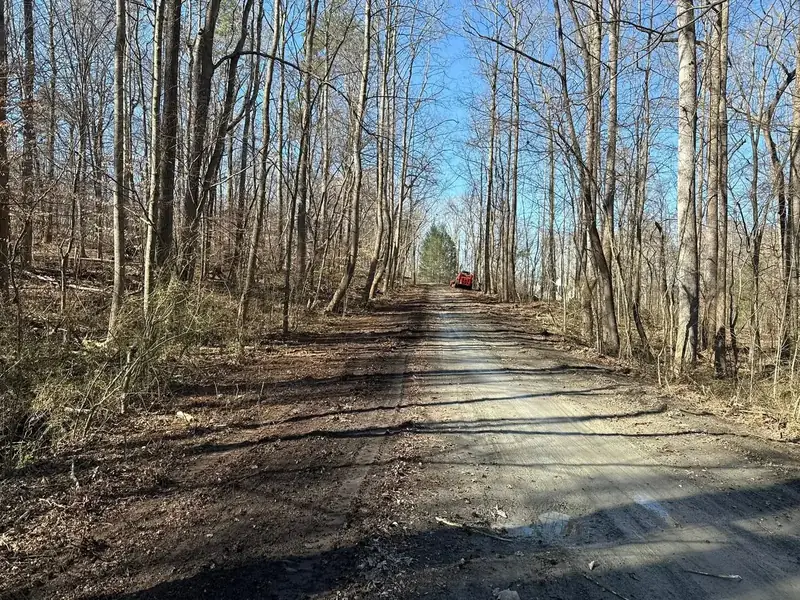
How bush hogging works on Piedmont ground
The brush cutter is a heavy-duty rotary mower built for growth a lawn mower or a finish mower can't touch — waist-high broomsedge and fescue gone to seed, blackberry and briars, honeysuckle mats, sapling sweetgum and pine up to two or three inches. It leaves the material chopped and lying on the ground, which breaks down into the soil over a season. It doesn't mulch like the forestry head does; anything over three inches or so should be a mulching job, and we'll say that on the walk-through instead of beating up the cutter and leaving stubs.
Being on a track loader instead of a tractor changes what we can mow. The machine climbs slopes a tractor would roll on, handles wet spots without sinking, and pushes through growth that would stall a PTO-driven hog. It also gets into tight places — around outbuildings, along fence lines, under low limbs, between the house and the creek — where a tractor with a cutter behind it can't turn. That's why a lot of our bush hogging is the edges and corners the owner's own tractor couldn't reach.
Timing in the Piedmont matters. A spring cut before the briars set and a late-summer cut before the sweetgum saplings harden are the two that keep a field open. Cutting a hay field or a conservation field also runs into bird nesting season — the state and the NRCS recommend holding off mid-spring to mid-summer on ground managed for wildlife, and we'll work around that if it applies. On a lot facing a code notice, timing is whenever the letter came, and we can usually get there fast.
What the job looks like
Walk the field
We look at the growth height and type, check for hidden fence, rock, wire and junk, and find the wet spots. If the growth is past what a cutter should handle, we'll tell you it's a mulching job.
Estimate or schedule
A written price for a one-time cut, or a per-visit rate on a schedule — spring and late summer for most fields. No contract required, just a calendar.
Mow
Perimeter and fence lines first, then the interior in passes, working tight around buildings and under limbs. Obstacles found during the walk get flagged and mowed around.
Edges and walk-through
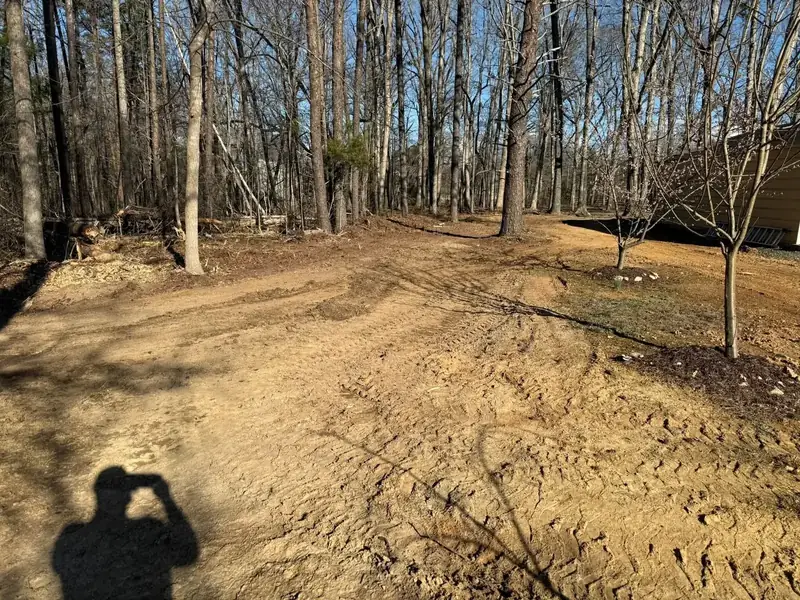
Driveway and road edges cleaned of thrown material, fence lines checked, and a walk with you before we leave. If you want it on the schedule for next season, we'll set it then.
Best fit for
- Vacant lots facing overgrowth notices from the city or county
- Hay fields and pasture that missed a cutting
- Pasture edges, fence rows and corners a tractor can't reach
- Back acreage on rural homesites that's getting away
- Fields between tenants or between crops
- Reclaimed pasture that needs mowing to beat back resprouts
- Hunting plots, trails and shooting lanes kept open through the season
What drives the price
We don't quote bush hogging from a chart. These are the things that move the number, and we'll walk through each one with you on site:
- Acreage and the height and thickness of the growth
- Saplings and briars versus plain grass and weeds
- Obstacles — fence, rock, junk, wet spots — that slow the work
- Slope and how rough the ground is
- One-time cut versus a scheduled rotation
- Access and how far the field is from where we can unload
Equipment we bring
- Compact track loader with a brush cutter / rotary mower attachment
- Forestry mulching head for growth that's gotten past the cutter
- Grapple for pulling junk and downed limbs out of the field first
- Root rake for cleaning out old wire found under the growth
Bush Hogging questions
How much does bush hogging cost per acre in NC?
Mowing is the least expensive thing we do with the machine, and it's priced by acreage and growth. Tall grass and weeds on open, flat ground go fast. Briars, saplings and a field full of hidden junk take longer. Scheduled cuts cost less per visit than a one-time rescue because the growth never gets heavy. We give a written number after seeing the field, and the estimate is free.
What's the difference between bush hogging and forestry mulching?
The cutter handles grass, weeds, briars and saplings up to two or three inches, and leaves the material chopped on the ground. The mulcher grinds brush and trees up to eight or ten inches into chips. If your field has been let go long enough that the saplings are thicker than your thumb, it's a mulching job, and we'll tell you that rather than tear up the cutter.
How often should a field be bush hogged?
Twice a year keeps most Piedmont fields open — once in late spring after the first flush and once in late summer before the sweetgum and pine saplings harden off. Once a year works on fields that are mostly grass. Hay fields and wildlife ground have their own timing, and we'll work around nesting season if it applies.
Can you mow a lot that got a code violation notice?
Yes, and that's a common call. Greensboro, High Point, Burlington and most Triad towns enforce overgrowth ordinances on vacant lots. We can usually get a lot mowed within a few days of the call, and we'll leave the edges clean enough that the inspector signs off.
Can you mow steep or wet ground?
Better than a tractor can. The track machine climbs slopes that would roll a tractor and crosses soft ground without sinking. Saturated bottoms still need to dry some before any machine should be on them, but we can usually mow the rest of the field and come back for the low end.
What areas do you bush hog in?
Greensboro and about an hour and twenty minutes out — the Triad, up to the Virginia line, west to Mount Airy and Elkin, south to Salisbury, Albemarle and Sanford, and east to Durham, Chapel Hill and Raleigh. For scheduled mowing we like to group fields by area, so ask about neighbors.