
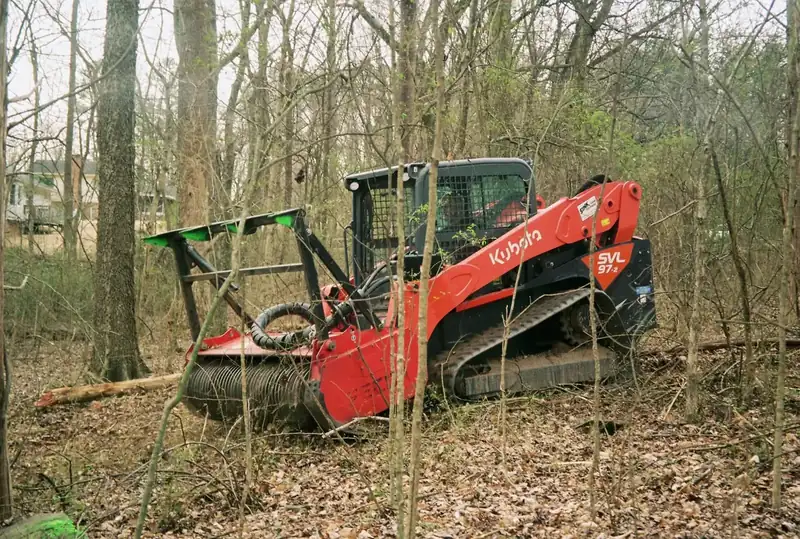
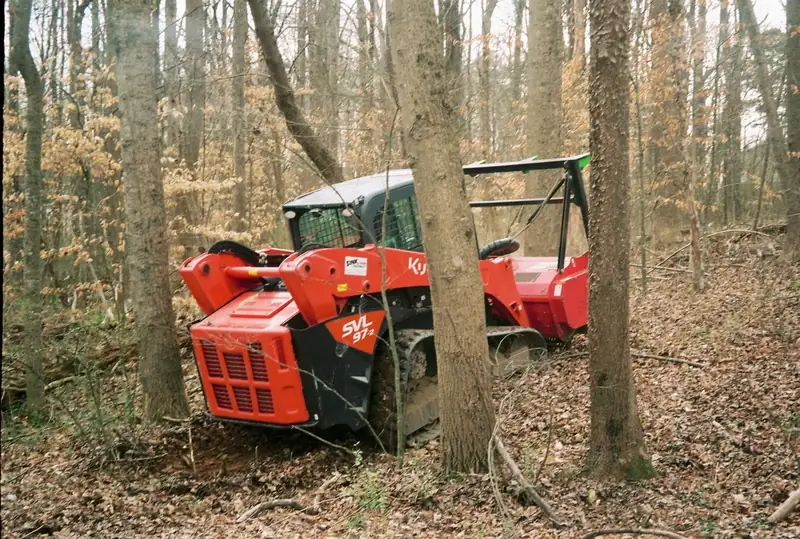
A field in Asheboro that gets bush hogged twice a year stays a field. One that doesn't is a brush job in three seasons and a mulching job in ten. A&R Land Services mows overgrown fields, lots and pasture edges across Randolph County with a brush cutter on a track machine — we're about 35 minutes away in Greensboro.
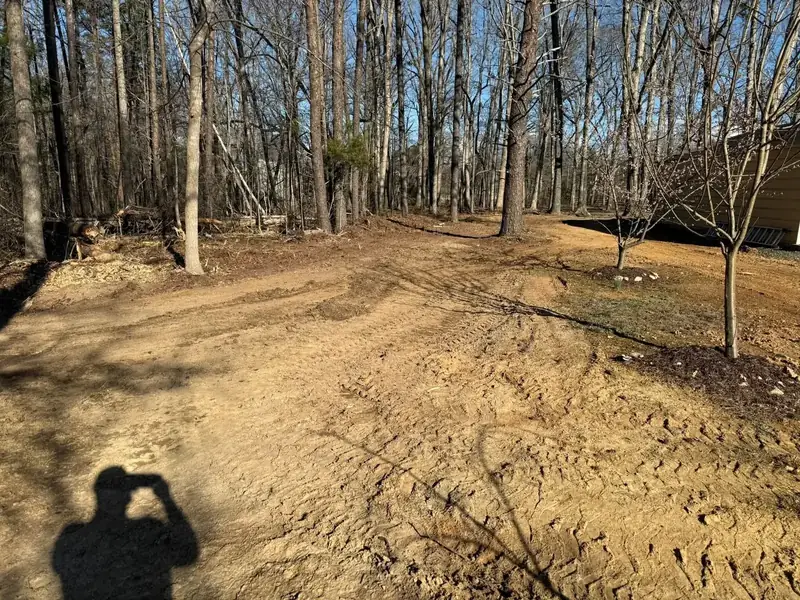
Asheboro and the surrounding towns enforce overgrowth ordinances on vacant lots, and a notice usually comes with a short deadline. We can get a Randolph County lot mowed and the edges cleaned within days of the call.
Asheboro ground conditions and how they shape bush hogging
Asheboro is the northern doorstep of the Uwharries, and the dirt changes the minute you cross out of Guilford County on US-220. Instead of deep red clay you get the Carolina slate belt: Badin, Tatum, Georgeville and Herndon silt loams that are shallow over fractured slate and metavolcanic rock, with Cid and Misenheimer on the wetter flats. It is good ground to grade when it is dry and miserable when it is wet, and there is rock close enough to the surface that a dozer blade will find it on most hillsides. Deep River runs along the east side of town, and Back Creek, Hasketts Creek and Caraway Creek cut the rest.
Around Lake Reese, NC-42 and Deep River, the properties we're usually called to look like this:
- Wooded 2–5 acre home lots off Old Cedar Falls Road, NC-42 and Dixie Drive in the growth corridor along I-73/I-74
- Rocky hunting and cabin tracts south of town toward the Birkhead Wilderness and the Uwharrie National Forest
- Commercial outparcels and industrial sites along US-64 and the Zoo Parkway needing rough grading and clearing before a sale
What bush hogging jobs look like around Asheboro
Most of our bush hogging work in Asheboro comes from two directions. First, wooded 2–5 acre home lots off Old Cedar Falls Road, NC-42 and Dixie Drive in the growth corridor along I-73/I-74. Second, pasture edges, fence rows and corners a tractor can't reach.
Both show up regularly along Deep River and Birkhead Mountains Wilderness, and both are jobs we can usually walk, quote and schedule inside a couple of weeks.
Neighbors in Franklinville, Ramseur and Randleman call us for the same work; Asheboro sits right in the middle of that route.
Why Asheboro property owners call A&R
Greensboro to Asheboro is about 35 minutes, which makes scheduled mowing practical. We group Randolph County fields by area and come through on a rotation, which keeps the per-visit price down.
Send us the address and a photo of the growth. We'll tell you whether it's a mowing job or a mulching job in Asheboro and put a number on it.
Bush Hogging in Asheboro: questions
How much does bush hogging cost per acre in NC?
Mowing is the least expensive thing we do with the machine, and it's priced by acreage and growth. Tall grass and weeds on open, flat ground go fast. Briars, saplings and a field full of hidden junk take longer. Scheduled cuts cost less per visit than a one-time rescue because the growth never gets heavy. We give a written number after seeing the field, and the estimate is free.
Can you mow a lot that got a code violation notice?
Yes, and that's a common call. Greensboro, High Point, Burlington and most Triad towns enforce overgrowth ordinances on vacant lots. We can usually get a lot mowed within a few days of the call, and we'll leave the edges clean enough that the inspector signs off.
How far is A&R Land Services from Asheboro?
We're based in Greensboro, about 35 minutes from Asheboro. Randolph County is inside the radius we work every week, so there's no long-haul mobilization charge built into your estimate.
Do you handle bush hogging near Lake Reese and NC-42?
Yes. We work throughout Asheboro and the surrounding Randolph County area, including properties around Lake Reese, NC-42 and Deep River. If you're outside the town limits, send the address and we'll confirm it's in range.
What should I expect from a bush hogging job in Randolph County?
Fields between tenants or between crops is the most common version of it around Asheboro. A written price for a one-time cut, or a per-visit rate on a schedule — spring and late summer for most fields. No contract required, just a calendar. Obstacles — fence, rock, junk, wet spots — that slow the work is the factor that moves the price most on Randolph County jobs, and we'll walk through it with you on site.