
If the city sent a letter about your Haw River lot or the back field got away from you this summer, we'll knock it down. Veteran and fireman owned, based in Greensboro, and bush hogging in Alamance County is the fastest-scheduling work we do.
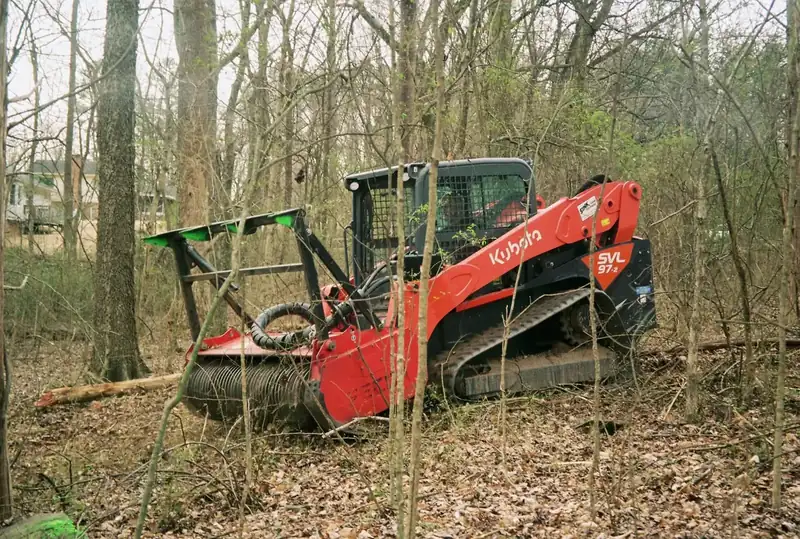
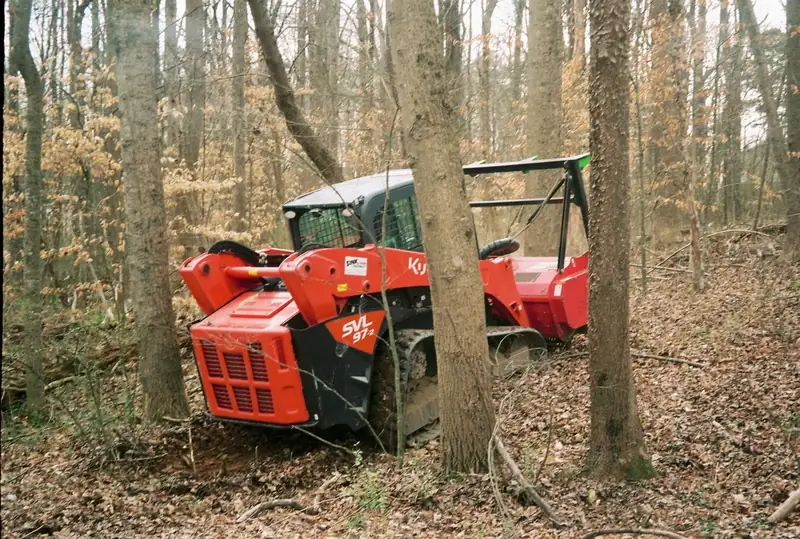
Pasture edges in Alamance County — along the creek, under the tree line, around the pond — are where the tractor stops and the brush starts. On Haw River farms we mow those strips with the track machine so the pasture stays the size it was fenced to be.
Haw River ground conditions and how they shape bush hogging
The river floodplain is the big constraint — anything in it is subject to flood rules, and we don't grade in the bottoms without the owner confirming what's allowed. Iredell clay on the terraces has to be dry to grade and ruts badly when it's not. Alamance County erosion control covers disturbance past an acre, and Haw River stream buffers apply along the river and its creeks. Invasive removal along the banks is best done in late summer when kudzu and knotweed are fully up and the crowns are easy to find.
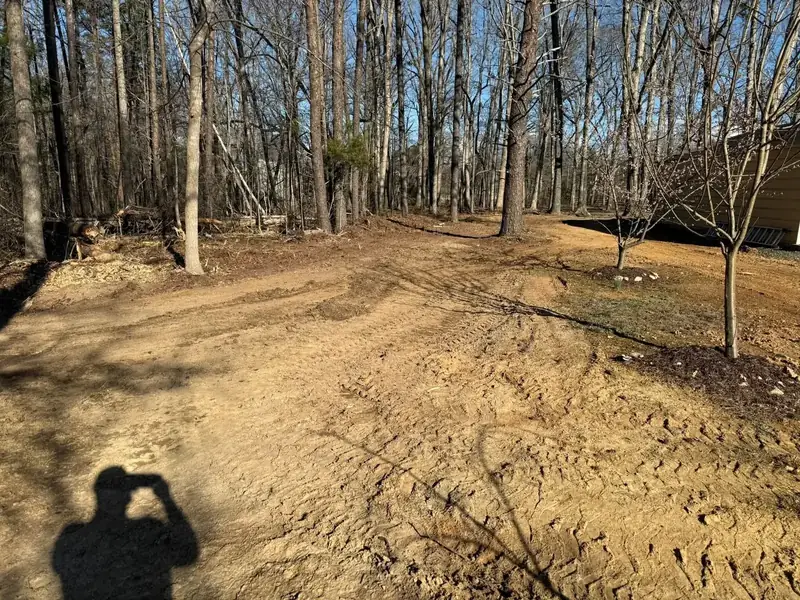
Around Stony Creek, Lang Street and NC-49, the properties we're usually called to look like this:
- Commercial and warehouse tracts along I-40/I-85 on the south side needing clearing and rough grading
- Riverbank parcels needing invasive removal and trail cutting within the buffer rules
- Thirty- to one-hundred-acre farms along NC-49 and Trollingwood-Hawfields Road reclaiming pasture and fence rows
What bush hogging jobs look like around Haw River
A typical Haw River call for bush hogging looks like this: Commercial and warehouse tracts along I-40/I-85 on the south side needing clearing and rough grading. We've handled that exact situation around NC-49 and the Trollingwood community more times than we can count.
The other common one is Reclaimed pasture that needs mowing to beat back resprouts, which usually means a tighter work area and more care around what stays.
If your property is somewhere in between, send the address and we'll tell you which side of the line it falls on.
We also cover bush hogging in Mebane, Burlington and Saxapahaw, so if you've got property in more than one spot we can often batch the work.
Why Haw River property owners call A&R
The track machine mows ground in Haw River that a tractor-mounted hog can't — steep banks, soft bottoms, tight corners around buildings. You get the whole field cut, not just the part the tractor could reach.
Field mowing in Alamance County is easiest on a schedule. Get in touch and we'll set up spring and late-summer cuts.
Bush Hogging in Haw River: questions
How often should a field be bush hogged?
Twice a year keeps most Piedmont fields open — once in late spring after the first flush and once in late summer before the sweetgum and pine saplings harden off. Once a year works on fields that are mostly grass. Hay fields and wildlife ground have their own timing, and we'll work around nesting season if it applies.
What's the difference between bush hogging and forestry mulching?
The cutter handles grass, weeds, briars and saplings up to two or three inches, and leaves the material chopped on the ground. The mulcher grinds brush and trees up to eight or ten inches into chips. If your field has been let go long enough that the saplings are thicker than your thumb, it's a mulching job, and we'll tell you that rather than tear up the cutter.
How far is A&R Land Services from Haw River?
We're based in Greensboro, about 32 minutes from Haw River. Alamance County is inside the radius we work every week, so there's no long-haul mobilization charge built into your estimate.
Do you handle bush hogging near Stony Creek and Lang Street?
Yes. We work throughout Haw River and the surrounding Alamance County area, including properties around Stony Creek, Lang Street and NC-49. If you're outside the town limits, send the address and we'll confirm it's in range.
What does bush hogging typically involve on a Haw River property?
Vacant lots facing overgrowth notices from the city or county is the most common version of it around Haw River. Driveway and road edges cleaned of thrown material, fence lines checked, and a walk with you before we leave. If you want it on the schedule for next season, we'll set it then. One-time cut versus a scheduled rotation is the factor that moves the price most on Alamance County jobs, and we'll walk through it with you on site.