
Before a septic system can go in, the area the county approved for it has to be cleared — trees, brush and stumps out of the tank location and the drain field, a path opened for the installer's equipment, and the ground left in a condition the drain field can actually work in. That last part is where septic clearing is different from every other kind of clearing. The drain field depends on the soil's ability to absorb water, and a track machine driven back and forth across wet clay will compact it to the point the field fails inspection or fails in service.
We clear septic areas across the Triad with that in mind. The county Environmental Health office evaluates the soil, marks the approved area, and issues the improvement permit; we clear to those flags. Where the drain field lines will run, we mulch and remove stumps with the lightest touch the job allows, work from the edges when the ground is wet, and keep the heavy traffic in the tank and access areas instead of on the field. Trees that would send roots into the lines come out; trees outside the area stay if you want them.
Clark is on the machine — veteran, working firefighter, owner. We're not a licensed septic installer; we clear and prep so one can do their job, and we've worked alongside enough of them to know what they need. Free estimates across the Triad and about an hour and twenty minutes from Greensboro.
How septic area clearing works on Piedmont ground
The job starts with the permit. In North Carolina the county Environmental Health department evaluates the lot, determines where a septic system can go and what type, and issues an improvement permit with a layout — tank location, drain field area, repair area set aside for the future. Those flags and that drawing are what we clear to. Clearing before the evaluation is a mistake we see often: the soil scientist wants to see undisturbed ground, and heavy equipment across the best soil on the lot can cost you the approved area. Get the permit first, then call us.
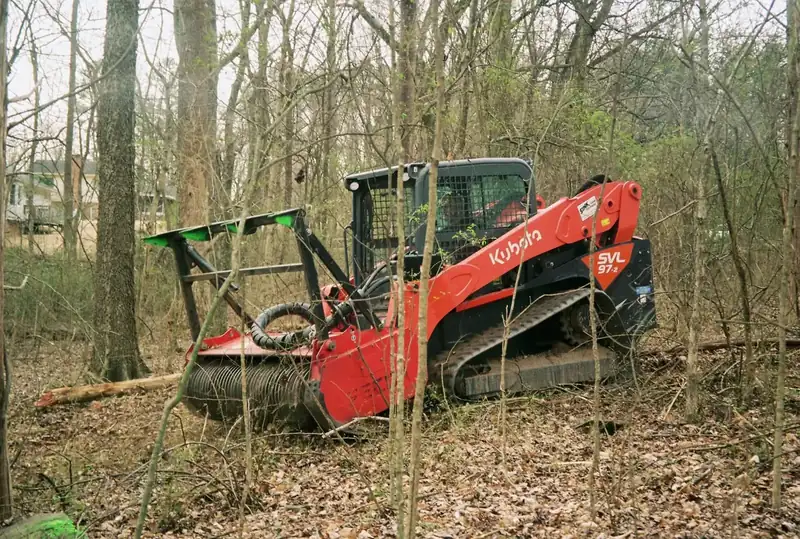
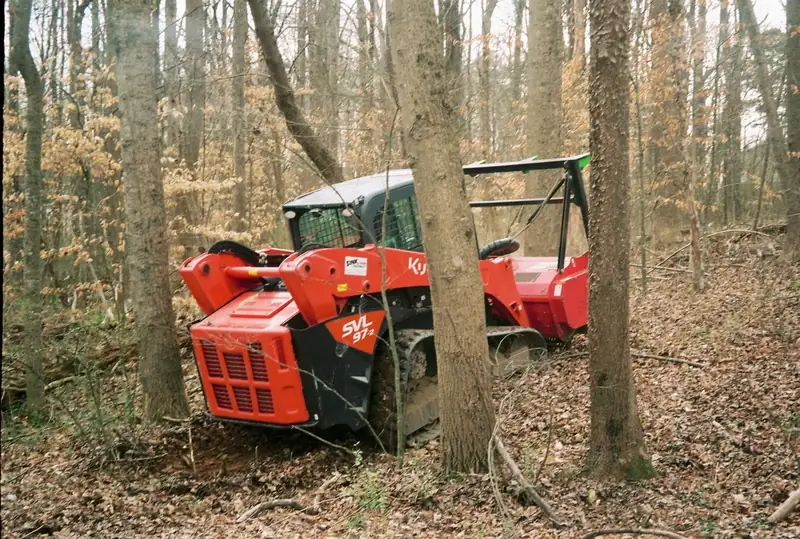
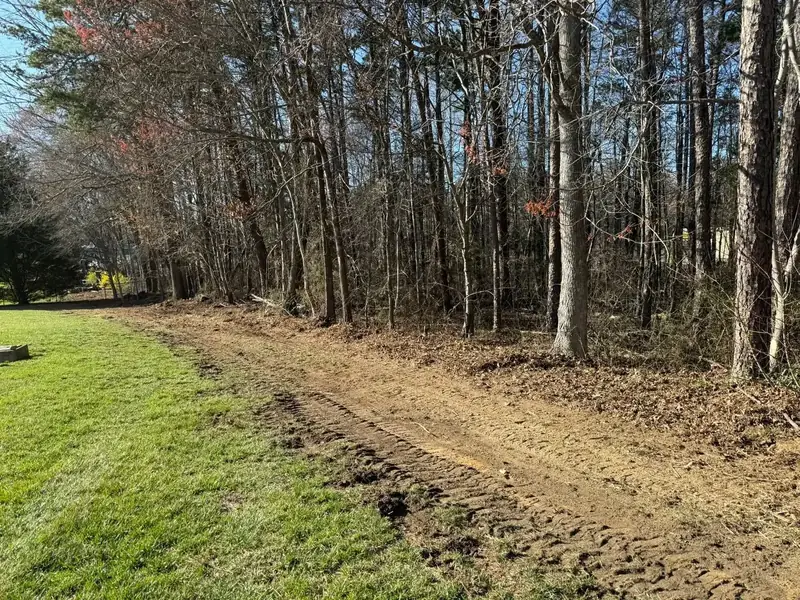
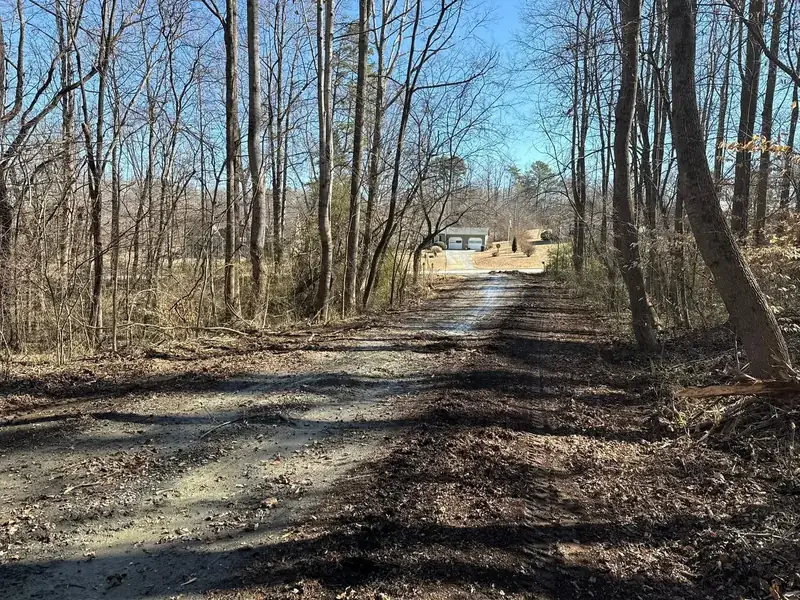
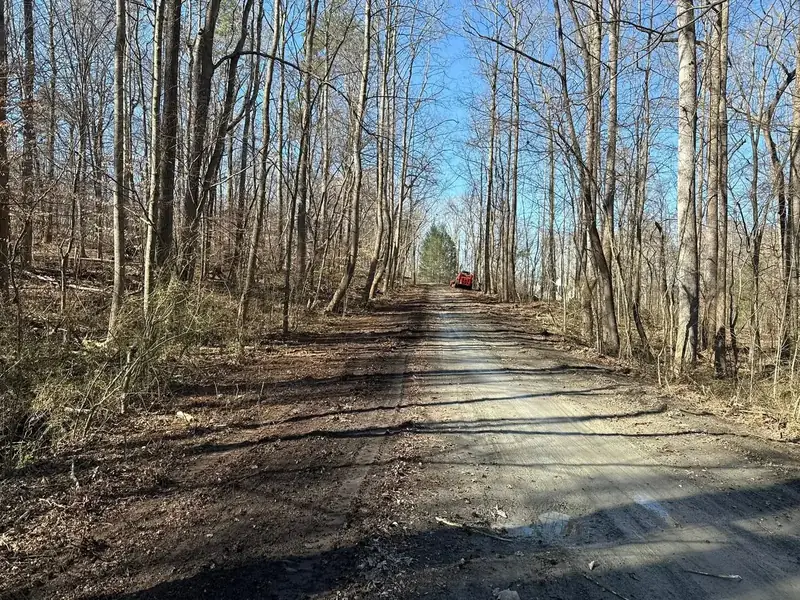
Clearing the area means taking out everything in the tank location, the drain field and the repair area, plus a path wide enough for the installer's excavator and their delivery trucks to reach the tank hole. Brush and small trees get mulched. Larger trees get felled and handled with the grapple. Stumps come out of the tank hole and the drain field — a stump left in a drain field line is a root problem and a settlement problem — and we fill the stump holes with clay and compact them so the installer's trenches don't cross a soft spot. Mulch gets raked off the drain field area so it doesn't end up in the trenches.
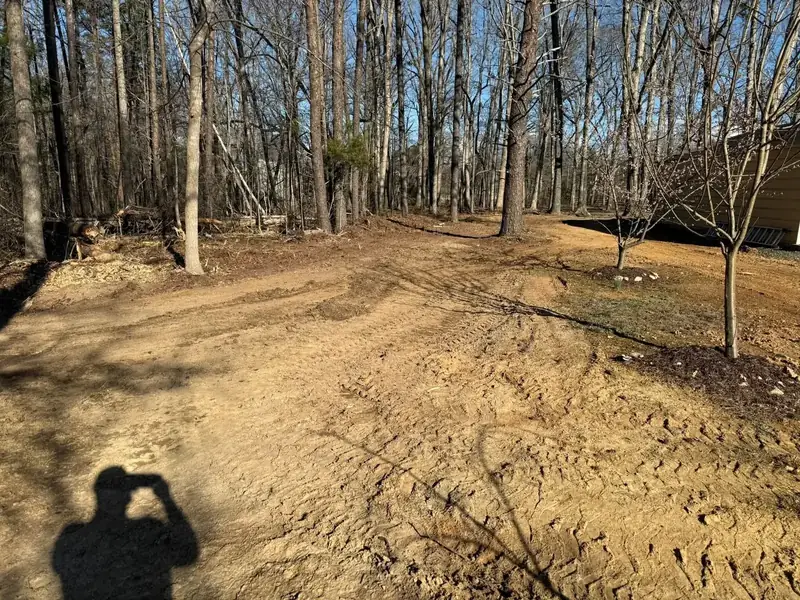
What we don't do is grade the drain field flat or drive across it any more than the job requires. Drain fields work on the natural soil structure, and the installer will typically want the field close to natural grade with the topsoil in place. We keep the mulcher light, the tracks off the trench lines when the ground is wet, and the finish rough rather than smooth. If the lot also needs the house pad built, the drive cut or a trench for the gravity line, we do that in the same visit with the drain field flagged off as a no-go for the heavy work.
What the job looks like
Permit and layout review
We look at the improvement permit and the Environmental Health layout, walk the flagged area with you, and identify which trees and stumps have to come out and where the installer's access runs.
Estimate
A written scope: what's cleared, how stumps are handled, where mulch goes, how the drain field soil is protected, and whether any pad, drive or trench work is included.
Clear light over the field
Brush and small trees mulched, big trees felled and grappled out, stumps pulled from the tank hole and field lines and the holes compacted. Heavy traffic kept to the tank and access areas.
Rake and hand off
Mulch raked off the drain field area, access path left firm, field left near natural grade. We walk it with you or the installer before they schedule the install.
Best fit for
- New home sites with a septic improvement permit in hand
- Manufactured home placements on rural lots
- Septic repairs and replacements where the new field is in the woods
- Lots where the approved area is behind the house in overgrowth
- Installers who need the area cleared before they mobilize
- Repair areas being cleared for a future system
What drives the price
We don't quote septic area clearing from a chart. These are the things that move the number, and we'll walk through each one with you on site:
- Size of the approved area including the repair area
- Tree size and density in the tank and field locations
- Number and size of stumps to pull and backfill
- Length of the installer's access path
- Debris handling — mulch in place, raked off, or hauled
- Ground conditions and the care needed to protect the field soil
- Pad, drive or trench work added to the same visit
Equipment we bring
- Compact track loader with forestry mulcher for brush and small trees
- Grapple for felled timber
- Stump bucket and mini excavator with thumb for stump removal
- Root rake for pulling roots and raking mulch off the field
- Dump trailer if debris has to leave the site
Septic Area Clearing questions
How much does it cost to clear a septic area?
A typical drain field and tank area is a fraction of an acre, so the cost is driven by how big the trees are and how many stumps have to come out rather than by acreage. A brushy area with saplings is a few hours. A field location in mature hardwoods with a dozen stumps to pull and backfill is most of a day. We walk the flagged area and give a written price. The free estimate is easy to combine with a pad or a driveway quote.
Should I clear the land before the septic soil evaluation?
No. The county soil scientist needs to see undisturbed ground, and running heavy equipment across the lot before the evaluation can compact the best soil and cost you the approved area or push you into a more expensive system type. Get the Environmental Health evaluation and improvement permit first, then clear to the flags.
Can you drive equipment over the drain field area?
As little as possible, and not when it's wet. Drain fields depend on the soil's natural structure to absorb water, and compaction ruins that. We mulch from the edges, keep the heavy work in the tank and access areas, and stay off the field lines when the clay is saturated. The installer will thank you for it and so will the inspector.
Do the stumps have to come out of the drain field?
Yes. Roots grow into drain lines and a rotting stump leaves a void the trench can settle into. We pull the stumps in the field and tank areas, backfill the holes with clay and compact them. Outside the approved area, stumps can be ground or left depending on what you want.
Do you install septic systems?
No — that's a licensed trade in North Carolina and we're not that trade. We clear the area, pull the stumps, open the access, and can dig for the installer if they want. If you need an installer, we can point you to ones we've worked alongside in the Triad.
What areas do you serve for septic clearing?
Greensboro and the Triad plus about an hour and twenty minutes out — Rockingham and Caswell up to Virginia, Surry and Yadkin, Davidson, Rowan, Stanly, Randolph and Lee to the south, and Alamance, Orange, Durham and Wake to the east. Most of that territory is on septic outside the towns.