

A manufactured home shows up on a truck, and the site has to be ready for it: a level, compacted pad the right size for the home and its piers, a driveway the transporter can actually negotiate, a cleared route from the road to the pad with enough turning room, and a lot graded so water runs away from the crawl space. The set-up crew, the dealer and the county inspector all expect that work done before delivery day, and when it isn't the delivery gets rescheduled and you pay for it.
We prep manufactured and mobile home sites across the Triad — single-wides, double-wides and modulars on family land, replacement homes on existing lots, and new placements on rural acreage. The ground here is red clay over thin topsoil, which makes a solid pad when it's stripped and compacted properly and a mess when it's scraped level and left. We also clear and grade for the septic installer, cut the drive, and trench for water and power when the licensed trades are ready.
Clark does the work himself — veteran, working firefighter, owner. He's dealt with enough transporters to know what a delivery driver needs from a site, and he'll walk it with your dealer or set-up crew so the pad, the turn and the approach all work. We're not a licensed installer or a general contractor; we do the dirt. Free estimates across the Triad and roughly an hour and twenty minutes from Greensboro.
How mobile home site prep works on Piedmont ground
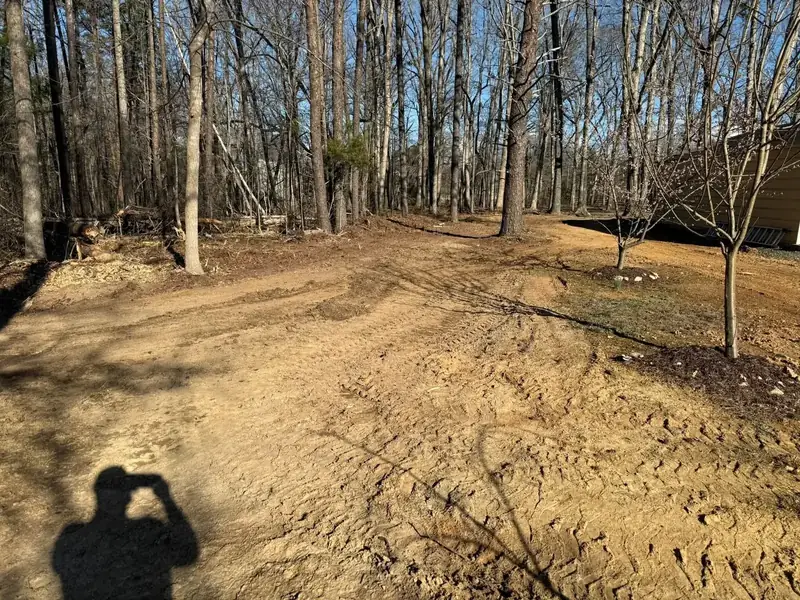
Site prep for a manufactured home follows the home's dimensions and the county's requirements. The pad is sized to the home plus working room for the set-up crew, built a few inches above the surrounding grade and compacted in lifts so the piers don't settle unevenly. Most counties in the Piedmont require a specific pad spec — compacted, level within a tolerance, free of organics — and the installer will tell you what the inspector expects. We strip the topsoil and anything that will rot, build the pad from compacted clay, laser-check it, and leave it slightly crowned so rain runs off until the home is set and skirted.
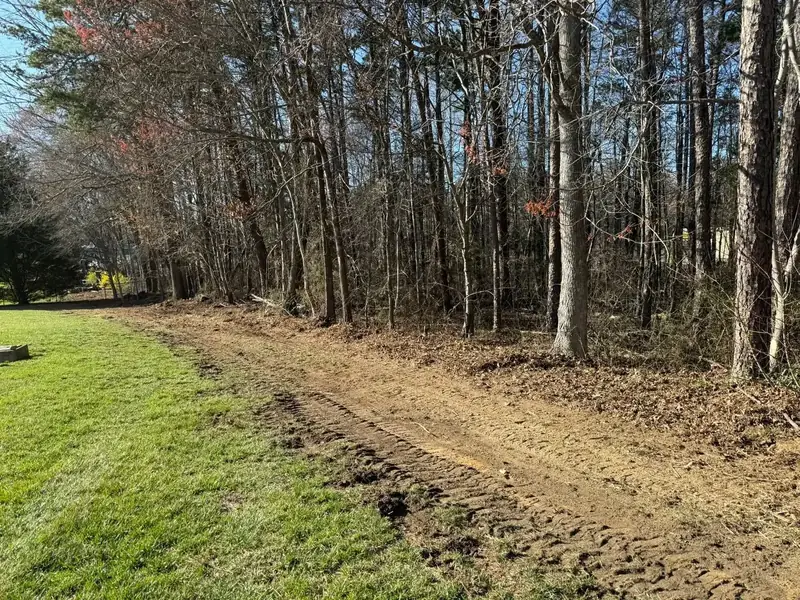
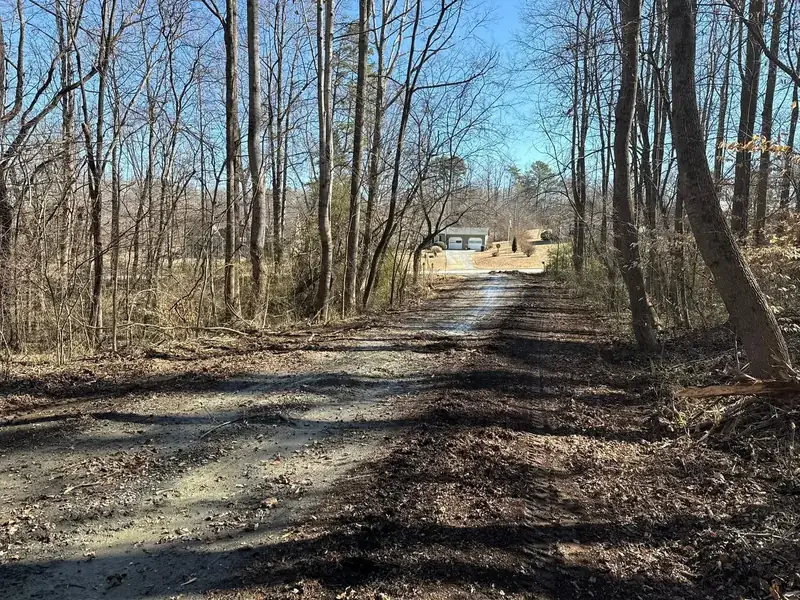
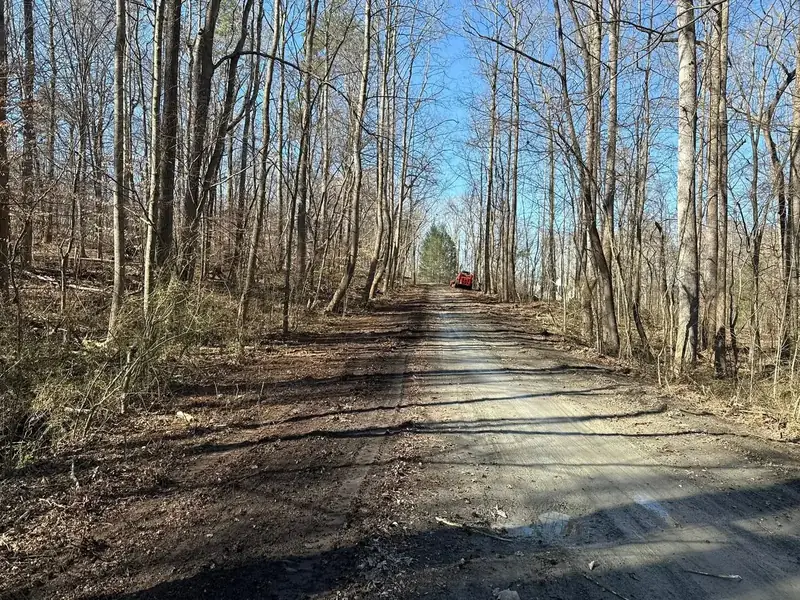
The route in is the part that trips people up. A transporter pulling a sixteen-foot-wide section needs a wide, firm, gently curved path from the road to the pad with no tight turns, no soft spots, no low branches and no steep grade changes that would high-center the hitch. We clear that path wide enough, grade out the humps and dips, and base it with stone where the ground is soft so the truck doesn't sink. The same drive serves you for years afterward, so we build it with a crown and ditches rather than as a temporary lane.
Around the home, the lot gets graded for drainage and the septic area gets cleared to the Environmental Health layout. We trench for the water line and the power to the pedestal when the plumber and electrician are scheduled, and we'll set a culvert at the road if the driveway crosses a ditch. After the home is set, we come back if needed to final grade around it, fill the pier holes, and put topsoil down so the yard can be seeded. The home, the piers, the tie-downs and the utility connections are the installer's and the trades' work; we make the ground ready for all of it.
What the job looks like
Walk the lot with the plan
We confirm the home dimensions and the county pad spec, pick the pad location, walk the delivery route from the road, and identify the septic area, well and utility paths.
Estimate
A written scope covering clearing, pad, delivery route and drive, septic area prep, trenching and drainage, priced as a package or itemized so you can phase it.
Clear and build the pad
Clear the pad, drive and septic areas, strip topsoil, build the pad in compacted lifts to the required size and tolerance, laser-check and crown it.
Drive and route
Cut and grade the delivery route wide and gentle enough for the transporter, base it with stone, set a culvert if the drive crosses a ditch.
Utilities and final grade
Trench for water and power when the trades are ready. After the set, final grade around the home, fill pier holes and spread topsoil for seeding.
Best fit for
- New single-wide and double-wide placements on family land
- Replacing an older mobile home on an existing lot
- Modular homes set on crawl space foundations
- Rural lots that need a delivery route cleared from the road
- Lots that failed a set-up crew's inspection and need the pad redone
- Sites that also need septic area clearing and a driveway
What drives the price
We don't quote mobile home site prep from a chart. These are the things that move the number, and we'll walk through each one with you on site:
- How much clearing the pad, drive and septic area need
- Pad size and the cut and fill required to level it
- Length and condition of the delivery route and driveway
- Stone needed to base the drive for the transporter
- Trenching for water and power
- Culvert at the road and drainage work
- Ground conditions and season
Equipment we bring
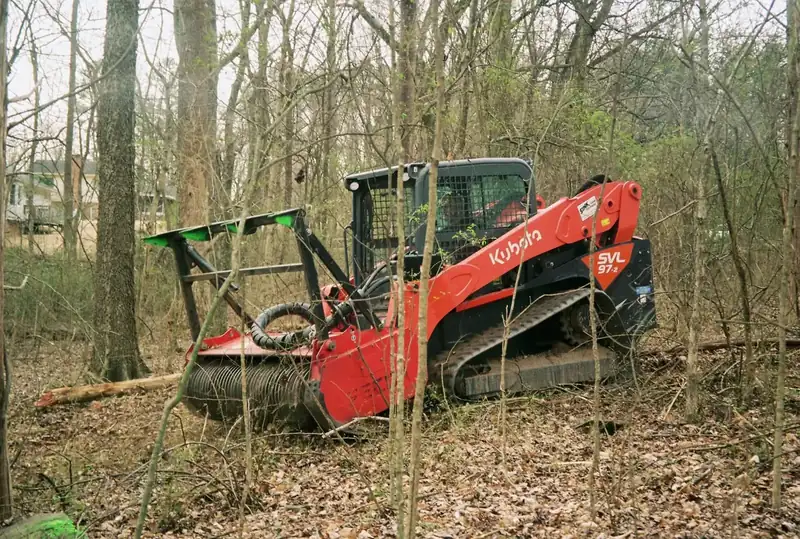
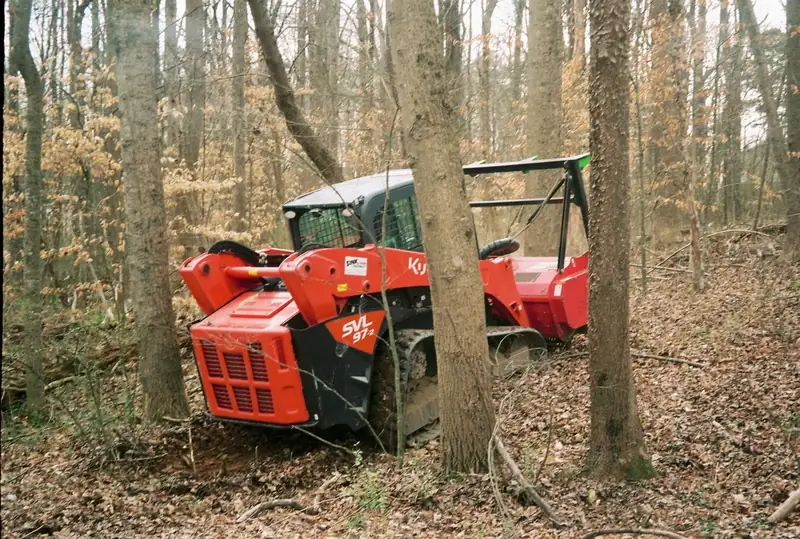
- Compact track loader with forestry mulcher and grapple for clearing
- Dozer blade and box blade for pad and drive grading
- Mini excavator with thumb for stumps, trenching and culverts
- Laser-guided grade checking on the pad
- Dump trailer for stone and topsoil
Mobile Home Site Prep questions
How much does it cost to prepare land for a mobile home in NC?
It depends on how much of the lot has to be cleared and how far the home has to travel from the road. An open lot near the road with a short drive is the low end — mostly a pad and some grading. A wooded lot with a long delivery route, a septic area to clear and trenching for utilities is the high end. We walk it with the home's dimensions in hand and give a written price for the full package, itemized so you can phase it.
What does the pad need to be for a manufactured home?
Level within a tight tolerance, compacted, free of topsoil and organics, and sized for the home plus room for the set-up crew. Most Piedmont counties inspect the pad before or during the set, and the installer will tell you the exact spec. We build it from compacted clay in lifts, laser-check it, and crown it slightly so it sheds water until the home goes on.
Do I need a permit to put a mobile home on my land?
Yes — the county issues a permit for the home placement and inspects the set, and Environmental Health issues the septic permit if you're not on sewer. Zoning rules vary by county and some areas restrict manufactured homes, so check with the planning office before buying the home. We'll help with the site side but the permits are pulled by the owner or the installer.
How wide does the driveway need to be for delivery?
The transporter needs a path at least fourteen to sixteen feet wide for a double-wide section, with gentle curves and no sharp grade changes. Low branches need to be up, and the ground has to be firm enough for a heavy truck. We clear and base the route with that in mind, and your dealer or transporter can tell us anything specific about their rig.
Can you get the lot ready before the septic is installed?
Yes, and that's the normal order. Get the Environmental Health soil evaluation done so the drain field is marked, then we clear and grade the pad, drive and septic area while keeping heavy equipment off the approved field. The septic installer comes next, then the home is set, then we final grade.
Where do you prep mobile home sites?
Greensboro and the Triad plus about an hour and twenty minutes out — Rockingham, Caswell and Stokes counties up to the Virginia line, Surry and Yadkin to the west, Davidson, Rowan, Stanly, Randolph and Lee to the south, and Alamance, Orange, Durham and Wake to the east.