

Rough grading is the big-dirt stage. It's where a site goes from whatever shape nature and the previous owner left it in to the shape the plans call for — high spots cut down, low spots filled and compacted, the general slope established so water drains, and the footprint of the house, shop or driveway roughed in close to its finished elevation. The fine finishing comes later. Rough grading is about moving volume and getting the bones right.
On Piedmont sites that volume is almost always red clay, and clay has rules. It has to be cut and placed at the right moisture, built up in thin lifts rather than dumped in one pile, and tracked or rolled as it goes so it doesn't settle under whatever gets built on it. The thin topsoil on top is worth saving, so we strip it first and stockpile it for the final grade instead of burying it. We run compact track loaders with a dozer blade and box blade and a mini excavator for the deeper cuts, with a laser to keep elevations honest.
Clark does the operating. Veteran, firefighter, owner, and the one who read your site plan before the machine came off the trailer. We rough-grade lots and acreage throughout the Triad and roughly an hour and twenty minutes out from Greensboro, and the estimate is free.
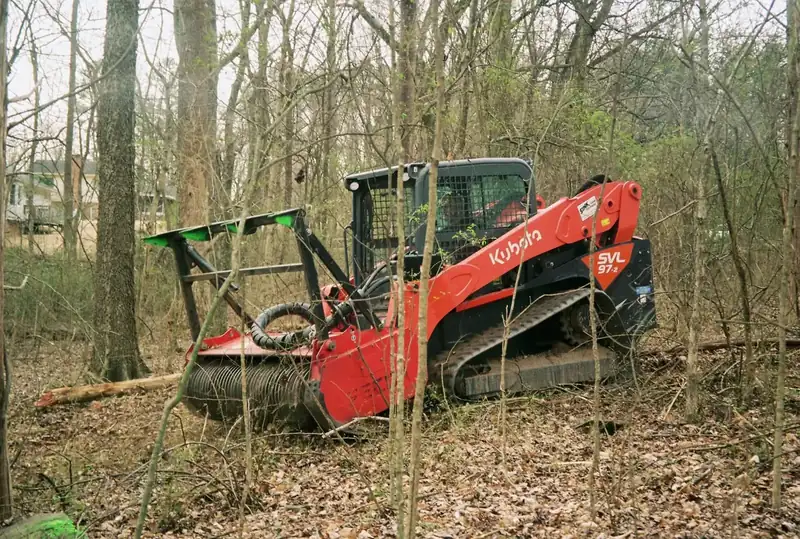
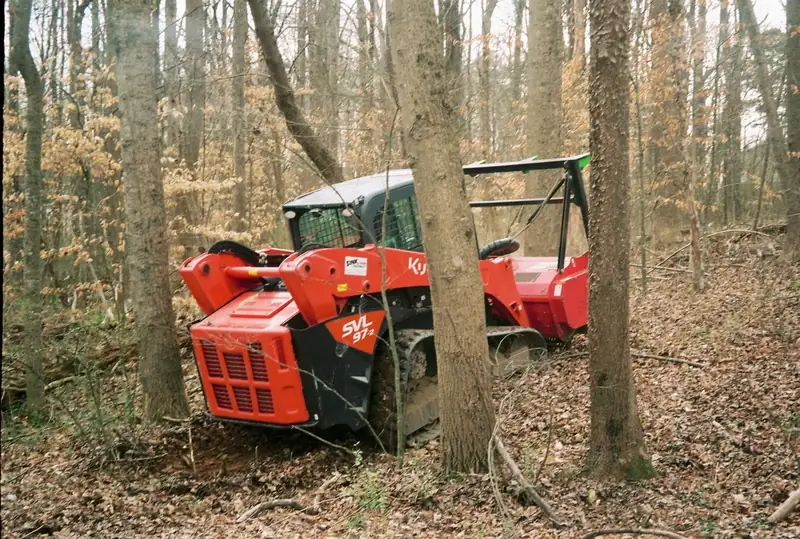
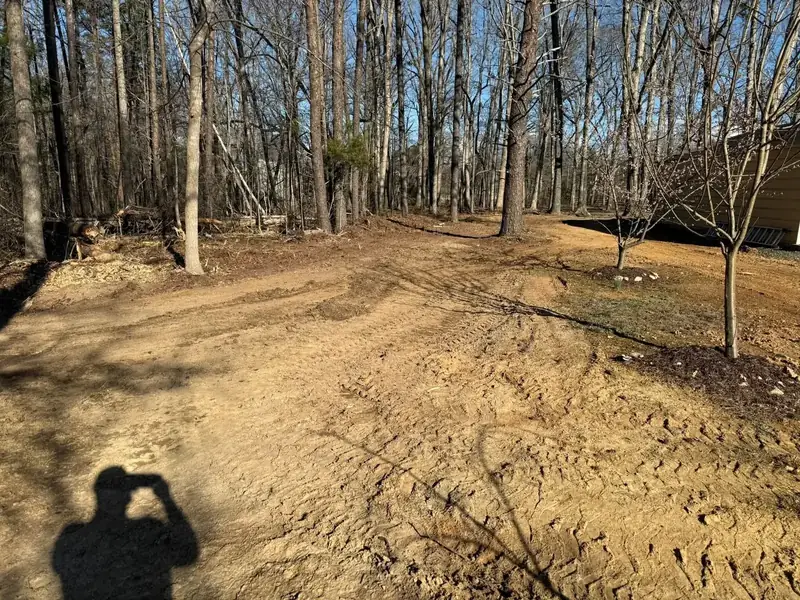
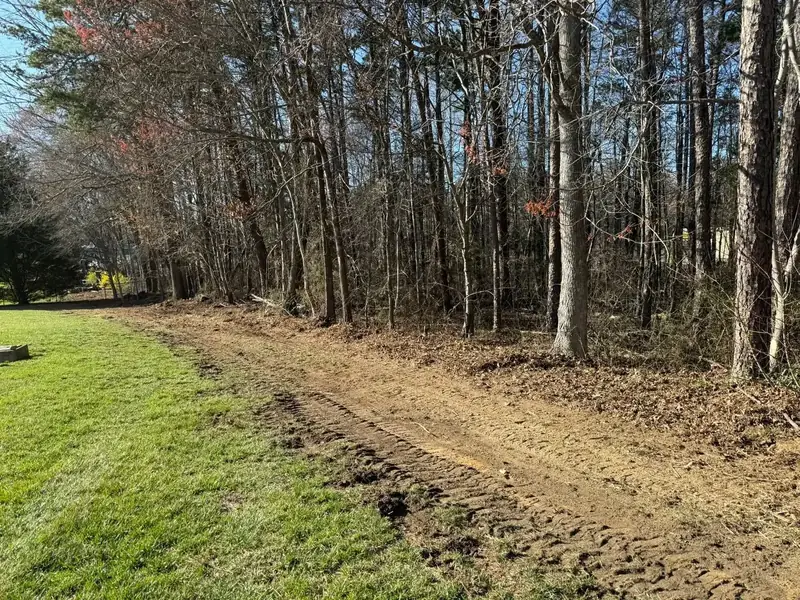
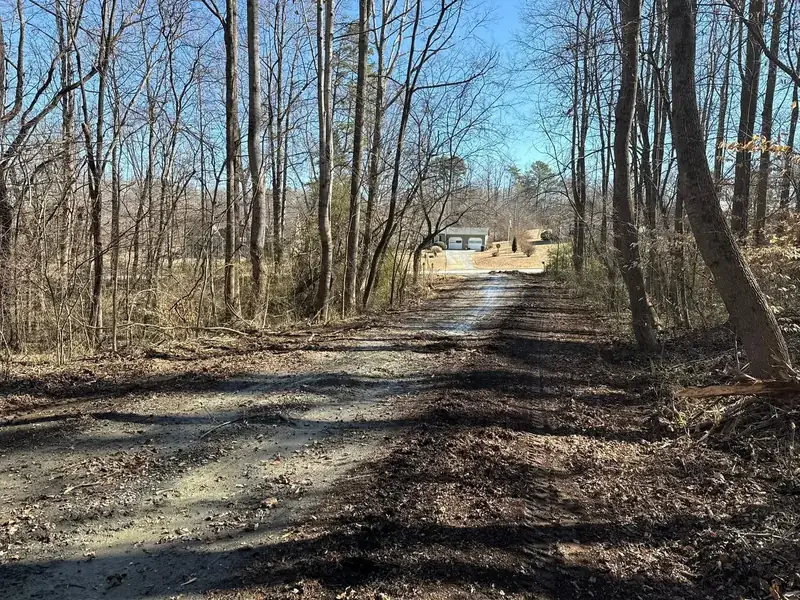
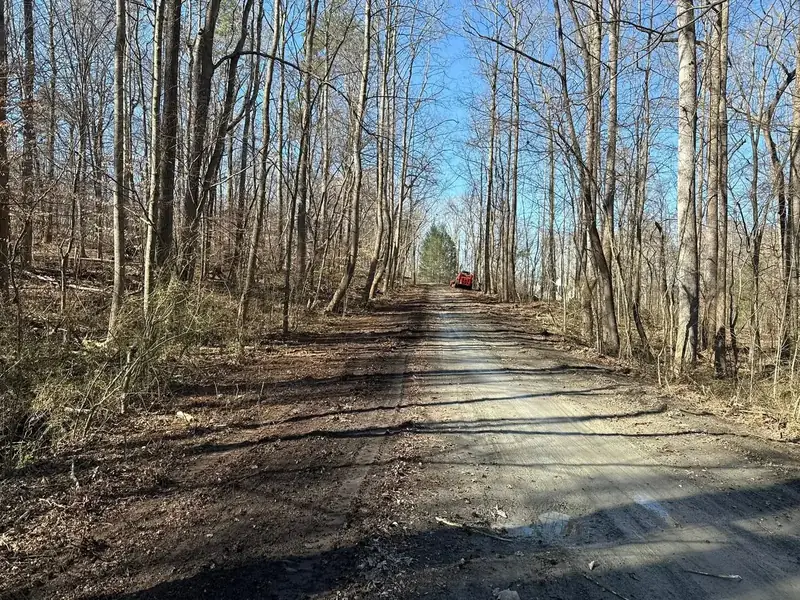
How rough grading works on Piedmont ground
A rough grading job starts with a target. Sometimes that's a set of plans with spot elevations and contour lines from an engineer or a builder. More often on residential work it's simpler: a conversation about where the house sits, where the drive comes in, which way the water should go, and how much of the natural slope you want to keep. From that we lay out grade stakes, set a laser benchmark, and figure out where the cut is coming from and where the fill is going. Balancing those on site — using dirt from the high side to fill the low side — is what keeps haul trucks off the job and the price down.
Then the dirt moves. Topsoil gets stripped and piled out of the way. The dozer blade and excavator cut the high ground, the loader carries it to the fill areas, and it goes down in lifts of six to eight inches, each one tracked in before the next goes on. That's not fussiness; clay placed loose will settle for years, and if a slab or a footing is sitting on it, that settlement shows up as cracks. We bring the rough grade to within a few inches of the final elevation and leave it slightly high, because final grading cuts down, it doesn't build up.
Drainage gets shaped at this stage too — swales along property lines, a crowned driveway bed, positive fall away from the pad. If the disturbed area is over an acre, North Carolina's sediment and erosion control rules apply and silt fence, a construction entrance and sometimes a basin have to be in before the first cut. We'll flag that on the walk-through so the permit is handled before the machines arrive, not after a neighbor calls the county.
What the job looks like
Plan review and site walk
We go over your site plan or sketch, confirm the house or shop location, walk the natural drainage, and check what's underground. If there's no plan, we help you make one on the spot.
Stake and benchmark
Grade stakes at the corners and key elevations, a laser benchmark set, and a cut-fill plan that balances dirt on site wherever the ground allows it.
Strip and cut
Topsoil stripped and stockpiled for later. Cuts made from the high side with the dozer blade and excavator, working the clay when it's at the right moisture to place and compact.
Fill in lifts
Fill placed in six-to-eight-inch layers and tracked in as it goes. Pads and anything taking a load get the most attention here. Laser checks throughout.
Shape drainage and hand off
Swales, crowns and positive fall shaped in. We leave the site a few inches high for final grading and walk it with you or your builder.
Best fit for
- New home sites after clearing, before footings go in
- Shop, barn and garage locations on sloped ground
- Driveway and farm road beds being roughed through a property
- Lots that were cleared years ago but never shaped
- Sloped yards being terraced or opened up for use
- Pond banks, berms and earth shaping for privacy or screening
What drives the price
We don't quote rough grading from a chart. These are the things that move the number, and we'll walk through each one with you on site:
- Cubic yards of cut and fill — the single biggest factor
- Whether the dirt balances on site or has to be trucked in or out
- Depth of cuts and whether rock or roots are in the way
- Compaction requirements for pads and structural fill
- Site access and how far material has to be carried
- Soil moisture and season
- Erosion control and permit requirements over an acre
Equipment we bring
- Compact track loader with dozer blade and box blade
- Mini excavator with thumb for deep cuts and spoils handling
- Laser-guided grade checking
- Root rake for pulling roots and debris out of the cut
- Dump trailer for import or export of material
Rough Grading questions
How much does rough grading cost for a house lot?
The honest answer is that it's driven by how many yards of dirt have to move and whether any of it comes in on a truck. A fairly flat lot that just needs shaping and a pad roughed in is a day or two with one machine. A sloped lot that needs a deep cut on one side and a tall fill on the other, with fill delivered, is a bigger number. We give a written estimate after walking it, and we try to balance cut and fill on site to keep trucking out of it.
What's the difference between rough grading and final grading?
Rough grading moves the volume and gets the site within a few inches of its planned shape — cuts, fills, drainage pattern, pad location. Final grading is the last step after construction: smoothing, setting the exact slope, spreading topsoil and leaving it ready for seed or sod. Most new builds need rough grading before the foundation and final grading after the framers and trades are gone.
Do you compact the fill?
Yes, and it's the part people don't see that matters most. Clay fill goes down in thin lifts and gets tracked in with the machine as each one is placed. Anything that will carry a slab, footing or driveway gets extra passes. For engineered fill that needs a tested density, we work to the geotech's spec and coordinate with their inspector.
Do I need a grading permit in North Carolina?
Disturbing more than an acre requires an approved sediment and erosion control plan under state rules, administered by the county or the state depending on where you are. Under an acre, most counties don't require a grading permit, though cities like Greensboro and Winston-Salem have stormwater and buffer rules that can apply. We'll point you to the right office if your lot is near the line.
Can you rough grade from my builder's plans?
That's the ideal case. Send us the site plan with spot elevations or contours and we'll stake it and grade to it. If you don't have formal plans, we can rough grade to a house location and a drainage direction you choose on site, and leave the pad high for your foundation contractor to set the last few inches.
How far out from Greensboro do you travel for grading?
About an hour and twenty minutes in any direction — the full Triad, up to Virginia, out to Mount Airy and Elkin, down to Salisbury, Albemarle and Sanford, and east to Durham, Chapel Hill and Raleigh. Bigger rough grading jobs make the longer drives worthwhile.