

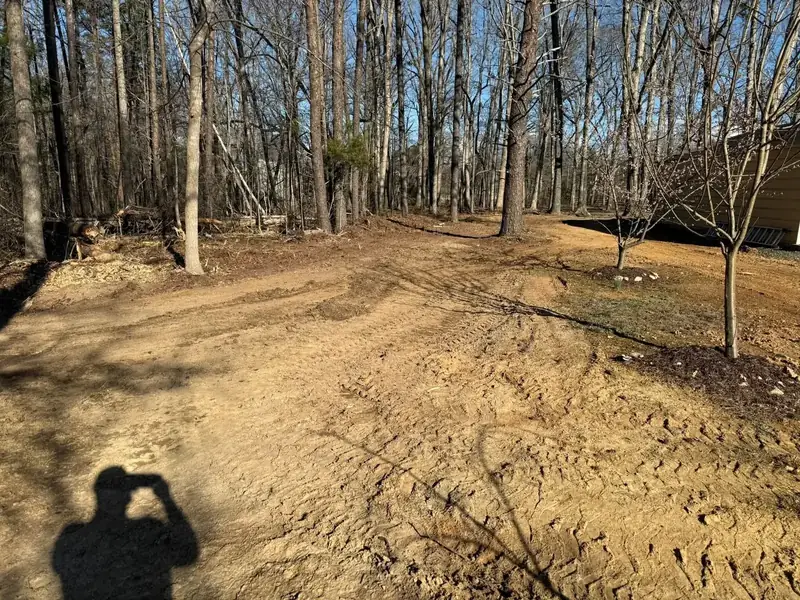
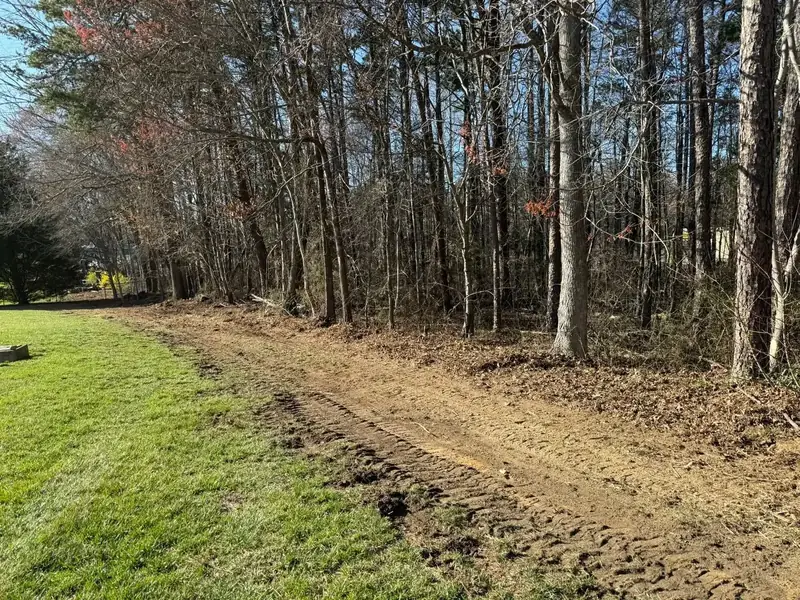
Final grading is where a construction site turns back into a yard. After the builder, the plumber, the septic installer and the electrician have all driven across it, the lot is a mess of ruts, spoil piles, buried blocks and clay. Final grading cleans that up: smooths the surface, sets the last few inches of slope so water leaves the foundation, spreads topsoil where grass is going, and leaves the ground fine enough that a seed drill or sod crew can work it the same day.
The job matters more in the Piedmont than in a lot of places because what's left after construction here is exposed red clay, and clay doesn't grow grass well or drain at all. It crusts, it sheds water, and it bakes. A proper final grade puts a few inches of real topsoil over it, pitches the whole thing gently away from the house, and keeps the swales and low spots where they belong. Skip it and you'll spend years fighting a lawn that's either mud or concrete.
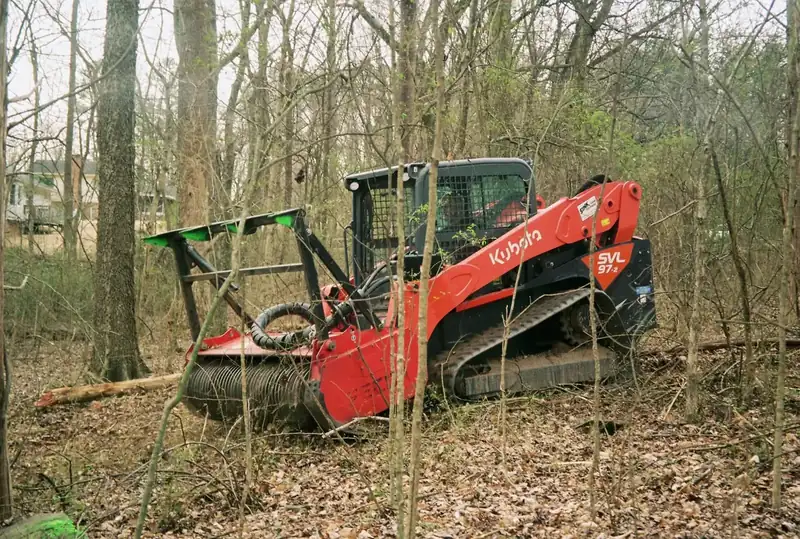
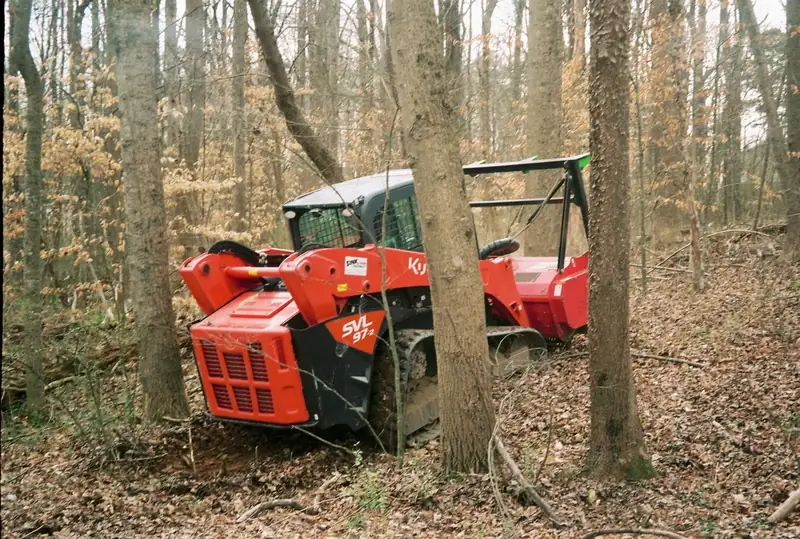
We do final grading with a compact track loader running a box blade and grading blade, a laser for slope, and a dump trailer for topsoil. Clark is a veteran and a working firefighter and he's the one on the machine. Free estimates throughout the Triad and about an hour and twenty minutes out from Greensboro.
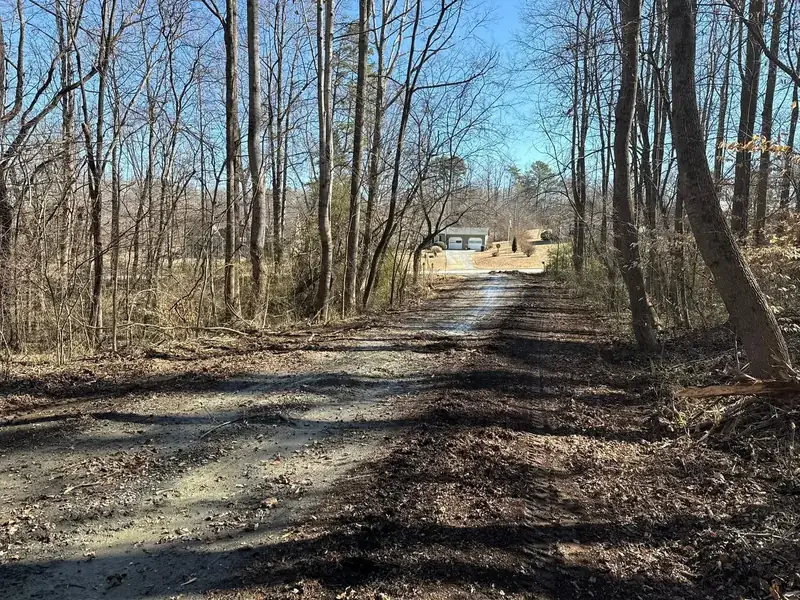
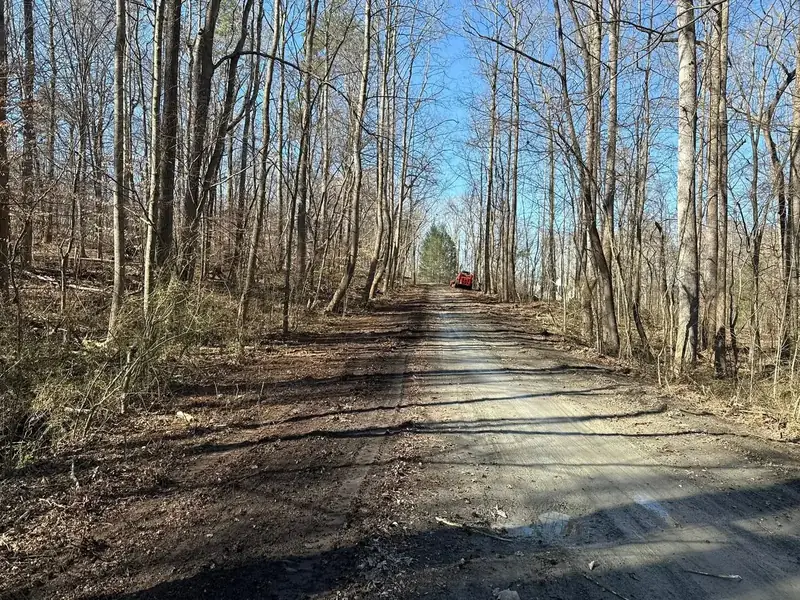
How final grading works on Piedmont ground
A final grade begins with cleanup. Construction debris — brick, block, lumber scraps, wire, drywall — gets picked up or raked out, because any of it left under the topsoil shows up later as a dead spot or a shovel-breaker. Spoil piles from footings and utility trenches get spread or hauled. Ruts get knocked down. Then we check the existing grade with a laser and find the problems: areas pitched toward the house, low spots that will pond, high spots that will scalp under a mower.
The shaping pass sets slope. At the foundation the target is roughly five percent fall for the first ten feet — six inches of drop — and after that a gentle one to two percent across the lawn toward a swale, a ditch or the street. Where there's a septic drain field, we grade over it lightly to keep water off without cutting into the trenches. Where a drive or patio is going, the base gets left at the right depth below finished elevation for stone or concrete. All of that is set with grade stakes and a laser, then confirmed with a final pass of the receiver before we call it done.
Topsoil is the finish. Most construction sites have none left, so it comes in on the trailer — screened material, spread three to four inches deep over the lawn areas with the box blade and then lightly firmed so it doesn't wash off in the first rain. We rake it fine enough for seed. If you're doing sod, we'll leave it a touch lower so the sod sits flush with walks and drives. Either way the ground is ready for the next crew without another pass.
What the job looks like
Debris and spoils cleanup
Construction scrap picked up, spoil piles spread or hauled, ruts knocked flat. Anything buried that would kill grass or break a shovel comes out now.
Laser check and stakes
We shoot the existing grade around the foundation and across the lot, mark the problem areas, and set stakes for the slope we're going to build.
Shape the slope
Box blade and grading blade passes to set positive fall from the house, keep swales open, and get walks, drives and pads to their correct depth below finish.
Topsoil and finish
Screened topsoil spread over lawn areas, lightly firmed, then raked to a seed-ready texture. Sod areas left slightly low so the sod sits flush.
Final walk
We walk it with you or your builder, confirm the water goes where it should, and hand it off ready for the seed or sod crew.
Best fit for
- New homes after the trades are out and before landscaping
- Yards that have settled or washed and now drain toward the house
- Lots where a previous grade was left rough or never topsoiled
- Additions, pool installs and septic replacements that tore up the yard
- Bare clay that won't grow grass no matter what's thrown at it
- Property being listed that needs a clean, finished lawn surface
What drives the price
We don't quote final grading from a chart. These are the things that move the number, and we'll walk through each one with you on site:
- Square footage of lawn and pad area being finished
- How rough the site is — a light smoothing vs. a full regrade with spoils
- Amount of topsoil brought in and how far it's hauled
- Debris that has to be cleaned up or hauled before grading
- Obstacles to work around: septic fields, utility boxes, trees, walks
- Seed-ready vs. sod-ready finish, and whether seeding is included
- Soil moisture and time of year
Equipment we bring
- Compact track loader with box blade and grading blade
- Laser-guided grade checking
- Root rake for pulling debris and roots out of the surface
- Dump trailer for topsoil delivery and spoils removal
Final Grading questions
How much does final grading cost?
Most residential final grades land somewhere between a half-day and two days of machine time, plus the topsoil. A small lot with a clean site and a few inches of topsoil is the low end. A large lot with spoil piles to spread, debris to haul and several loads of topsoil is the high end. Topsoil is often the biggest single line item, so we'll tell you how many loads the lot needs before you commit.
How much topsoil do I need for a new lawn?
Three to four inches over the lawn area is a good target in our clay. Less than that and the grass roots hit clay and stall in the first dry spell; more than that is money you don't need to spend. A quarter acre of lawn at four inches works out to roughly 130 cubic yards, which is several trailer loads. We'll do that math on your lot.
Can you grade around a septic drain field?
Yes, carefully. We grade over drain fields with light passes only, never cut into them, and keep heavy loads off the trenches. The goal is to shed surface water away from the field so it doesn't stay saturated. If your septic installer just finished, we'll coordinate with them on where the lines run.
Will grass grow on the red clay if you just smooth it?
Poorly. Bermuda will take on bare clay if you fight it long enough, but fescue — the lawn most people in the Triad want — needs real topsoil to root in. Smoothing clay without topsoil gives you a surface that crusts, sheds water and bakes in July. We recommend topsoil on every final grade for a lawn.
When's the best time to final grade and seed in North Carolina?
Fescue seeds best in September and October here, with a second window in early spring. Bermuda and zoysia go in late spring and summer. We'll final grade whenever the ground is dry enough to work, but if you're timing a fescue lawn, getting the grade done in late summer sets you up for fall seeding.
Do you serve the whole Triad for final grading?
We're in Greensboro and cover roughly an hour and twenty minutes out — Winston-Salem, High Point, Burlington, Asheboro, Reidsville, Mount Airy, Elkin, Salisbury, Albemarle, Sanford, Durham, Chapel Hill and Raleigh, and everything in between.