

A lot of Cary homeowners call us a year after moving in, when the yard the builder left has settled and started draining toward the crawl space. A final regrade fixes that. We're about 1 hour 15 minutes from Cary and we've done plenty of them in Wake County.
New construction around Cary almost always finishes on bare clay. The topsoil was thin to begin with and the builder pushed what was there into a pile or buried it. Our final grade brings screened topsoil in, spreads it three to four inches over the lawn, and shapes it so the water runs to the swale instead of the foundation.
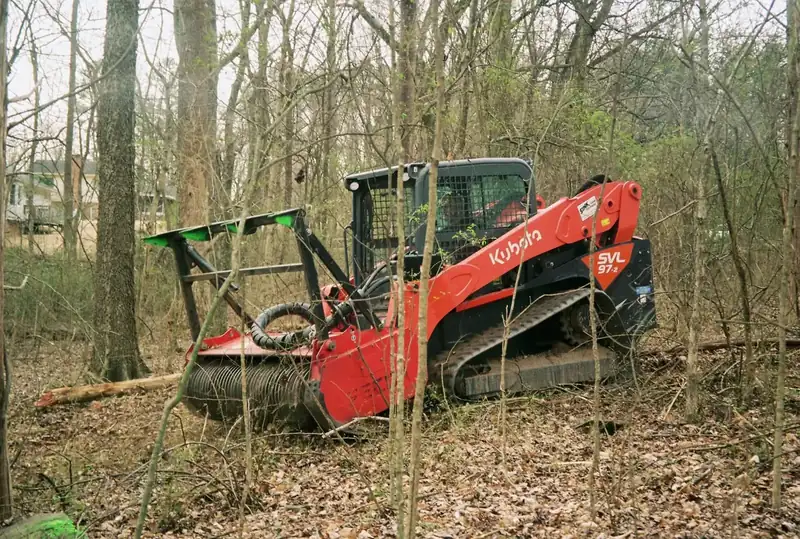
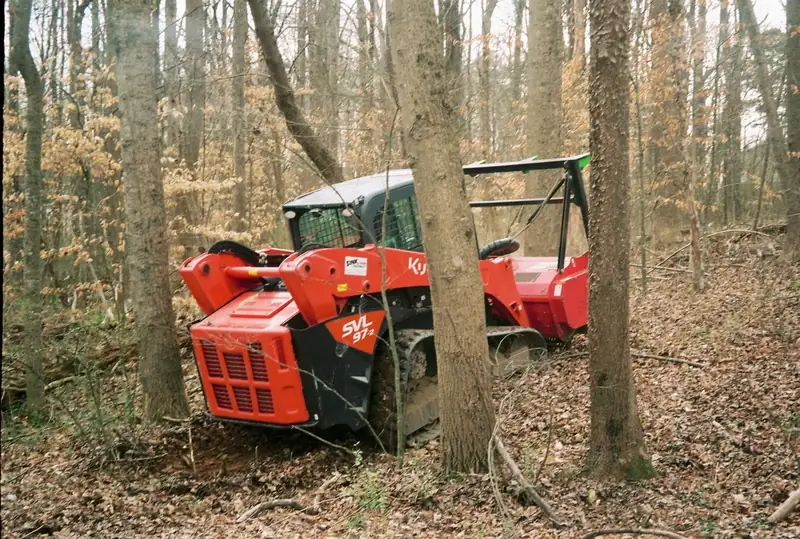
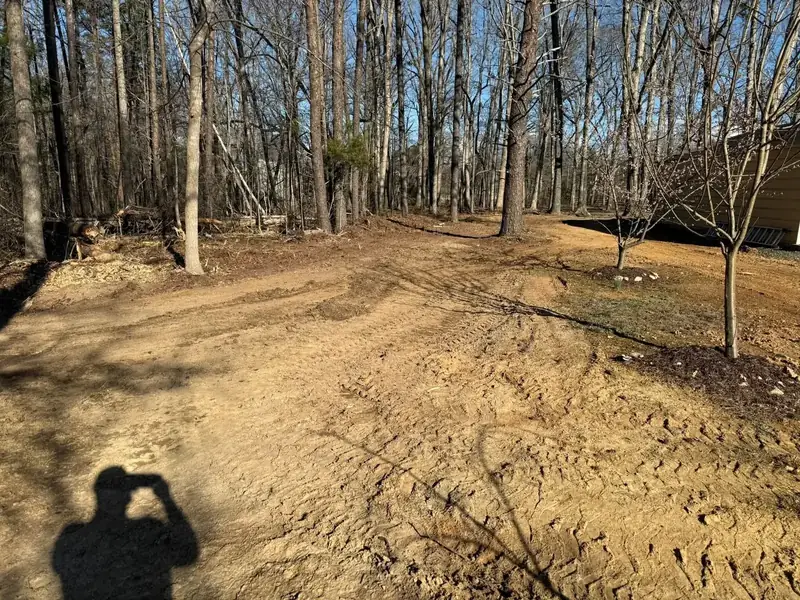
Cary ground conditions and how they shape final grading
Cary is mostly built out, so the land work there is small, tight and heavily permitted, but there is still more of it than people expect. The soils are Cecil and Appling on the east side toward Raleigh and White Store and Creedmoor Triassic clay on the west side toward Jordan Lake and Apex — the line runs roughly along NC-55. Swift Creek, Crabtree Creek and the Black Creek greenway corridor drain the town. Leftover wooded parcels inside town are oak-hickory with loblolly and an understory of privet, wisteria and English ivy that has had thirty years to thicken up.
Around Green Level Church Road, Black Creek Greenway and Crabtree Creek, the properties we're usually called to look like this:
- Five- to ten-acre tracts on the Jordan Lake side toward New Hill with buffer-limited clearing
- Commercial outparcels along NC-55, NC-54 and US-64 needing stumps pulled and rough grading
- Estate lots in MacGregor Downs, Lochmere and the Preston area wanting understory mulched and invasive vines removed
What final grading jobs look like around Cary
Around Crabtree Creek, the properties that call us for final grading tend to be five- to ten-acre tracts on the Jordan Lake side toward New Hill with buffer-limited clearing.
Closer to NC-55 it's more often new homes after the trades are out and before landscaping — different layout, same machine, and the estimate reflects the difference honestly.
Cary isn't one kind of ground, and we don't price it like it is.
Raleigh, Pittsboro and Sanford are in the same loop as Cary for us — same crew, same pricing basis.
Why Cary property owners call A&R
We tell Wake County customers exactly how many loads of topsoil the lot needs and why, before the job starts. No vague "some topsoil" line on the estimate.
Send a few photos of your Cary lot and the address. We'll come walk it and put a real number on a seed-ready finish.
Final Grading in Cary: questions
How much topsoil do I need for a new lawn?
Three to four inches over the lawn area is a good target in our clay. Less than that and the grass roots hit clay and stall in the first dry spell; more than that is money you don't need to spend. A quarter acre of lawn at four inches works out to roughly 130 cubic yards, which is several trailer loads. We'll do that math on your lot.
When's the best time to final grade and seed in North Carolina?
Fescue seeds best in September and October here, with a second window in early spring. Bermuda and zoysia go in late spring and summer. We'll final grade whenever the ground is dry enough to work, but if you're timing a fescue lawn, getting the grade done in late summer sets you up for fall seeding.
How far is A&R Land Services from Cary?
We're based in Greensboro, about 1 hour 15 minutes from Cary. Wake County is inside the radius we work every week, so there's no long-haul mobilization charge built into your estimate.
Do you handle final grading near Green Level Church Road and Black Creek Greenway?
Yes. We work throughout Cary and the surrounding Wake County area, including properties around Green Level Church Road, Black Creek Greenway and Crabtree Creek. If you're outside the town limits, send the address and we'll confirm it's in range.
What should I expect from a final grading job in Wake County?
Lots where a previous grade was left rough or never topsoiled is the most common version of it around Cary. We shoot the existing grade around the foundation and across the lot, mark the problem areas, and set stakes for the slope we're going to build. Amount of topsoil brought in and how far it's hauled is the factor that moves the price most on Wake County jobs, and we'll walk through it with you on site.