
A lot of Raleigh homeowners call us a year after moving in, when the yard the builder left has settled and started draining toward the crawl space. A final regrade fixes that. We're about 1 hour 20 minutes from Raleigh and we've done plenty of them in Wake County.
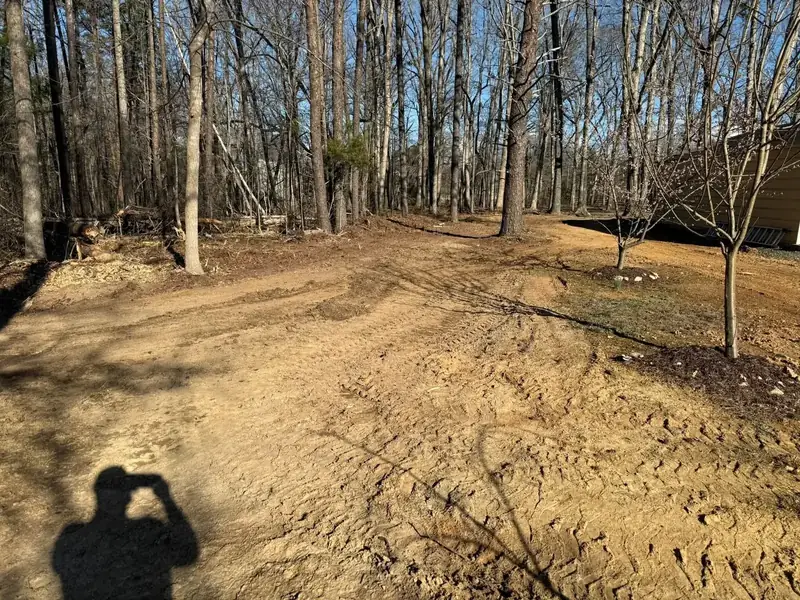
New construction around Raleigh almost always finishes on bare clay. The topsoil was thin to begin with and the builder pushed what was there into a pile or buried it. Our final grade brings screened topsoil in, spreads it three to four inches over the lawn, and shapes it so the water runs to the swale instead of the foundation.
Raleigh ground conditions and how they shape final grading
Raleigh sits on the eastern edge of the Piedmont where the ground is Cecil, Appling and Wedowee sandy clay loam over granite and gneiss — well drained, workable, and generally kinder than the Triassic clay in Durham to the west. Falls Lake and the Neuse River define the north and east, with Crabtree Creek, Walnut Creek and Swift Creek draining the city. Floodplains along those creeks grow up in sweetgum, box elder, privet and wisteria that hides old fence and trash. Wooded lots that were skipped during the 1980s and 90s booms are now oak-hickory with loblolly and a dense privet and English ivy understory.
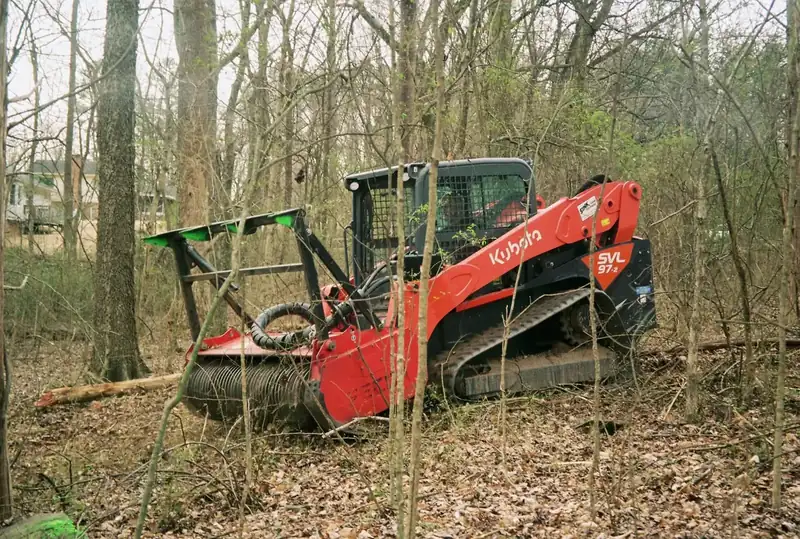
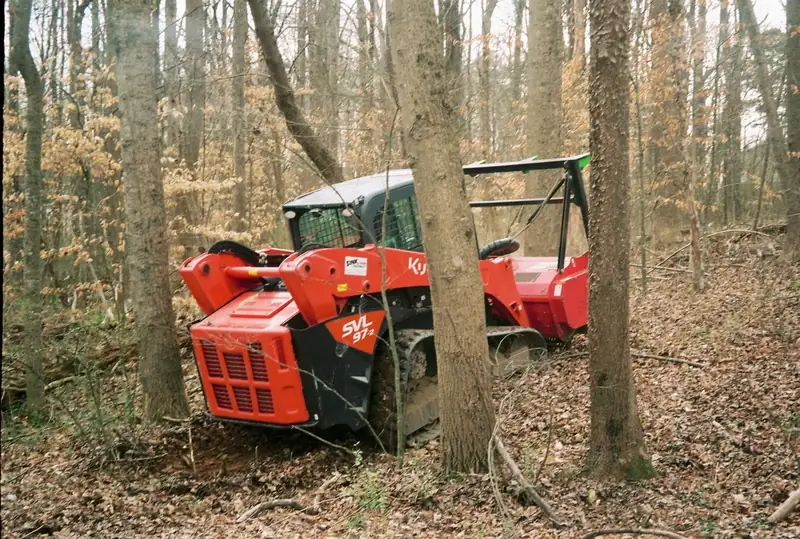
Around the Neuse River, Falls of Neuse Road and Walnut Creek, the properties we're usually called to look like this:
- Commercial outparcels along US-64, US-401 and US-70 needing stumps pulled and rough grading
- Church and school properties with wooded back acreage to open for parking or fields
- Wooded infill lots inside the Beltline that have grown up in privet and ivy for decades
What final grading jobs look like around Raleigh
Most of our final grading work in Raleigh comes from two directions. First, commercial outparcels along US-64, US-401 and US-70 needing stumps pulled and rough grading. Second, additions, pool installs and septic replacements that tore up the yard.
Both show up regularly along Walnut Creek and Lake Wheeler, and both are jobs we can usually walk, quote and schedule inside a couple of weeks.
Neighbors in Durham, Chapel Hill and Apex call us for the same work; Raleigh sits right in the middle of that route.
Why Raleigh property owners call A&R
We tell Wake County customers exactly how many loads of topsoil the lot needs and why, before the job starts. No vague "some topsoil" line on the estimate.
Send a few photos of your Raleigh lot and the address. We'll come walk it and put a real number on a seed-ready finish.
Final Grading in Raleigh: questions
How much does final grading cost?
Most residential final grades land somewhere between a half-day and two days of machine time, plus the topsoil. A small lot with a clean site and a few inches of topsoil is the low end. A large lot with spoil piles to spread, debris to haul and several loads of topsoil is the high end. Topsoil is often the biggest single line item, so we'll tell you how many loads the lot needs before you commit.
When's the best time to final grade and seed in North Carolina?
Fescue seeds best in September and October here, with a second window in early spring. Bermuda and zoysia go in late spring and summer. We'll final grade whenever the ground is dry enough to work, but if you're timing a fescue lawn, getting the grade done in late summer sets you up for fall seeding.
How far is A&R Land Services from Raleigh?
We're based in Greensboro, about 1 hour 20 minutes from Raleigh. Wake County is inside the radius we work every week, so there's no long-haul mobilization charge built into your estimate.
Do you handle final grading near the Neuse River and Falls of Neuse Road?
Yes. We work throughout Raleigh and the surrounding Wake County area, including properties around the Neuse River, Falls of Neuse Road and Walnut Creek. If you're outside the town limits, send the address and we'll confirm it's in range.
What should I expect from a final grading job in Wake County?
Property being listed that needs a clean, finished lawn surface is the most common version of it around Raleigh. Box blade and grading blade passes to set positive fall from the house, keep swales open, and get walks, drives and pads to their correct depth below finish. Seed-ready vs. sod-ready finish, and whether seeding is included is the factor that moves the price most on Wake County jobs, and we'll walk through it with you on site.