
Dirt work is the honest name for a lot of what we do: moving dirt from where it is to where you need it. Spreading a load of topsoil the landscape supplier dropped in the driveway. Hauling in fill to raise a low corner of the yard. Knocking down the spoil pile the pool company left behind. Spreading gravel across a parking area. Filling the trench the plumber dug and never leveled. Building a berm for privacy. It's not glamorous, and a lot of it is the kind of job people try with a wheelbarrow for a weekend before they call.
We run a compact track loader with a bucket and a box blade, a mini excavator for loading and digging, and a dump trailer that moves topsoil, fill and stone in and spoil out. In the Triad the native material is red clay, which is excellent structural fill when it's compacted in lifts and useless for growing anything. Topsoil is thin here and usually has to be brought in. Knowing which dirt goes where — clay under a pad, screened topsoil on a lawn, crusher run on a drive — is most of the job.
Clark does the work — veteran, working firefighter, owner. Small jobs are welcome; a morning spreading topsoil is a morning well spent. Free estimates across the Triad and about an hour and twenty minutes from Greensboro.
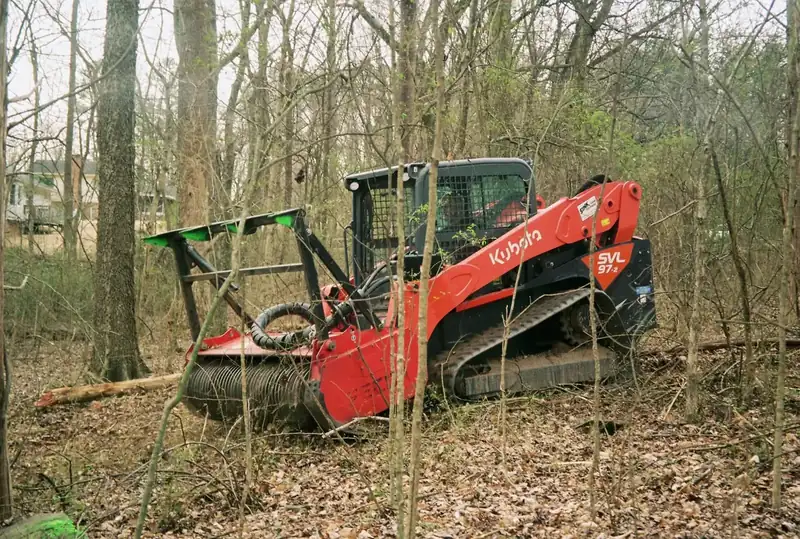
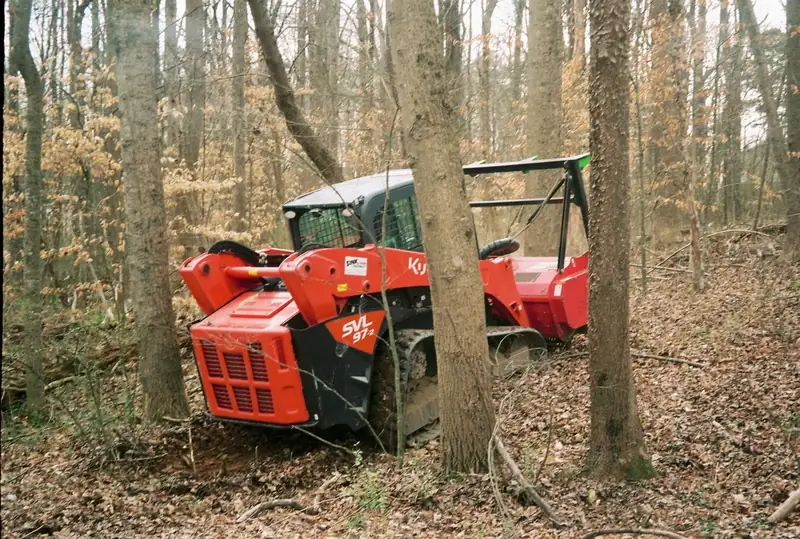
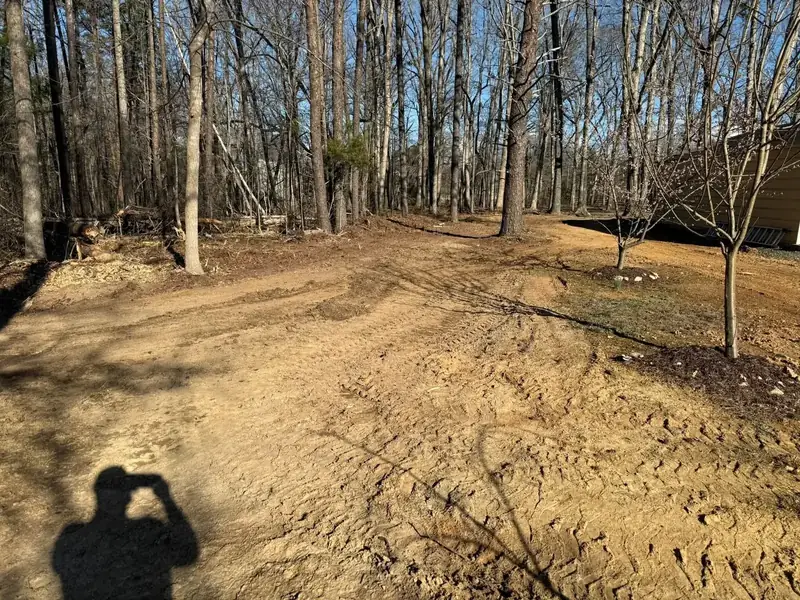
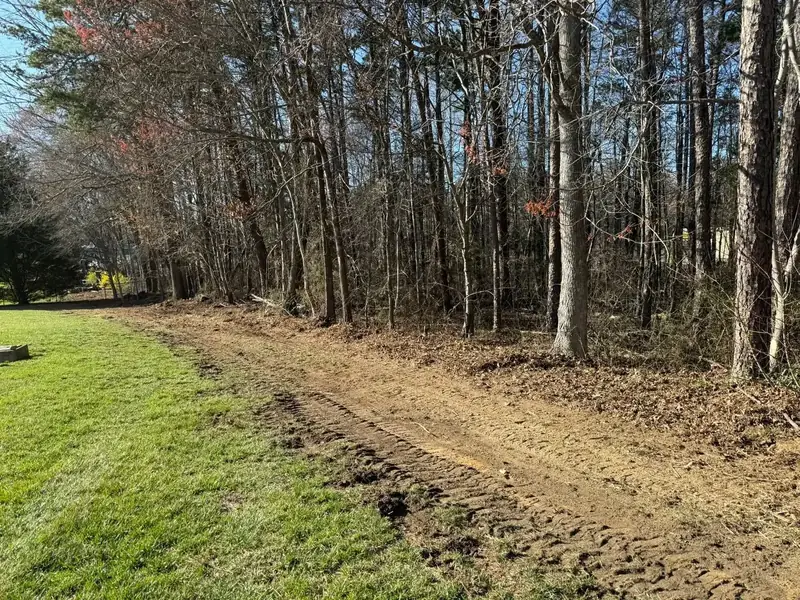
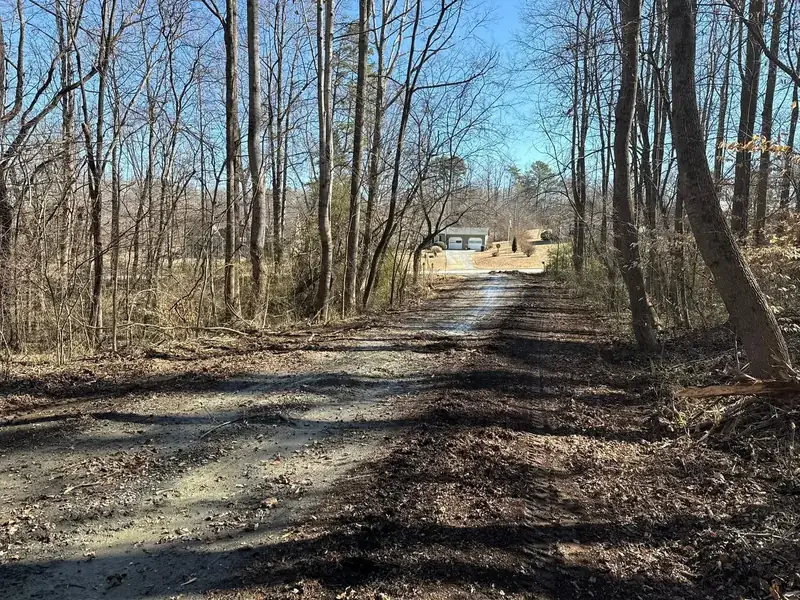
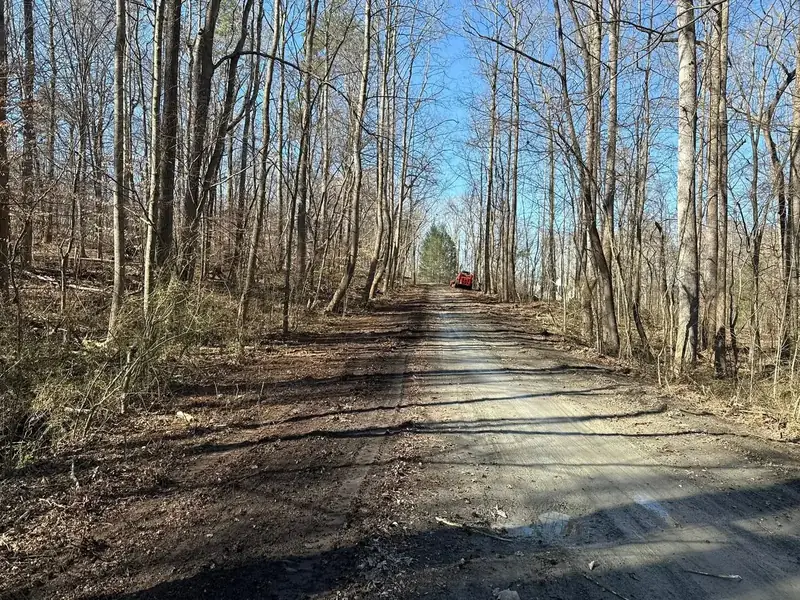
How dirt work works on Piedmont ground
Dirt work breaks into bringing material in, moving material around, and taking material out. Bringing it in means we source and haul topsoil, clay fill, screened fill, sand or stone on the dump trailer, or we spread what you've had delivered by the yard. Moving it around is loader work: spreading a pile evenly, filling low spots, building up a berm, shaping a mound, backfilling a trench or a foundation. Taking it out is loading spoil, old mulch, sod or debris onto the trailer and hauling it off. Most jobs are a mix.
The thing that separates good dirt work from somebody with a rental loader is what goes where and how it's placed. Clay fill under anything that bears a load — a pad, a drive, a walk — goes in lifts and gets compacted, or it settles for years. Topsoil goes on top of the finished grade, three to four inches for a lawn, raked fine, and never buried under clay where it does nothing. Fill in a low spot gets the organic muck dug out first, or the new dirt just sinks into the old mess. Berms get built with a stable slope so they don't erode into the neighbor's yard. We've seen every one of these done wrong and had to fix it.
Dirt work overlaps with grading, and the line is mostly about scale and precision. If you need a yard reshaped to a laser-checked slope, that's grading. If you need twelve yards of topsoil spread over the back lawn and a low spot by the fence filled, that's dirt work. We do both, and on the site visit we'll tell you which one you actually need — and whether the low spot has a drainage cause that fill alone won't fix.
What the job looks like
Figure out the material
We look at what you need done, what material it takes — topsoil, clay fill, stone — and how much. If you're having it delivered, we tell you the quantity; if we're hauling, we quote it.
Estimate
A written scope with the material, the loads, the spreading or filling, and any compaction or haul-off. Priced by the job, with material called out separately so you can see it.
Haul and place
Material delivered on the trailer or spread from your pile. Fill placed in compacted lifts where it bears a load; topsoil spread to depth and raked; spoil loaded and hauled.
Finish and clean up
Surface smoothed, drive and walks swept, piles gone. We walk it with you before the trailer gets loaded.
Best fit for
- Spreading delivered topsoil, mulch or stone
- Filling low spots, old pool sites and settled areas
- Raising a yard or a pad area with clay fill
- Removing spoil piles left by other contractors
- Backfilling foundations, trenches and retaining walls
- Building berms and mounds for privacy or screening
- Leveling out a gravel lot or parking area
What drives the price
We don't quote dirt work from a chart. These are the things that move the number, and we'll walk through each one with you on site:
- Cubic yards of material moved, delivered or hauled off
- Type of material — topsoil, screened fill, clay, stone — and its source
- Haul distance for delivery or disposal
- Compaction needed for structural fill
- Whether muck or debris has to be dug out before filling
- Access for the trailer and the loader
- Finish required — rough spread vs. raked seed-ready
Equipment we bring
- Compact track loader with bucket, box blade and grading blade
- Mini excavator with thumb for loading and digging out muck
- Dump trailer for topsoil, fill and stone delivery and spoil haul-off
- Laser-guided grade checking when the spread needs to hold a slope
Dirt Work questions
How much does dirt work cost?
It's mostly material plus machine time. Spreading a pile you've already had delivered is the simplest and cheapest version — a couple of hours of loader work. Hauling in and placing several loads of fill or topsoil costs more because the material and the trucking are the bigger part. Haul-off is priced per load. We give a written estimate with material and labor shown separately so you can see where the money goes.
What's the difference between fill dirt and topsoil?
Fill dirt is subsoil — in our area, red clay — used to build up or level ground that will carry a load. It compacts dense and drains poorly, and nothing grows in it. Topsoil is the darker, organic layer that plants root in. You use fill to get the ground to the right height and topsoil on the last few inches where grass or garden is going. Using one where the other belongs is the most common dirt mistake we fix.
How many yards of topsoil do I need?
Length times width in feet, times depth in inches, divided by 324 gives cubic yards. For a lawn, three to four inches is the target in our clay. A thousand square feet at four inches is about twelve yards. We'll measure your area and do the math before you order, and tell you how many trailer loads it is if we're hauling.
Can you fill a low spot in my yard that holds water?
Yes, but we'll check why it holds water first. If it's just low, we dig out the soft muck, fill with compacted clay and top with topsoil. If water is coming from a downspout, a neighbor's lot or a spring, filling it alone moves the puddle. In that case we'll talk about a drain or a swale so the fix lasts.
Do you deliver topsoil and fill?
We haul on our dump trailer, which is right for small and mid-size quantities. For very large volumes, a dump truck delivery from a supplier is more efficient and we can spread it when it arrives. Either way we'll tell you the quantity and help you order the right material.
Where do you do dirt work?
Greensboro and the Triad, out to about an hour and twenty minutes — the Virginia line, Mount Airy, Elkin, Salisbury, Albemarle, Sanford, Durham, Chapel Hill and Raleigh. Small spreading jobs make the most sense closer to home, and we'll be honest about the travel on the estimate.