

Yard leveling is the fix for a lawn that's become hard to live with. Low spots that stay soggy for days. Humps that scalp under the mower. A back corner that's sunk where the old septic tank or a stump used to be. Ruts from the truck that delivered the shed. Over time every yard in the Piedmont develops some of this, and once it's bad enough that the mower bounces and the kids trip, it's time to regrade it rather than keep topdressing with bags from the hardware store.
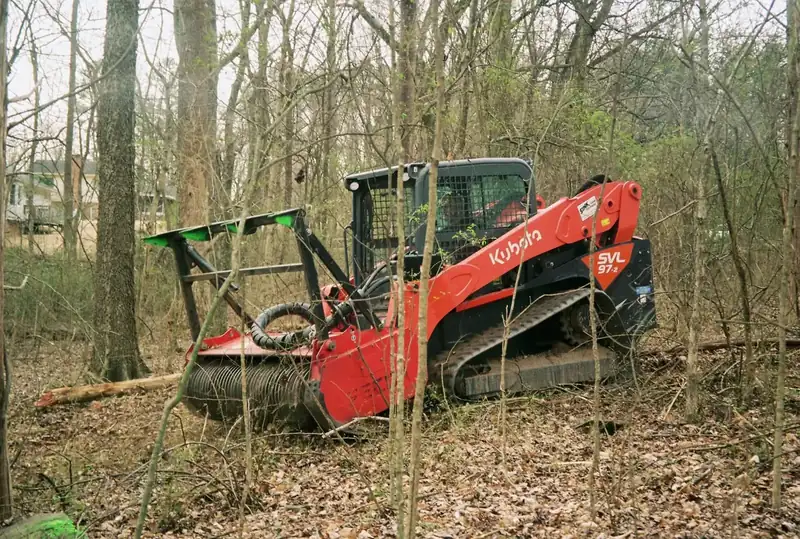
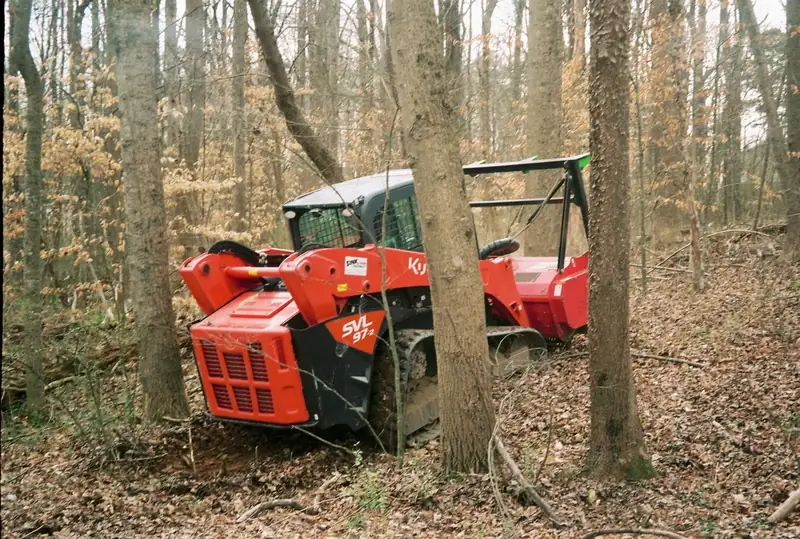
The job is a smaller cousin of final grading. We knock down the highs, fill the lows with the right material, re-establish a gentle slope away from the house, and leave the surface smooth and ready for seed or sod. In our red clay that often means bringing in topsoil, because the reason the lawn is thin and bumpy in the first place is usually that the clay is right at the surface. A box blade on a compact track loader does most of this work; a laser keeps the slope honest.
Clark runs every leveling job himself — veteran, working firefighter, owner. He's regraded enough Triad lawns to know that "level" almost never means flat; it means smooth, with the water going somewhere other than the crawl space. Free estimates in Greensboro and about an hour and twenty minutes in every direction.
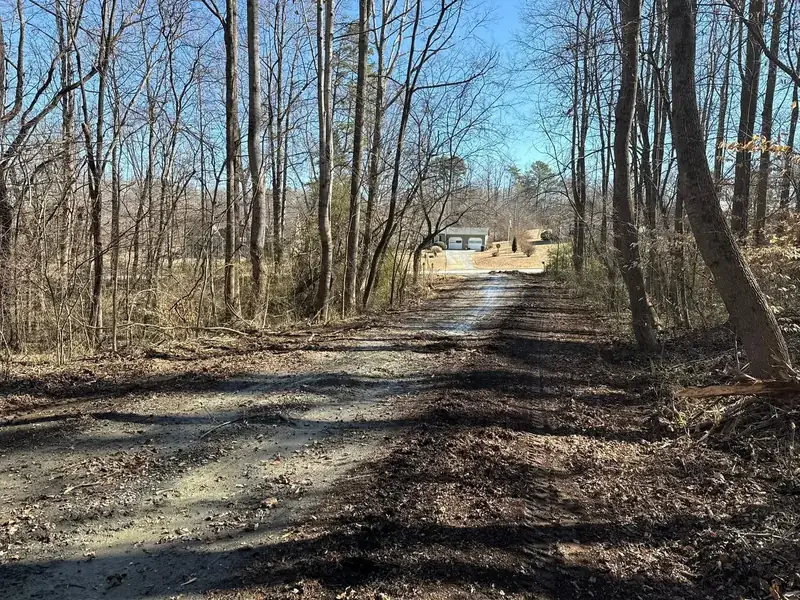
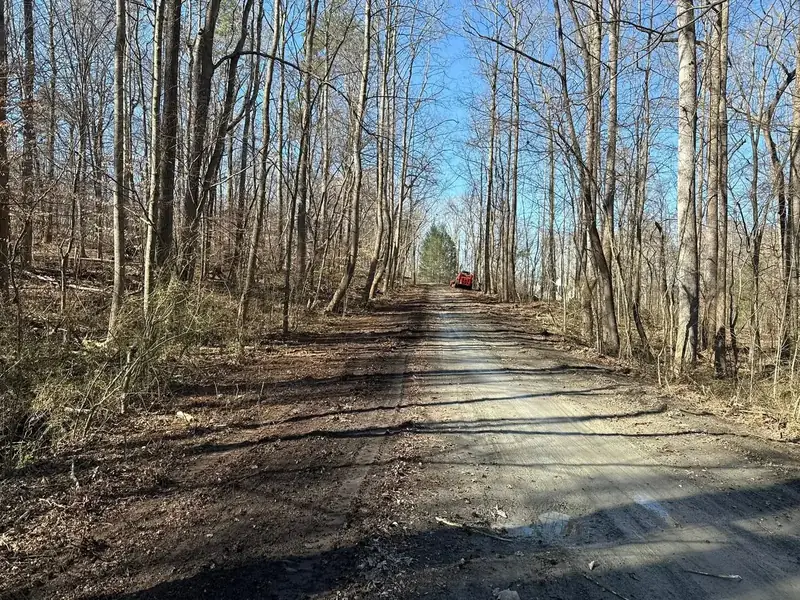
How yard leveling works on Piedmont ground
The first question on a yard leveling job is what's underneath. A low spot that keeps sinking usually has something rotting or settling below it — a stump, a buried brush pile from when the house was built, an old septic tank, a trench that was never compacted. Filling it with topsoil just delays the problem. We probe those spots, dig out what's causing them if it's reasonable, and backfill with compacted clay before putting topsoil on top. A hump, on the other hand, is often a root flare, a rock or a pile of spoil the builder never spread; that gets cut down and the material used elsewhere.
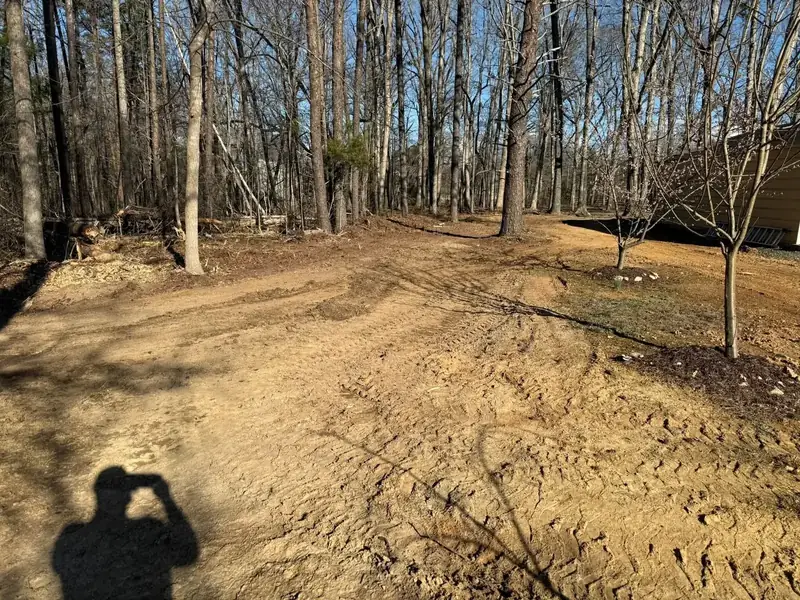
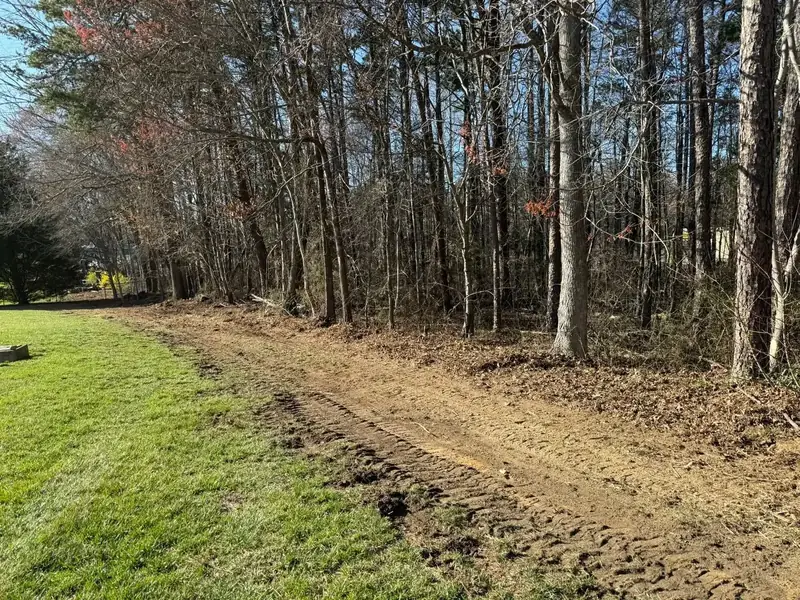
Then the regrade. We shoot the yard with a laser to see the real slope, which is often a surprise — plenty of lawns that look fine have a back half draining toward the house. The box blade cuts and fills in passes until the surface is smooth and pitched correctly: roughly five percent away from the foundation for the first ten feet, then one to two percent across the lawn toward wherever the water can safely leave. We work around trees, utility boxes, walks and septic lines, and we're careful not to bury the lower courses of siding or change the grade against a crawl space vent.
Finish depends on what you're doing next. If the existing grass is coming back, we keep the disturbed area as tight as possible and rake it for overseeding. If the lawn is being redone, we spread topsoil over the whole area and rake it fine for seed or leave it slightly low for sod. Either way the goal is a lawn you can mow in straight lines without bracing for the dip. If the water problem is bigger than the grade — a neighbor's runoff, a spring, a downspout dumping into the low spot — we'll say so and talk about a french drain or a swale instead.
What the job looks like
Walk the yard
We look at the low spots, the humps and where the water goes after a rain, probe anything that's actively sinking, and shoot the slope with a laser to see what's really happening.
Estimate
A written scope: what gets cut, what gets filled, whether anything underground comes out, how much topsoil comes in and how the surface is left. The price holds once we start.
Fix what's underneath
Sinking spots get opened up, the cause removed if practical, and compacted clay backfilled. Humps get cut and the material reused in the lows.
Regrade and topsoil
Box blade passes set the slope away from the house and smooth the surface. Topsoil spread where the lawn is being renewed, raked fine for seed or left low for sod.
Walk-through
We check the finished grade with you, confirm the water has somewhere to go, and clean up the drive and walks before leaving.
Best fit for
- Lawns with low spots that stay wet for days after rain
- Yards that drain toward the house or crawl space
- Bumpy, rutted ground that beats up the mower and the operator
- Settled areas over old stumps, trenches or removed tanks
- Yards torn up by a pool, septic or utility job
- Thin lawns on bare clay that need topsoil to recover
- Sloped back yards being eased to a usable, mowable grade
What drives the price
We don't quote yard leveling from a chart. These are the things that move the number, and we'll walk through each one with you on site:
- Size of the area being regraded — a corner, the back yard or the whole lot
- Depth of the low spots and whether something has to be dug out
- Amount of topsoil or fill brought in
- Whether the existing lawn is being saved or redone
- Obstacles: trees, septic lines, utilities, walks, fences
- Access for the machine — gate width, slopes, neighbors' property
- Season and how wet the ground is
Equipment we bring
- Compact track loader with box blade and grading blade
- Mini excavator for digging out settled areas and old debris
- Laser-guided grade checking
- Dump trailer for topsoil in and spoils out
Yard Leveling questions
How much does it cost to level a yard?
A single low spot or a side yard that just needs the slope corrected is a half-day job and the least expensive version. Regrading an entire back yard, digging out a settled area and bringing in several loads of topsoil is a full day or two and sits higher. Topsoil is often the biggest single cost, so we'll tell you how many loads it takes. The estimate is free and written.
Can you level my yard without killing the grass?
Partly. Where we only need to fill a shallow low spot or take down a small hump, we can keep the disturbance tight and the surrounding grass survives. Where the whole area needs cutting and filling, the existing lawn is going to be torn up and the honest move is to plan on reseeding or sodding it. We'll tell you which you're looking at.
Why does my yard keep sinking in the same spot?
Something's decaying or settling under it. The usual suspects in the Triad are a stump that was buried rather than removed, a brush pile the builder covered, an old septic tank or a utility trench that was never compacted. Topping it off with dirt works for a season. Digging it out and backfilling with compacted clay fixes it.
Should the yard be perfectly flat?
No. A flat yard in our clay is a shallow pond. The target is smooth with a gentle slope — roughly six inches of fall over the first ten feet from the house, then one or two percent across the lawn. That's enough to move water without being noticeable when you mow.
Can a skid steer fit in my back yard?
Our compact track loader needs about six feet of clear width to get through a gate or between a house and a fence. If the gap is narrower, we can sometimes pull a fence panel and reset it, or come in across a neighbor's lot with permission. We'll figure that out on the site visit.
Do you level yards outside Greensboro?
Yes. We work the whole Triad and about an hour and twenty minutes out from Greensboro — Winston-Salem, High Point, Burlington, Kernersville, Asheboro, Reidsville, Mount Airy, Elkin, Salisbury, Albemarle, Sanford, Durham, Chapel Hill and Raleigh.