

Clark is a working firefighter, so this one's personal. Rural homes in the Piedmont sit in pine stands with a privet understory, a leaf layer that hasn't been raked in years, and brush growing right up to the siding. Every few years a dry spring or fall turns that into a real problem — a debris burn gets away, a cutover catches, and the house with thirty feet of mulched ground around it is the one still standing. Defensible space is that thirty feet. A firebreak is the same idea along a property line or around a pine stand, wide enough that a ground fire runs out of fuel before it crosses.
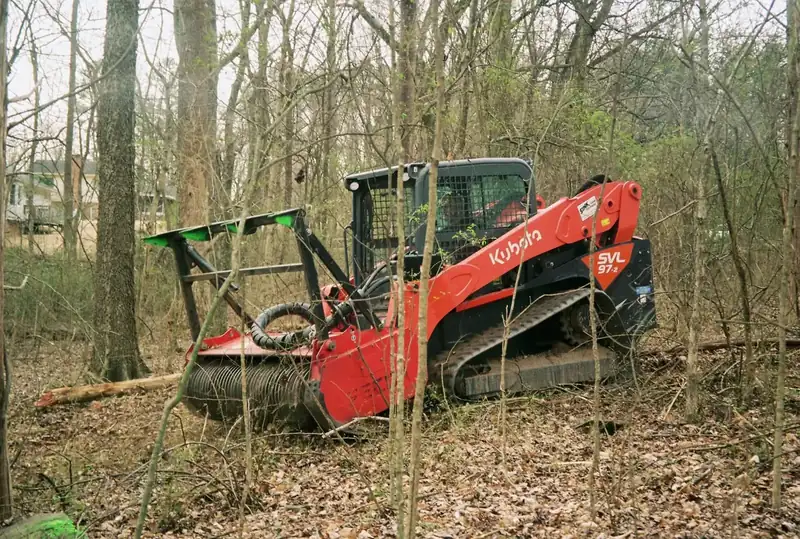
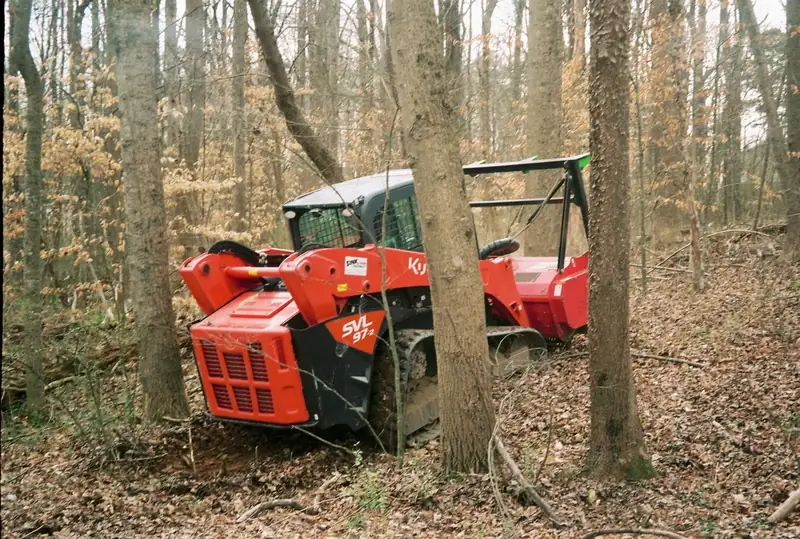
We build both with a forestry mulcher. The machine takes the brush, saplings, dead pine and ladder fuels to the ground in a strip or a ring, and the chip layer it leaves is far less flammable than standing brush and the leaf litter it replaces. Around a house that means a mulched zone with the big trees limbed up and the small stuff gone. Along a line it means a bare or mulched strip the width a fire crew could actually use.
Every firebreak and defensible space job gets the owner on the machine — veteran, firefighter, the person who's stood on the wrong side of a brush fire and knows what stops one. Walk-throughs are free, and we'll be straight about what will actually help on your ground.
How firebreaks works on Piedmont ground
Defensible space around a structure is layered. The first five feet from the siding should have nothing that burns — no brush, no mulch piled against the wall, no stacked firewood. From five to thirty feet, the ground gets mulched clean, trees get spaced so crowns don't touch, and lower limbs get cut up to eight or ten feet so a ground fire can't climb. From thirty to a hundred feet the thinning gets lighter — take the dead pines and the privet, leave the healthy hardwoods, break up the solid brush. We do the mulching and the limbing; the leaf blowing and the firewood stacking are yours.
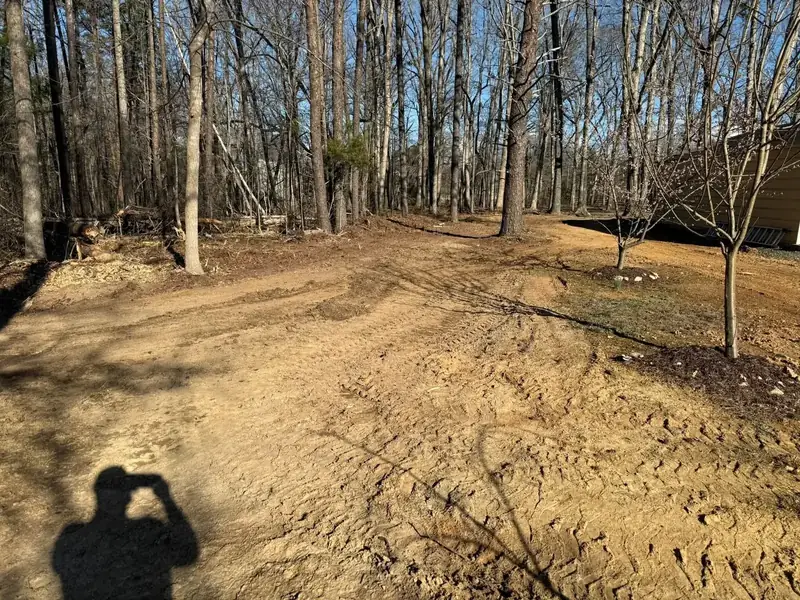
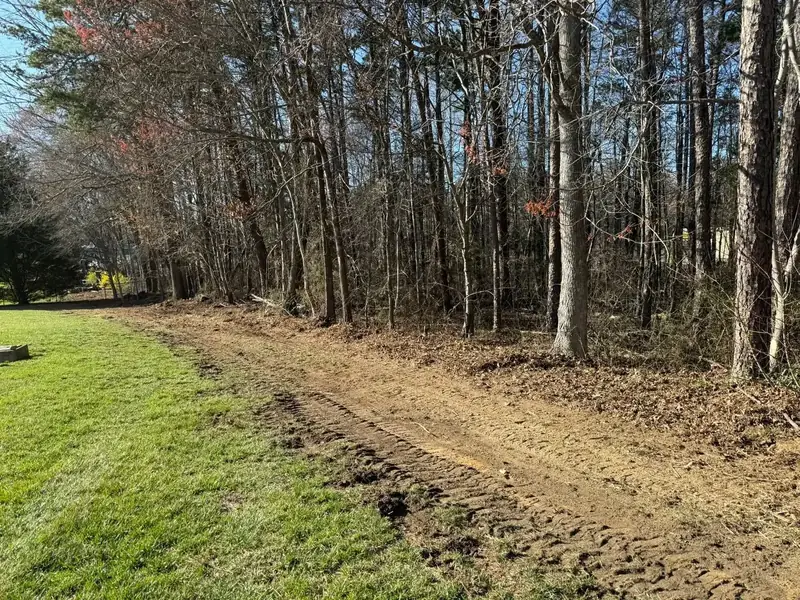
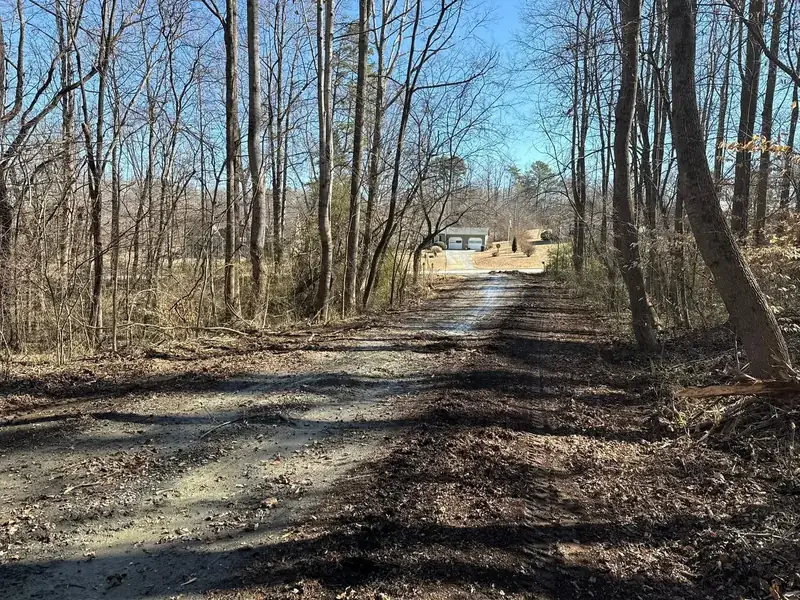
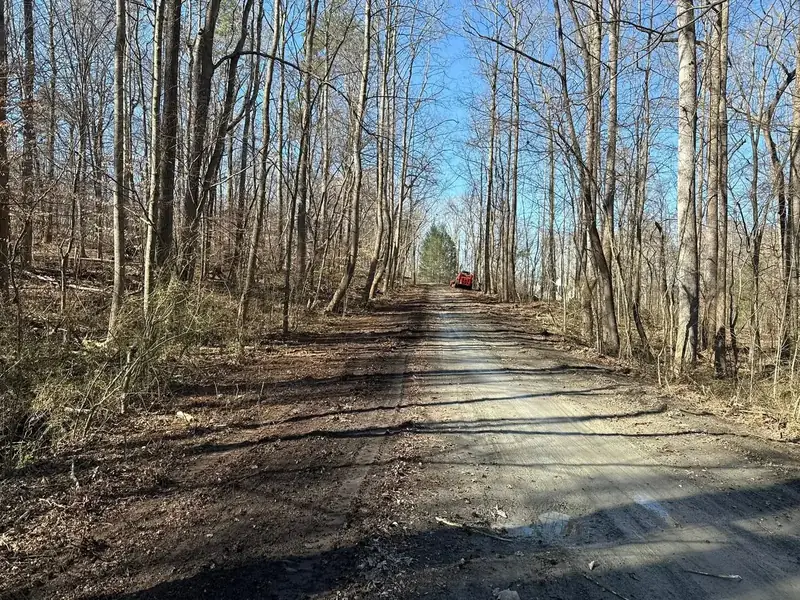
A firebreak on a property line or around a pine plantation is a strip, typically ten to thirty feet wide, with the fuel removed. On flat ground a mulched strip does the job because chips don't carry fire the way standing brush and pine straw do. On slopes or around a stand you're worried about, we can go to bare mineral soil with the blade, which is what the Forest Service does on control lines. A plowed or bladed line also doubles as equipment access, which is why a lot of our firebreaks end up being the farm road nobody had before.
The Piedmont's fire season is spring and fall, when the leaves are down, the humidity drops and the wind picks up. The NC Forest Service issues burn permits and tracks fire danger by county, and the counties around Greensboro — Rockingham, Stokes, Randolph especially — see brush fires every dry stretch. If you do controlled burns on your land, a mulched or bladed break is what keeps them controlled. If you don't, the break is what keeps the neighbor's from becoming yours. Either way, the work is best done in late winter before green-up, when the fuel is visible and the ground is firm.
What the job looks like
Walk it from the structure out
We start at the house or barn and work outward, noting fuel against the walls, touching crowns, dead pines, the leaf layer and where the brush is solid. On a property-line break we walk the line and look at what's on the other side.
Scope the zones
A written estimate that lays out the mulched ring, the limbing height, the thinning beyond it, and any bladed line — with the price. If a dead tree is a hazard to the house, it's called out.
Mulch and limb
The mulcher takes brush, saplings and dead material to the ground in the defensible zone. Keeper trees get limbed up. Dead pines near the house get dropped and grappled off.
Cut the break
Along a line or around a stand, the mulcher runs the strip to the planned width. If the break goes to bare soil, the blade follows and the strip is left clean enough to drive.
Walk it with you
We walk the zones and the break together, point out what to keep up with each season — the leaf layer, the firewood, the regrowth — and set a follow-up if you want the break maintained.
Best fit for
- Rural homes and cabins sitting in pine woods
- Barns, shops and equipment sheds surrounded by brush
- Property lines bordering cutovers, pine plantations or neighbors who burn
- Landowners who run controlled burns and need control lines
- Hunting camps and remote structures with no hydrant nearby
- Pine stands and timber investments worth protecting
- Subdivisions and HOAs on the edge of large wooded tracts
What drives the price
We don't quote firebreaks from a chart. These are the things that move the number, and we'll walk through each one with you on site:
- Size of the defensible zone and how many structures it wraps
- Length and width of the firebreak
- Fuel density — solid privet and dead pine versus open woods
- Mulched break versus bladed to bare soil
- Dead or hazard trees near structures that need dropping
- Slope and terrain along the line
- Maintenance visits to keep the break open through the season
Equipment we bring
- Compact track loader with a high-flow forestry mulching head
- Grading blade and dozer blade for bare-soil control lines
- Grapple for dead pines and limbs dropped near structures
- Brush cutter / rotary mower attachment for maintaining breaks
- Root rake for cleaning a line to mineral soil
Firebreaks questions
How much does it cost to create defensible space around a house?
A thirty-foot mulched ring with limbing around a typical rural home is usually a day's work, and a longer firebreak along a property line is priced by its length and width. Fuel density, dead trees near the house, and whether the break goes to bare soil are the main variables. We walk it from the house out and give a written number. Estimates are free, and we'll tell you what actually matters on your ground.
How wide should a firebreak be?
Ten feet is a minimum for a mulched or bladed line on flat ground with light fuel. Twenty to thirty feet is better alongside a pine stand, a cutover or a slope. Around a house, thirty feet of cleaned ground is the standard defensible zone, with lighter thinning out to a hundred. Wider is better; the break has to be wide enough that embers and radiant heat don't cross it.
Is a mulched firebreak effective, or does it need to be bare dirt?
A mulched strip stops a ground fire in most Piedmont conditions because the chips don't carry flame the way standing brush and pine straw do. For a control line you'll burn against, or on a slope with heavy fuel, bare mineral soil is the standard and we blade it. We'll tell you which your situation calls for.
When is the best time to build a firebreak in NC?
Late winter, before green-up. The fuel is visible with the leaves down, the ground is firm enough to run the machine, and the break is in place before spring fire season. Fall is the second window. We'd rather not be cutting a break in the middle of a dry spell when the risk is already high.
Do I need a permit to clear defensible space?
Mulching brush around your own house doesn't need a permit. If the firebreak disturbs more than an acre to bare soil, NC erosion rules can apply, and if it runs through a creek buffer we'll keep it mulched rather than bladed there. Burning debris afterward requires a burn permit from the NC Forest Service, which is free and online.
What areas do you serve for firebreaks?
Greensboro and about an hour and twenty minutes in every direction — the Triad, north to the Virginia line through Rockingham and Stokes, west to Mount Airy and Elkin, south to Salisbury, Albemarle and Sanford, and east to Durham, Chapel Hill and Raleigh.