
Rural homes in Sanford sit in the kind of pine and privet that carries a brush fire straight to the siding. A&R Land Services mulches defensible space and cuts firebreaks across Lee County, run by a working firefighter who's seen what thirty feet of clean ground does. We're about 1 hour away in Greensboro.
Lee County gets brush fires every dry stretch, mostly from debris burns that get away. A mulched or bladed break on your Sanford line is what keeps a neighbor's escaped burn from becoming your problem.
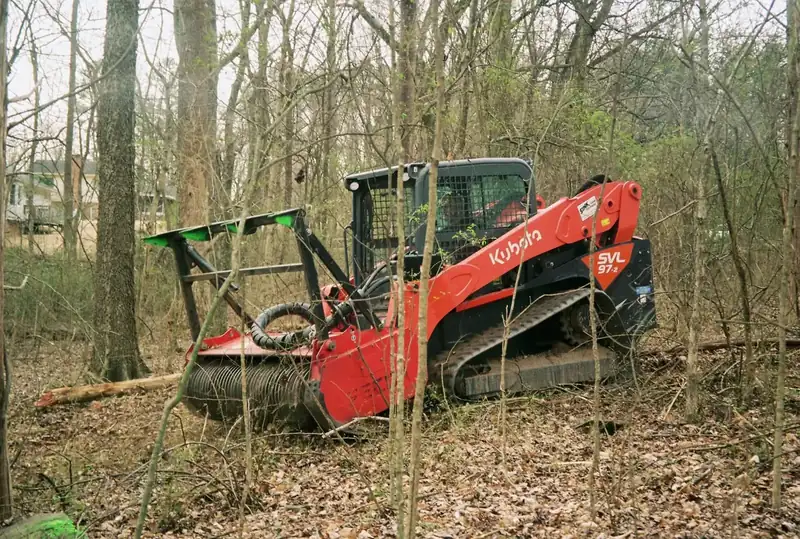
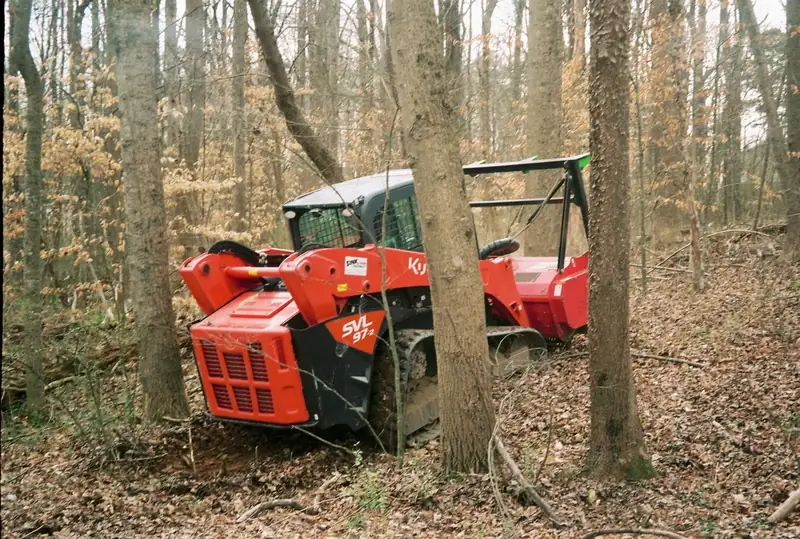
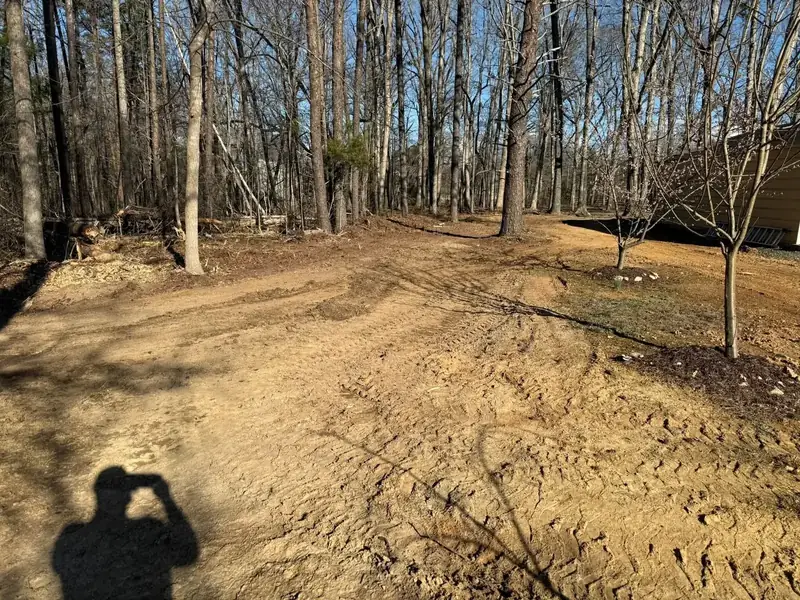
Sanford ground conditions and how they shape firebreaks
Sanford is where three kinds of ground collide. The north and west of town sit in the Deep River Triassic basin — Creedmoor, White Store and Mayodan clays over red shale and sandstone that are slick when wet and brick-hard when dry, with the old brick-clay pits to prove it. East toward the Harnett line the land drops onto the Sandhills edge, where Blaney, Vaucluse and Wagram sands drain in minutes and grow longleaf and turkey oak. South toward Carthage you climb back onto slate-belt Badin and Tatum soils. The Deep River, Cape Fear and Little Buffalo Creek carry the drainage, and the bottoms are privet, box elder and sweetgum.
Around Raven Rock State Park (east), San-Lee Park and Carthage Street, the properties we're usually called to look like this:
- Former farmland along US-1, NC-87 and Tramway Road being cleared and rough graded for subdivisions and commercial
- Cattle and old tobacco ground along NC-42 and Deep River Road reclaimed for pasture or split into homesteads
- Sandhills-edge lots east of town needing clearing and erosion control on sandy slopes
What firebreaks jobs look like around Sanford
One job we see over and over near Carthage Street: Former farmland along US-1, NC-87 and Tramway Road being cleared and rough graded for subdivisions and commercial. That's textbook firebreaks work, and it's usually a one-mobilization job for us.
Out toward Broadway the pattern changes — more Landowners who run controlled burns and need control lines. The approach is the same, the time on site is what moves.
Either way, the first question we ask on a Sanford site walk is what the ground needs to do afterward, because that decides how far we take it.
Neighbors in Apex, Cary and Troy call us for the same work; Sanford sits right in the middle of that route.
Why Sanford property owners call A&R
Greensboro to Sanford is about 1 hour, which makes a maintenance pass on the break every year or two practical. Breaks grow back in; we're close enough to keep yours open.
Send us photos of what's growing against your Sanford house or barn and we'll tell you what it'll take to make it defensible.
Firebreaks in Sanford: questions
How much does it cost to create defensible space around a house?
A thirty-foot mulched ring with limbing around a typical rural home is usually a day's work, and a longer firebreak along a property line is priced by its length and width. Fuel density, dead trees near the house, and whether the break goes to bare soil are the main variables. We walk it from the house out and give a written number. Estimates are free, and we'll tell you what actually matters on your ground.
Do I need a permit to clear defensible space?
Mulching brush around your own house doesn't need a permit. If the firebreak disturbs more than an acre to bare soil, NC erosion rules can apply, and if it runs through a creek buffer we'll keep it mulched rather than bladed there. Burning debris afterward requires a burn permit from the NC Forest Service, which is free and online.
How far is A&R Land Services from Sanford?
We're based in Greensboro, about 1 hour from Sanford. Lee County is inside the radius we work every week, so there's no long-haul mobilization charge built into your estimate.
Do you handle firebreaks near Raven Rock State Park (east) and San-Lee Park?
Yes. We work throughout Sanford and the surrounding Lee County area, including properties around Raven Rock State Park (east), San-Lee Park and Carthage Street. If you're outside the town limits, send the address and we'll confirm it's in range.
What should I expect from a firebreaks job in Lee County?
Pine stands and timber investments worth protecting is the most common version of it around Sanford. We walk the zones and the break together, point out what to keep up with each season — the leaf layer, the firewood, the regrowth — and set a follow-up if you want the break maintained. Fuel density — solid privet and dead pine versus open woods is the factor that moves the price most on Lee County jobs, and we'll walk through it with you on site.