
Fire season in Troy is spring and fall, when the leaves are down and the wind's up. The time to build the break is late winter, and a firefighter on the machine knows why. Call before the dry spell, not during it.
The fuel around Troy homes is loblolly pine straw over a privet and honeysuckle understory, usually with a few dead pines standing in it. That mix burns fast and climbs. On Montgomery County defensible space jobs we take the understory, limb the pines, and drop the dead ones first.
Troy ground conditions and how they shape firebreaks
Troy is the seat of Montgomery County and the gateway to the Uwharries, and the land is unlike the rest of our service area. The soils are Badin, Tatum, Georgeville and Uwharrie series — thin, silty and full of slate and rhyolite — over the oldest mountains on the continent. Rock is the defining feature: it's in every trench, every pad and most driveways. The Little River, the Uwharrie River and Barnes Creek drain the township toward the Pee Dee and Lake Tillery. Cut-over timber here grows back as a thicket of loblolly, sweetgum and Virginia pine, and the old homeplaces are buried in privet, wisteria and kudzu.
Around the Uwharrie River, Ophir Road and Montgomery Community College, the properties we're usually called to look like this:
- Logging roads and gravel drives through the Uwharries that need rebuilding and ditching
- Lake Tillery waterfront and second-row lots needing view clearing and a graded pad over rock
- Small farms toward Star and Biscoe with pasture gone to pine and fence rows to reclaim
What firebreaks jobs look like around Troy
If you're near Montgomery Community College or Badin Lake, odds are your situation is one we've already worked: logging roads and gravel drives through the Uwharries that need rebuilding and ditching, or landowners who run controlled burns and need control lines.
The firebreaks approach for Montgomery County ground is the same either way — look first, quote in writing, bring the right attachment, walk it with you when it's done.
Seagrove, Concord and Asheboro are in the same loop as Troy for us — same crew, same pricing basis.
Why Troy property owners call A&R
We tell Montgomery County landowners what actually helps and skip the rest. A thirty-foot mulched ring, limbed trees and the dead pines down does more for a Troy house than any amount of thinning two hundred feet out.
For firebreaks and defensible space in Troy, call (336) 392-8138 before fire season, not during it.
Firebreaks in Troy: questions
How wide should a firebreak be?
Ten feet is a minimum for a mulched or bladed line on flat ground with light fuel. Twenty to thirty feet is better alongside a pine stand, a cutover or a slope. Around a house, thirty feet of cleaned ground is the standard defensible zone, with lighter thinning out to a hundred. Wider is better; the break has to be wide enough that embers and radiant heat don't cross it.
Do I need a permit to clear defensible space?
Mulching brush around your own house doesn't need a permit. If the firebreak disturbs more than an acre to bare soil, NC erosion rules can apply, and if it runs through a creek buffer we'll keep it mulched rather than bladed there. Burning debris afterward requires a burn permit from the NC Forest Service, which is free and online.
How far is A&R Land Services from Troy?
We're based in Greensboro, about 1 hour 5 minutes from Troy. Montgomery County is inside the radius we work every week, so there's no long-haul mobilization charge built into your estimate.
Do you handle firebreaks near the Uwharrie River and Ophir Road?
Yes. We work throughout Troy and the surrounding Montgomery County area, including properties around the Uwharrie River, Ophir Road and Montgomery Community College. If you're outside the town limits, send the address and we'll confirm it's in range.
What should I expect from a firebreaks job in Montgomery County?
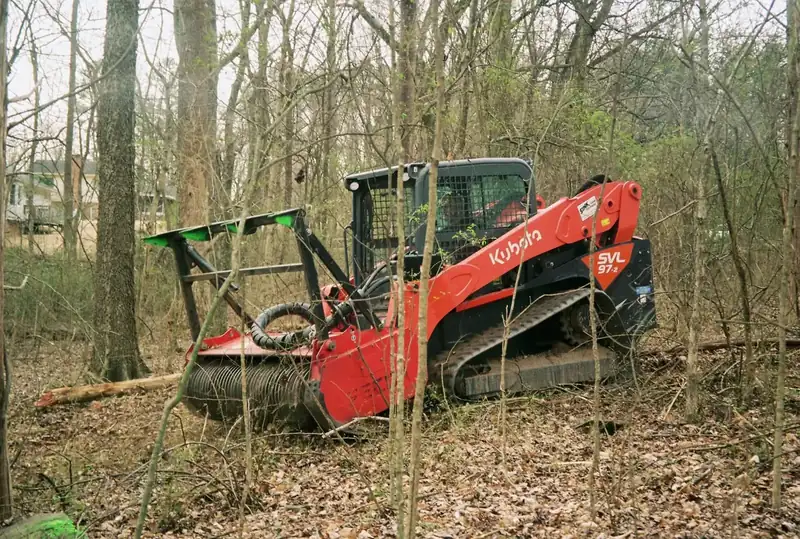
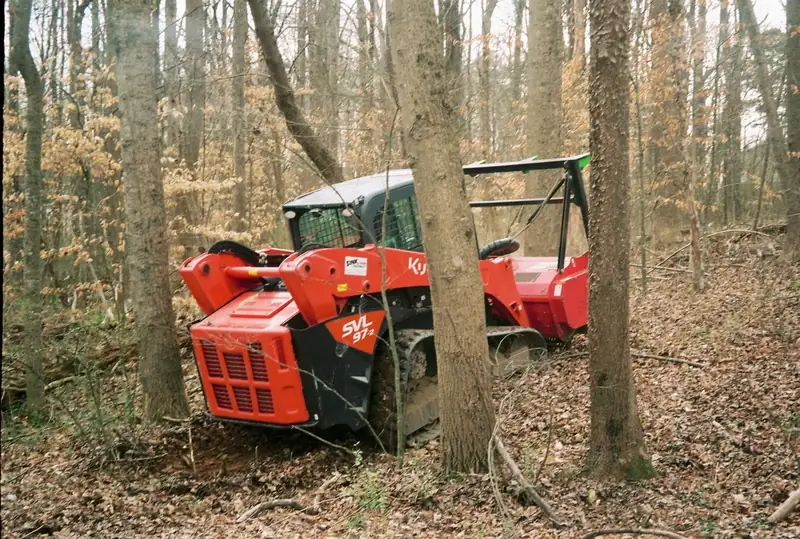
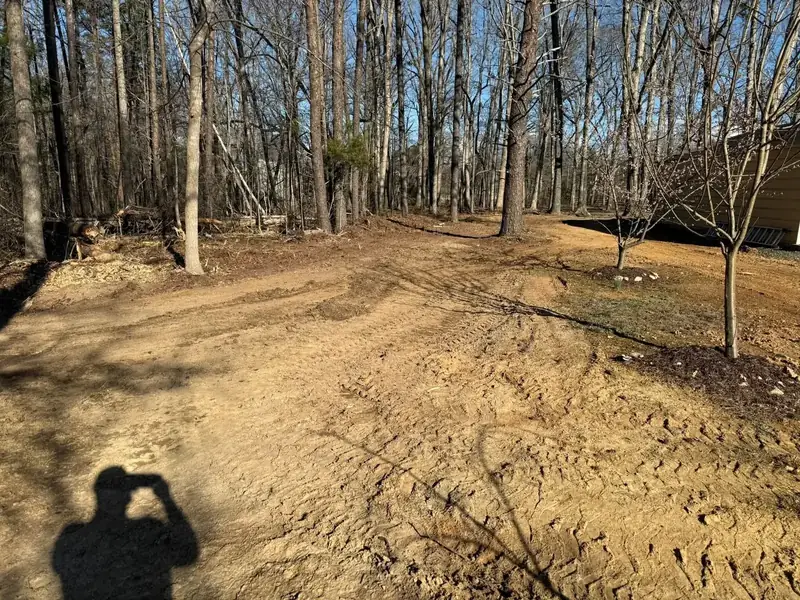
Pine stands and timber investments worth protecting is the most common version of it around Troy. Along a line or around a stand, the mulcher runs the strip to the planned width. If the break goes to bare soil, the blade follows and the strip is left clean enough to drive. Fuel density — solid privet and dead pine versus open woods is the factor that moves the price most on Montgomery County jobs, and we'll walk through it with you on site.