

Fire season in Asheboro is spring and fall, when the leaves are down and the wind's up. The time to build the break is late winter, and a firefighter on the machine knows why. Call before the dry spell, not during it.
The fuel around Asheboro homes is loblolly pine straw over a privet and honeysuckle understory, usually with a few dead pines standing in it. That mix burns fast and climbs. On Randolph County defensible space jobs we take the understory, limb the pines, and drop the dead ones first.
Asheboro ground conditions and how they shape firebreaks
Asheboro is the northern doorstep of the Uwharries, and the dirt changes the minute you cross out of Guilford County on US-220. Instead of deep red clay you get the Carolina slate belt: Badin, Tatum, Georgeville and Herndon silt loams that are shallow over fractured slate and metavolcanic rock, with Cid and Misenheimer on the wetter flats. It is good ground to grade when it is dry and miserable when it is wet, and there is rock close enough to the surface that a dozer blade will find it on most hillsides. Deep River runs along the east side of town, and Back Creek, Hasketts Creek and Caraway Creek cut the rest.
Around Zoo Parkway (NC-159), the North Carolina Zoo and Back Creek, the properties we're usually called to look like this:
- Rocky hunting and cabin tracts south of town toward the Birkhead Wilderness and the Uwharrie National Forest
- Lake Lucas and Lake Reese waterfront lots needing brush and privet cleared with the bank left intact
- Wooded 2–5 acre home lots off Old Cedar Falls Road, NC-42 and Dixie Drive in the growth corridor along I-73/I-74
What firebreaks jobs look like around Asheboro
Most of our firebreaks work in Asheboro comes from two directions. First, rocky hunting and cabin tracts south of town toward the Birkhead Wilderness and the Uwharrie National Forest. Second, pine stands and timber investments worth protecting.
Both show up regularly along Back Creek and Dixie Drive, and both are jobs we can usually walk, quote and schedule inside a couple of weeks.
We also cover firebreaks in Randleman, Seagrove and Trinity, so if you've got property in more than one spot we can often batch the work.
Why Asheboro property owners call A&R
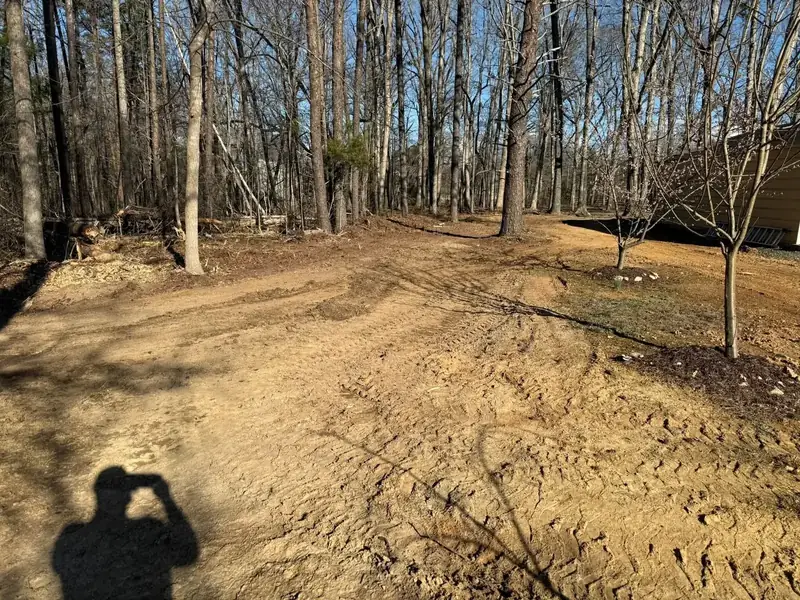
We tell Randolph County landowners what actually helps and skip the rest. A thirty-foot mulched ring, limbed trees and the dead pines down does more for a Asheboro house than any amount of thinning two hundred feet out.
For firebreaks and defensible space in Asheboro, call (336) 392-8138 before fire season, not during it.
Firebreaks in Asheboro: questions
How much does it cost to create defensible space around a house?
A thirty-foot mulched ring with limbing around a typical rural home is usually a day's work, and a longer firebreak along a property line is priced by its length and width. Fuel density, dead trees near the house, and whether the break goes to bare soil are the main variables. We walk it from the house out and give a written number. Estimates are free, and we'll tell you what actually matters on your ground.
Do I need a permit to clear defensible space?
Mulching brush around your own house doesn't need a permit. If the firebreak disturbs more than an acre to bare soil, NC erosion rules can apply, and if it runs through a creek buffer we'll keep it mulched rather than bladed there. Burning debris afterward requires a burn permit from the NC Forest Service, which is free and online.
How far is A&R Land Services from Asheboro?
We're based in Greensboro, about 35 minutes from Asheboro. Randolph County is inside the radius we work every week, so there's no long-haul mobilization charge built into your estimate.
Do you handle firebreaks near Zoo Parkway (NC-159) and the North Carolina Zoo?
Yes. We work throughout Asheboro and the surrounding Randolph County area, including properties around Zoo Parkway (NC-159), the North Carolina Zoo and Back Creek. If you're outside the town limits, send the address and we'll confirm it's in range.
What should I expect from a firebreaks job in Randolph County?
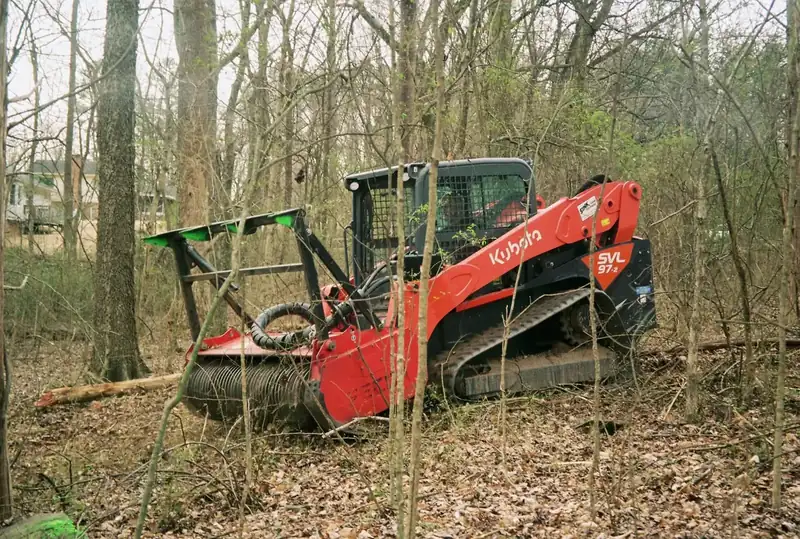
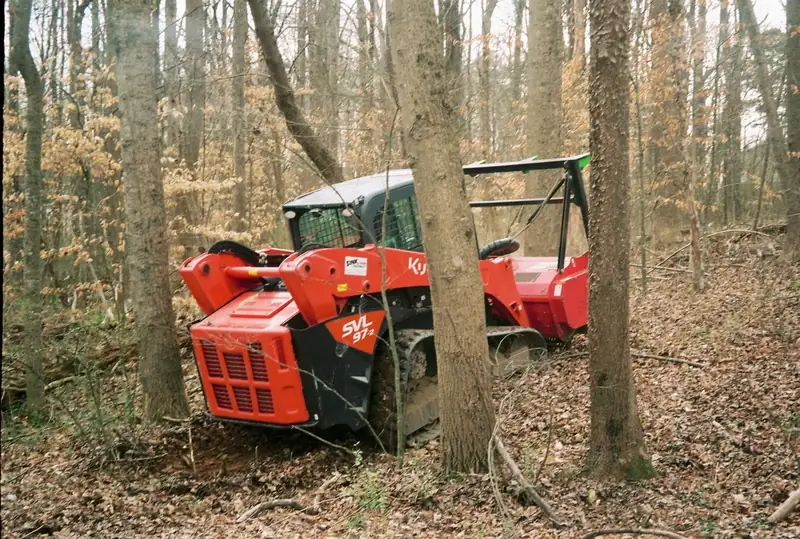
Rural homes and cabins sitting in pine woods is the most common version of it around Asheboro. The mulcher takes brush, saplings and dead material to the ground in the defensible zone. Keeper trees get limbed up. Dead pines near the house get dropped and grappled off. Dead or hazard trees near structures that need dropping is the factor that moves the price most on Randolph County jobs, and we'll walk through it with you on site.