
Fire season in Jamestown is spring and fall, when the leaves are down and the wind's up. The time to build the break is late winter, and a firefighter on the machine knows why. Call before the dry spell, not during it.
The fuel around Jamestown homes is loblolly pine straw over a privet and honeysuckle understory, usually with a few dead pines standing in it. That mix burns fast and climbs. On Guilford County defensible space jobs we take the understory, limb the pines, and drop the dead ones first.
Jamestown ground conditions and how they shape firebreaks
Drainage comes up on nearly every Jamestown job. The town slopes toward the Deep River and High Point Lake, and the low side of most lots has standing water in winter. We've put in a good number of French drains and short ditch runs here, and we talk to owners about where mulched material should and shouldn't sit when the lot drains into the lake watershed. Summer and early fall are the easy months to grade. Winter work gets planned around a few dry days.
Around High Point Lake, Dillon Road and Penny Road, the properties we're usually called to look like this:
- Half-acre to two-acre back lots behind homes on Guilford Road, Penny Road and Dillon Road that have gone to privet and sweetgum
- Infill lots between established subdivisions that need clearing and a level pad before a builder will commit
- Older homeplaces near Mendenhall and Castle McCulloch with wisteria-covered outbuildings and overgrown fence rows
What firebreaks jobs look like around Jamestown
Most of our firebreaks work in Jamestown comes from two directions. First, half-acre to two-acre back lots behind homes on Guilford Road, Penny Road and Dillon Road that have gone to privet and sweetgum. Second, pine stands and timber investments worth protecting.
Both show up regularly along Penny Road and the Forest Oaks and Ragsdale High School area, and both are jobs we can usually walk, quote and schedule inside a couple of weeks.
Greensboro, Pleasant Garden and Trinity are in the same loop as Jamestown for us — same crew, same pricing basis.
Why Jamestown property owners call A&R
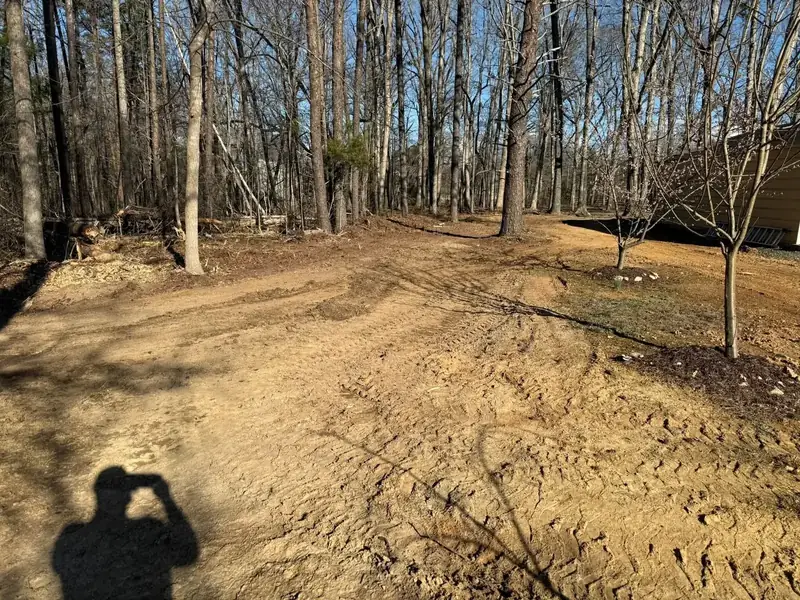
We tell Guilford County landowners what actually helps and skip the rest. A thirty-foot mulched ring, limbed trees and the dead pines down does more for a Jamestown house than any amount of thinning two hundred feet out.
For firebreaks and defensible space in Jamestown, call (336) 392-8138 before fire season, not during it.
Firebreaks in Jamestown: questions
How wide should a firebreak be?
Ten feet is a minimum for a mulched or bladed line on flat ground with light fuel. Twenty to thirty feet is better alongside a pine stand, a cutover or a slope. Around a house, thirty feet of cleaned ground is the standard defensible zone, with lighter thinning out to a hundred. Wider is better; the break has to be wide enough that embers and radiant heat don't cross it.
When is the best time to build a firebreak in NC?
Late winter, before green-up. The fuel is visible with the leaves down, the ground is firm enough to run the machine, and the break is in place before spring fire season. Fall is the second window. We'd rather not be cutting a break in the middle of a dry spell when the risk is already high.
How far is A&R Land Services from Jamestown?
We're based in Greensboro, about 15 minutes from Jamestown. Guilford County is inside the radius we work every week, so there's no long-haul mobilization charge built into your estimate.
Do you handle firebreaks near High Point Lake and Dillon Road?
Yes. We work throughout Jamestown and the surrounding Guilford County area, including properties around High Point Lake, Dillon Road and Penny Road. If you're outside the town limits, send the address and we'll confirm it's in range.
What does firebreaks typically involve on a Jamestown property?
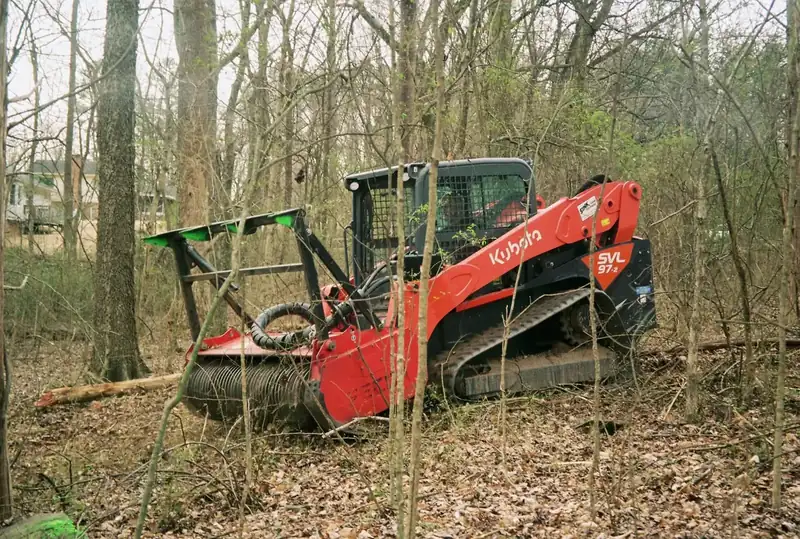
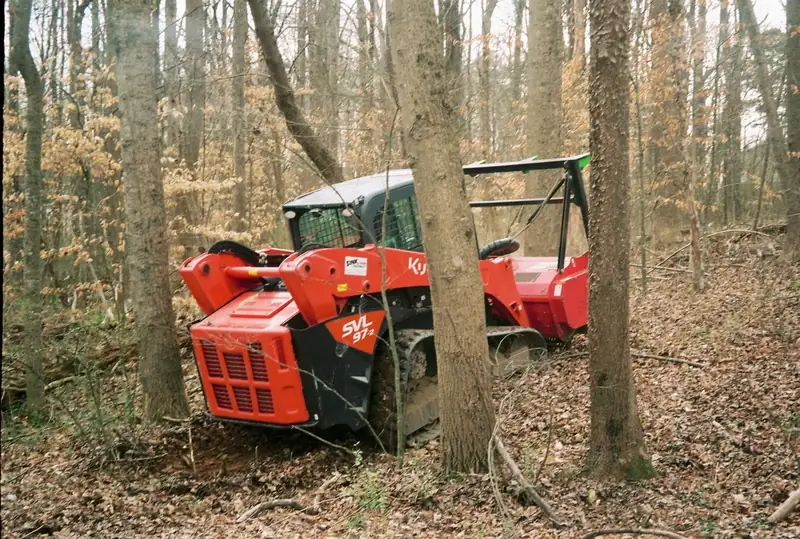
Rural homes and cabins sitting in pine woods is the most common version of it around Jamestown. The mulcher takes brush, saplings and dead material to the ground in the defensible zone. Keeper trees get limbed up. Dead pines near the house get dropped and grappled off. Dead or hazard trees near structures that need dropping is the factor that moves the price most on Guilford County jobs, and we'll walk through it with you on site.