
Fire season in Stoneville is spring and fall, when the leaves are down and the wind's up. The time to build the break is late winter, and a firefighter on the machine knows why. Call before the dry spell, not during it.
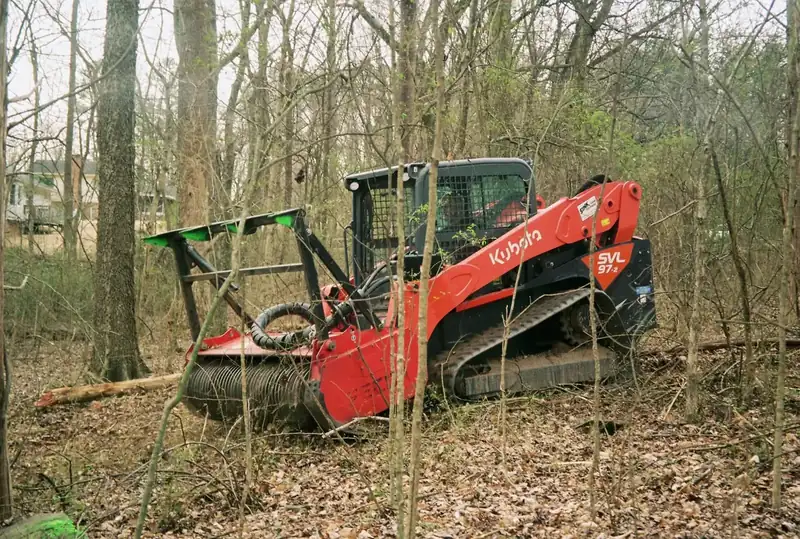
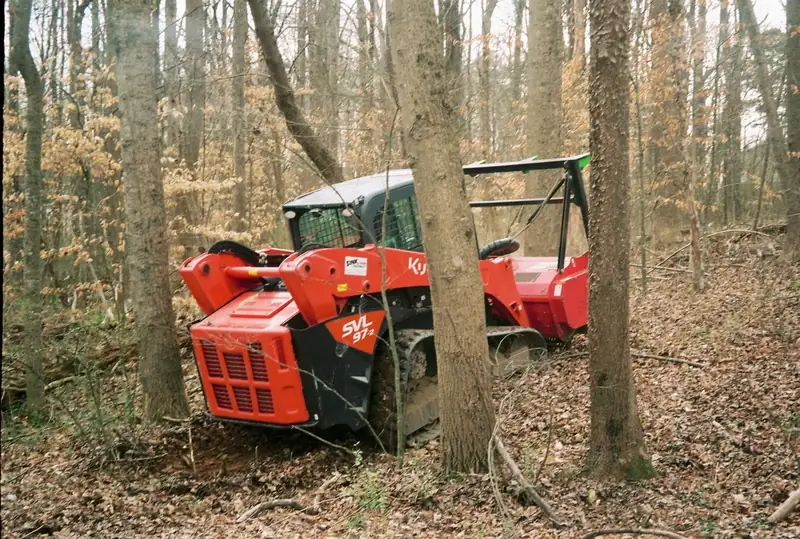
The fuel around Stoneville homes is loblolly pine straw over a privet and honeysuckle understory, usually with a few dead pines standing in it. That mix burns fast and climbs. On Rockingham County defensible space jobs we take the understory, limb the pines, and drop the dead ones first.
Stoneville ground conditions and how they shape firebreaks
Matrimony Creek bottoms are soft and the county will enforce stream buffers on anything draining into it, so we mulch creek edges rather than grub them and keep a vegetated strip along the bank. Red clay ridges along US-220 can be worked in winter if the week has been dry, but basin flats near the Dan need warm weather to carry a machine. Rockingham County requires a sediment plan past one acre, and the water supply watershed designation on parts of the Dan means we seed and straw as soon as the dirt work is done.
Around Price Road, Price community and Main Street (US-220 Business), the properties we're usually called to look like this:
- Hunting leases near the Virginia line needing shooting lanes, plots and a road the truck can get down
- Even-aged pine regrowth from the 1998 tornado track being cleared for new use
- Ten-acre home sites off US-220 Business for modular and stick-built houses needing pads, driveways and septic areas
What firebreaks jobs look like around Stoneville
A typical Stoneville call for firebreaks looks like this: Hunting leases near the Virginia line needing shooting lanes, plots and a road the truck can get down. We've handled that exact situation around Main Street (US-220 Business) and Settle Bridge Road more times than we can count.
The other common one is Pine stands and timber investments worth protecting, which usually means a tighter work area and more care around what stays.
If your property is somewhere in between, send the address and we'll tell you which side of the line it falls on.
We also cover firebreaks in Mayodan, Madison and Wentworth, so if you've got property in more than one spot we can often batch the work.
Why Stoneville property owners call A&R
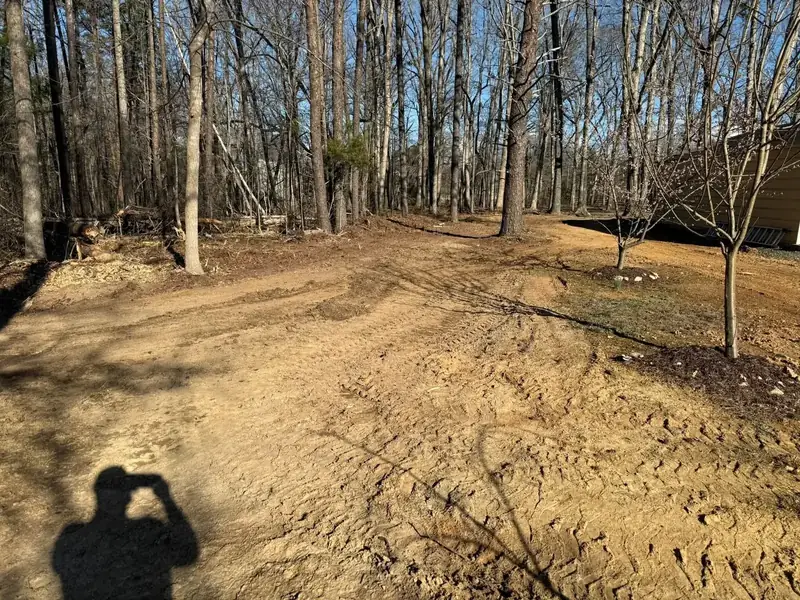
We tell Rockingham County landowners what actually helps and skip the rest. A thirty-foot mulched ring, limbed trees and the dead pines down does more for a Stoneville house than any amount of thinning two hundred feet out.
For firebreaks and defensible space in Stoneville, call (336) 392-8138 before fire season, not during it.
Firebreaks in Stoneville: questions
How much does it cost to create defensible space around a house?
A thirty-foot mulched ring with limbing around a typical rural home is usually a day's work, and a longer firebreak along a property line is priced by its length and width. Fuel density, dead trees near the house, and whether the break goes to bare soil are the main variables. We walk it from the house out and give a written number. Estimates are free, and we'll tell you what actually matters on your ground.
Is a mulched firebreak effective, or does it need to be bare dirt?
A mulched strip stops a ground fire in most Piedmont conditions because the chips don't carry flame the way standing brush and pine straw do. For a control line you'll burn against, or on a slope with heavy fuel, bare mineral soil is the standard and we blade it. We'll tell you which your situation calls for.
How far is A&R Land Services from Stoneville?
We're based in Greensboro, about 42 minutes from Stoneville. Rockingham County is inside the radius we work every week, so there's no long-haul mobilization charge built into your estimate.
Do you handle firebreaks near Price Road and Price community?
Yes. We work throughout Stoneville and the surrounding Rockingham County area, including properties around Price Road, Price community and Main Street (US-220 Business). If you're outside the town limits, send the address and we'll confirm it's in range.
What does firebreaks typically involve on a Stoneville property?
Rural homes and cabins sitting in pine woods is the most common version of it around Stoneville. We start at the house or barn and work outward, noting fuel against the walls, touching crowns, dead pines, the leaf layer and where the brush is solid. On a property-line break we walk the line and look at what's on the other side. Dead or hazard trees near structures that need dropping is the factor that moves the price most on Rockingham County jobs, and we'll walk through it with you on site.