
If your Raleigh house or barn backs up to a cutover, a pine stand or a neighbor who burns, a firebreak is cheap insurance. Veteran and fireman owned, based in Greensboro, and we build breaks on Wake County property every late winter.
A lot of Raleigh homes were built on a cleared pad with the pines left close for shade, and twenty years later the crowns touch the roof. We thin and limb those so a ground fire can't get into the canopy over the house.
Raleigh ground conditions and how they shape firebreaks
Raleigh is the far end of our service area, so we are selective and we go for real jobs. North Raleigh past Falls of Neuse Road, Leesville Road and Durant Road still has estate lots and the last wooded parcels in the big subdivisions, and owners want understory mulched, views opened and backyards reclaimed. The south and east sides along Rock Quarry Road, Poole Road and Old Stage Road toward Garner have larger wooded and former-farm tracts being cleared for infill subdivisions and commercial. Wendell, Knightdale and the US-64 corridor are close enough that we handle them on the same trip.
Around Falls Lake, Walnut Creek and Leesville Road, the properties we're usually called to look like this:
- Church and school properties with wooded back acreage to open for parking or fields
- Neuse River and Crabtree Creek frontage with buffer-limited clearing and trail work
- Estate and large subdivision lots in north Raleigh off Falls of Neuse, Leesville and Durant Roads wanting understory mulched and views opened
What firebreaks jobs look like around Raleigh
If you're near Leesville Road or I-540, odds are your situation is one we've already worked: church and school properties with wooded back acreage to open for parking or fields, or property lines bordering cutovers, pine plantations or neighbors who burn.
The firebreaks approach for Wake County ground is the same either way — look first, quote in writing, bring the right attachment, walk it with you when it's done.
If you're just outside Raleigh — Cary, Apex, Sanford or anywhere between — you're still inside our regular range.
Why Raleigh property owners call A&R
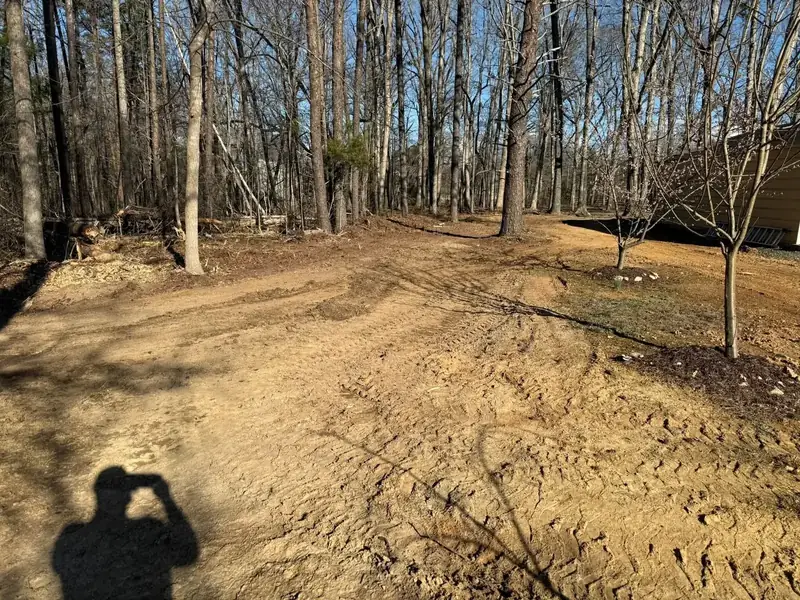
A mulched defensible zone in Raleigh doesn't look like a scraped moat around the house. The big trees stay, limbed up, over a clean chip floor. It looks like a maintained property, because that's what it is.
Firebreak work in Wake County starts with a walk from the structure out. Get in touch — late winter is the time.
Firebreaks in Raleigh: questions
How wide should a firebreak be?
Ten feet is a minimum for a mulched or bladed line on flat ground with light fuel. Twenty to thirty feet is better alongside a pine stand, a cutover or a slope. Around a house, thirty feet of cleaned ground is the standard defensible zone, with lighter thinning out to a hundred. Wider is better; the break has to be wide enough that embers and radiant heat don't cross it.
Do I need a permit to clear defensible space?
Mulching brush around your own house doesn't need a permit. If the firebreak disturbs more than an acre to bare soil, NC erosion rules can apply, and if it runs through a creek buffer we'll keep it mulched rather than bladed there. Burning debris afterward requires a burn permit from the NC Forest Service, which is free and online.
How far is A&R Land Services from Raleigh?
We're based in Greensboro, about 1 hour 20 minutes from Raleigh. Wake County is inside the radius we work every week, so there's no long-haul mobilization charge built into your estimate.
Do you handle firebreaks near Falls Lake and Walnut Creek?
Yes. We work throughout Raleigh and the surrounding Wake County area, including properties around Falls Lake, Walnut Creek and Leesville Road. If you're outside the town limits, send the address and we'll confirm it's in range.
How do you approach firebreaks on Raleigh ground?
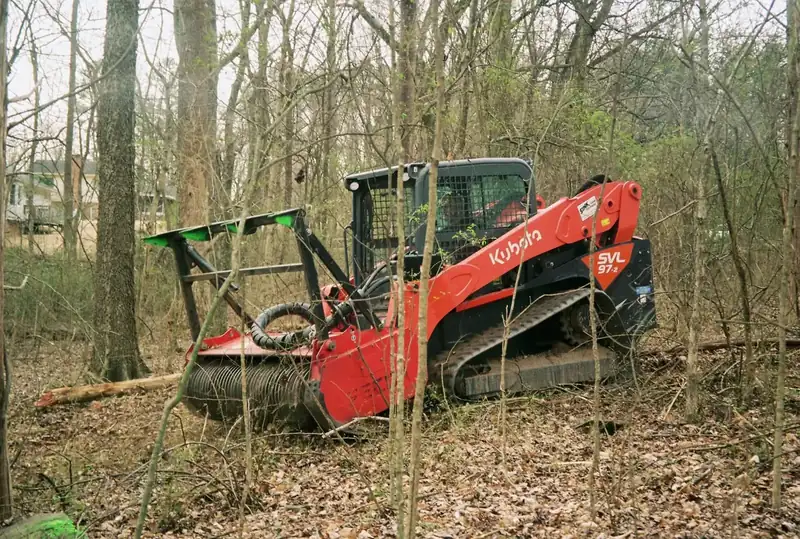
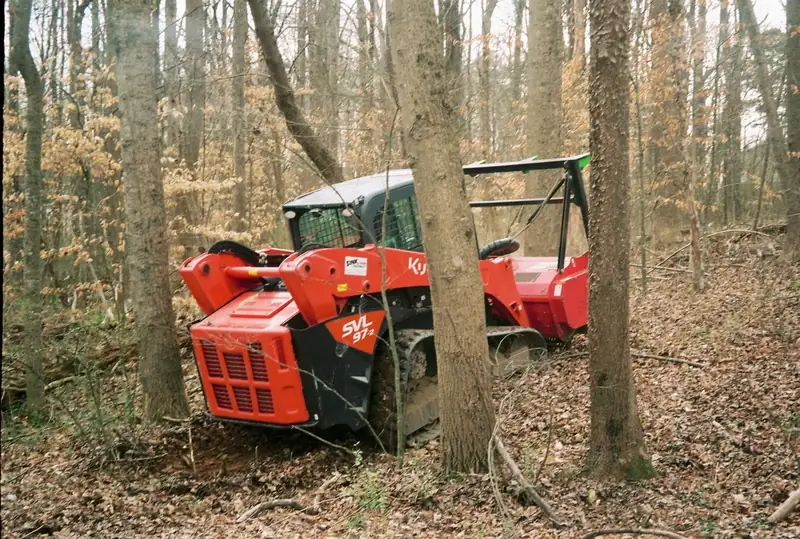
Hunting camps and remote structures with no hydrant nearby is the most common version of it around Raleigh. Along a line or around a stand, the mulcher runs the strip to the planned width. If the break goes to bare soil, the blade follows and the strip is left clean enough to drive. Length and width of the firebreak is the factor that moves the price most on Wake County jobs, and we'll walk through it with you on site.