
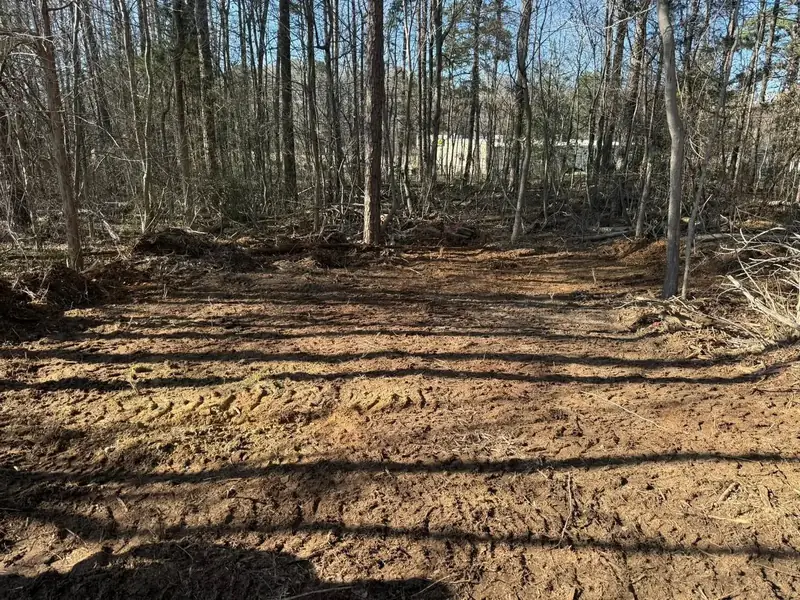
Most wooded property in Raleigh has the same problem — good trees overhead, a privet and honeysuckle wall underneath. A&R Land Services clears the understory and leaves the canopy, turning a closed-in woods into a clean, walkable stand. We work Wake County from Greensboro, about 1 hour 20 minutes away.
A lot of Raleigh homesites were built on a cleared pad with the surrounding woods left alone, and fifteen years later the woods have closed in to the back door. Clearing the understory in that ring around the house opens the view, drops the tick load and gives you defensible space all at once.
Raleigh ground conditions and how they shape underbrush clearing
Wake County has its own erosion and sediment control program, and the City of Raleigh enforces a tree-conservation ordinance on larger lots and a Neuse River riparian buffer rule — 50 feet on perennial and intermittent streams — that applies across the entire basin. Falls Lake watershed adds more rules north of town. We map buffers and tree-save areas before we quote, mulch rather than grub where the root mat matters, and keep the Crabtree and Neuse bottoms for dry months. Granite is near the surface in north Raleigh and can turn a pad into a hammer job.
Around Falls Lake, Swift Creek and Lake Wheeler, the properties we're usually called to look like this:
- Former farm and timber tracts on the south and east sides along Rock Quarry Road, Poole Road and Old Stage Road being cleared for infill subdivisions
- Church and school properties with wooded back acreage to open for parking or fields
- Neuse River and Crabtree Creek frontage with buffer-limited clearing and trail work
What underbrush clearing jobs look like around Raleigh
Most of our underbrush clearing work in Raleigh comes from two directions. First, former farm and timber tracts on the south and east sides along Rock Quarry Road, Poole Road and Old Stage Road being cleared for infill subdivisions. Second, reducing tick, snake and fire fuel around a house in the woods.
Both show up regularly along Lake Wheeler and Durant Road, and both are jobs we can usually walk, quote and schedule inside a couple of weeks.
If you're just outside Raleigh — Durham, Apex, Cary or anywhere between — you're still inside our regular range.
Why Raleigh property owners call A&R
Greensboro to Raleigh is about 1 hour 20 minutes, which means a smaller job — a one-acre ring around a house, a buffer strip along a road — is still worth scheduling. We're in Wake County regularly and can usually fit it in within a couple of weeks.
Send us photos of what's under your trees in Raleigh and we'll tell you what it takes to open it up.
Underbrush Clearing in Raleigh: questions
Will clearing underbrush hurt my trees?
Done carefully, no. We flag the keepers, keep a margin around each trunk, and cut low limbs rather than push through them. Mature oaks and poplars have deep enough roots that a track machine passing over the mulch layer doesn't bother them. We avoid running directly over the root flare of the biggest trees.
Will the privet grow back after mulching?
It'll try. Privet resprouts from the root crown within a season. The mulch layer slows it and makes the resprouts easy to see and mow or treat. Most customers do a light follow-up the next year and are ahead of it from then on. We'll talk through what that looks like on your property.
How far is A&R Land Services from Raleigh?
We're based in Greensboro, about 1 hour 20 minutes from Raleigh. Wake County is inside the radius we work every week, so there's no long-haul mobilization charge built into your estimate.
Do you handle underbrush clearing near Falls Lake and Swift Creek?
Yes. We work throughout Raleigh and the surrounding Wake County area, including properties around Falls Lake, Swift Creek and Lake Wheeler. If you're outside the town limits, send the address and we'll confirm it's in range.
What does underbrush clearing typically involve on a Raleigh property?
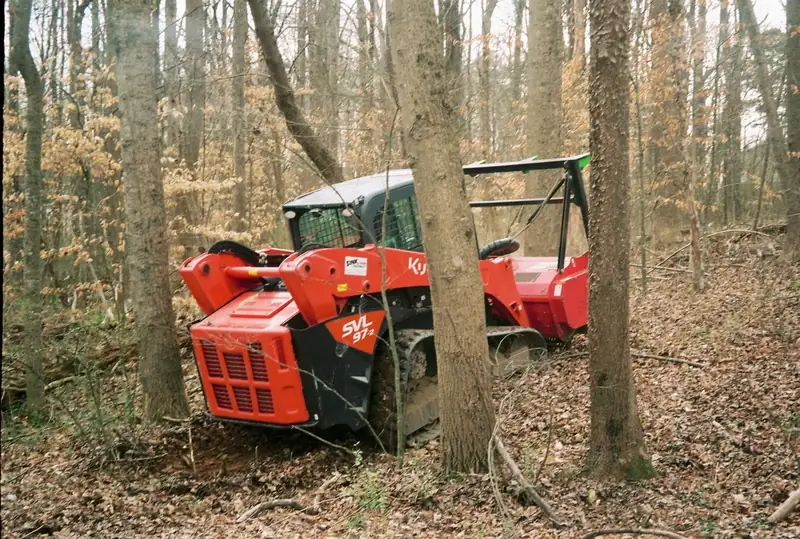
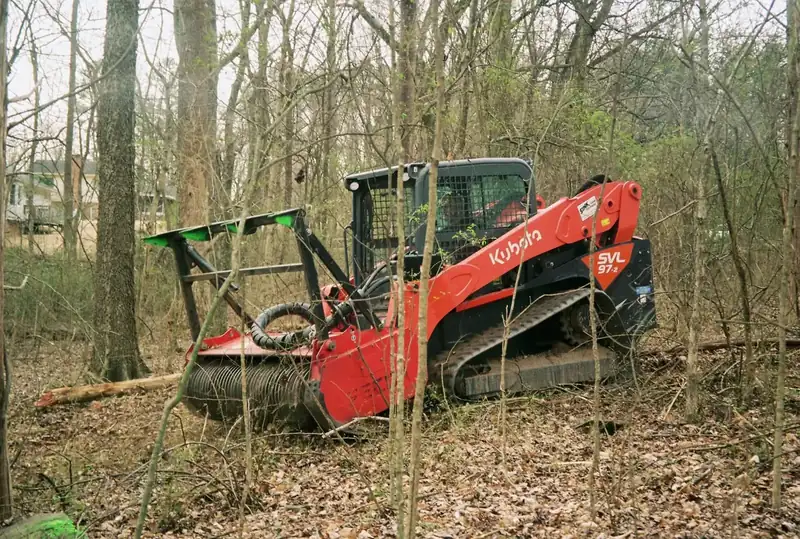
Hardwood stands being prepped for a cabin or outbuilding is the most common version of it around Raleigh. The mulcher works between the trunks, taking privet, honeysuckle, saplings and dead material to the ground. Low limbs in the way are cut cleanly. We leave a clean margin around every keeper tree. Tree spacing — tight stands take longer to work between is the factor that moves the price most on Wake County jobs, and we'll walk through it with you on site.