
Fire season in Rural Hall is spring and fall, when the leaves are down and the wind's up. The time to build the break is late winter, and a firefighter on the machine knows why. Call before the dry spell, not during it.
The fuel around Rural Hall homes is loblolly pine straw over a privet and honeysuckle understory, usually with a few dead pines standing in it. That mix burns fast and climbs. On Forsyth County defensible space jobs we take the understory, limb the pines, and drop the dead ones first.
Rural Hall ground conditions and how they shape firebreaks
Rural Hall is on the northern edge of Forsyth where the ground starts climbing toward the Sauratown range, and the soils reflect it — Cecil and Pacolet on the lower ridges, with rockier Wedowee and Rion as you head toward Germanton and Stokes County. Grassy Creek and Buffalo Creek drain west to the Yadkin, and Mill Creek heads north toward the Dan. The bottoms are narrow and tight. Fallow tobacco land here comes back as loblolly and Virginia pine with sweetgum, and the field edges are overrun with honeysuckle, privet and blackberry.
Around Covington Memorial Park, NC-66 and Tobaccoville Road, the properties we're usually called to look like this:
- Ten- to sixty-acre former tobacco farms along Tobaccoville Road and Germanton Road returning to pasture and hay
- Farm roads and gravel lanes to back fields and barns
- Hunting tracts toward the Stokes line needing lanes, trails and firebreaks through Virginia pine
What firebreaks jobs look like around Rural Hall
Most of our firebreaks work in Rural Hall comes from two directions. First, ten- to sixty-acre former tobacco farms along Tobaccoville Road and Germanton Road returning to pasture and hay. Second, pine stands and timber investments worth protecting.
Both show up regularly along Tobaccoville Road and Stanleyville Drive, and both are jobs we can usually walk, quote and schedule inside a couple of weeks.
If you're just outside Rural Hall — Walkertown, King, Tobaccoville or anywhere between — you're still inside our regular range.
Why Rural Hall property owners call A&R
We tell Forsyth County landowners what actually helps and skip the rest. A thirty-foot mulched ring, limbed trees and the dead pines down does more for a Rural Hall house than any amount of thinning two hundred feet out.
For firebreaks and defensible space in Rural Hall, call (336) 392-8138 before fire season, not during it.
Firebreaks in Rural Hall: questions
How wide should a firebreak be?
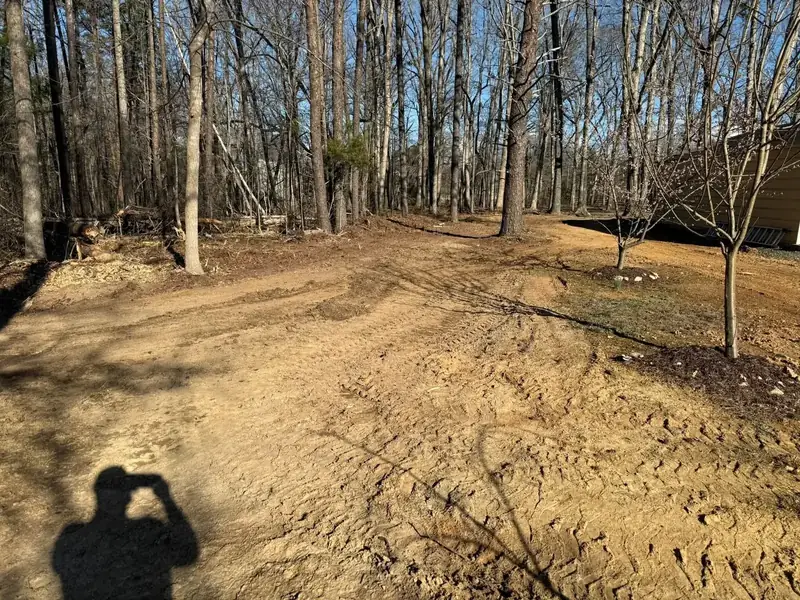
Ten feet is a minimum for a mulched or bladed line on flat ground with light fuel. Twenty to thirty feet is better alongside a pine stand, a cutover or a slope. Around a house, thirty feet of cleaned ground is the standard defensible zone, with lighter thinning out to a hundred. Wider is better; the break has to be wide enough that embers and radiant heat don't cross it.
When is the best time to build a firebreak in NC?
Late winter, before green-up. The fuel is visible with the leaves down, the ground is firm enough to run the machine, and the break is in place before spring fire season. Fall is the second window. We'd rather not be cutting a break in the middle of a dry spell when the risk is already high.
How far is A&R Land Services from Rural Hall?
We're based in Greensboro, about 40 minutes from Rural Hall. Forsyth County is inside the radius we work every week, so there's no long-haul mobilization charge built into your estimate.
Do you handle firebreaks near Covington Memorial Park and NC-66?
Yes. We work throughout Rural Hall and the surrounding Forsyth County area, including properties around Covington Memorial Park, NC-66 and Tobaccoville Road. If you're outside the town limits, send the address and we'll confirm it's in range.
What should I expect from a firebreaks job in Forsyth County?
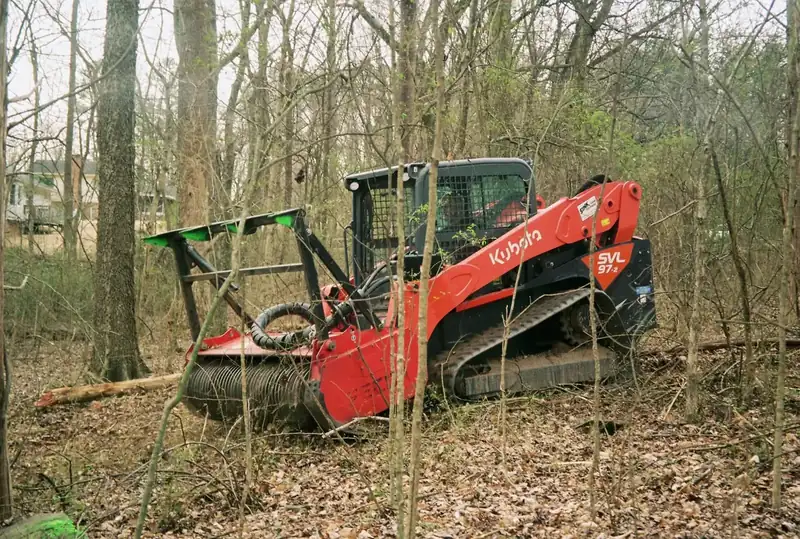
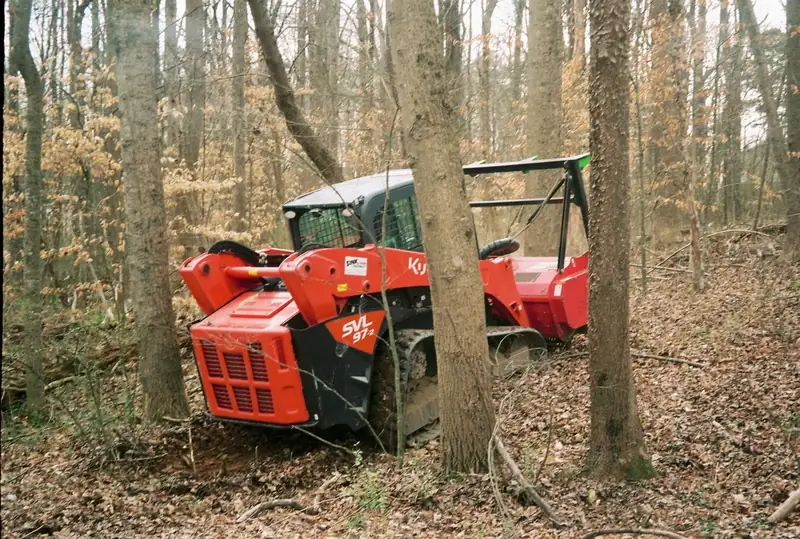
Rural homes and cabins sitting in pine woods is the most common version of it around Rural Hall. The mulcher takes brush, saplings and dead material to the ground in the defensible zone. Keeper trees get limbed up. Dead pines near the house get dropped and grappled off. Dead or hazard trees near structures that need dropping is the factor that moves the price most on Forsyth County jobs, and we'll walk through it with you on site.