
Grading in Climax means dealing with the same clay every property in Guilford County sits on — it holds water, it compacts hard, and it punishes anybody who shapes it at the wrong moisture. We know the ground, we're about 25 minutes from Greensboro, and we grade it the way it has to be done here.
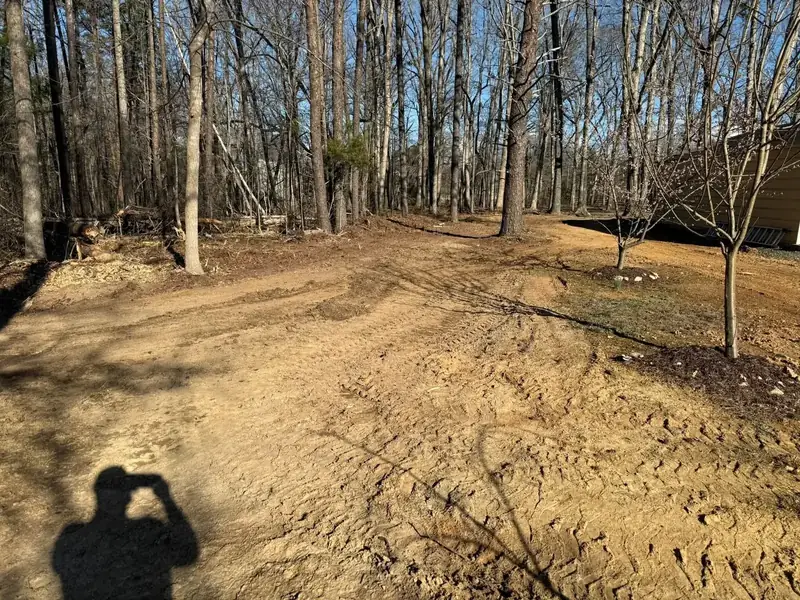
The lots we grade around Climax usually share a problem: thin topsoil over clay that won't absorb much of anything. Water that lands on it has to run off, which means the slope has to be deliberate. We set it with a laser, not by eye, and we take special care at the foundation line where a few inches of fall makes the difference.
Climax ground conditions and how they shape land grading
The western part of Climax drains to Randleman Lake, a regional water supply, and the lake's watershed rules put buffers on the creeks and limits on impervious surface. On slate ground the problem is runoff, not mud — Georgeville soil sheds water quickly and cuts gullies on a bare slope within one storm. So we seed and straw grades immediately and leave mulch in place on the slopes. Rock close to the surface means we scope grading jobs carefully; sometimes a pad has to be built up rather than cut down. The ridges carry equipment most of the year.
Around Climax Road, Polecat Creek and the Guilford–Randolph county line, the properties we're usually called to look like this:
- Pond banks and creek edges on old farms that have grown up in sweetgum and privet
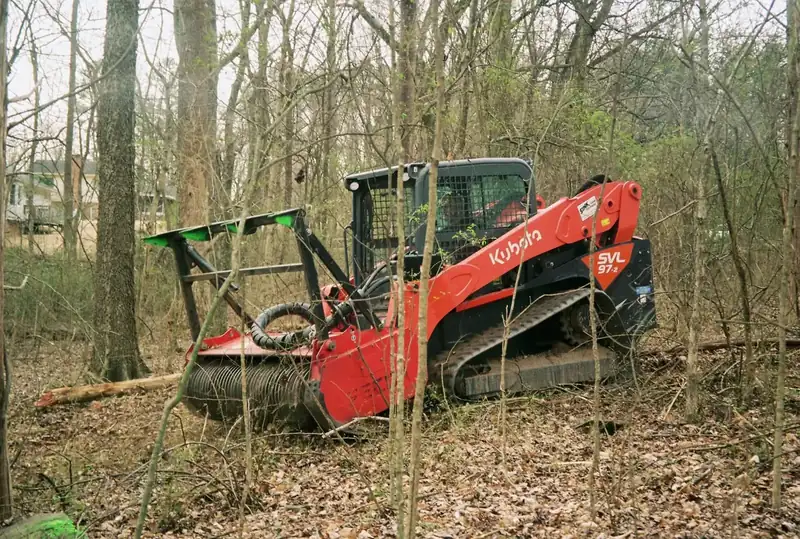
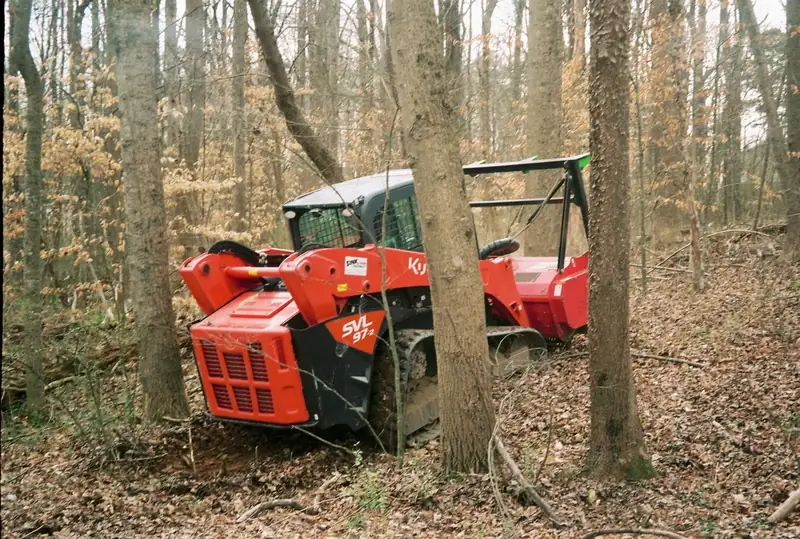
- Five- to ten-acre home sites near US-421 wanting the thicket mulched and a drive graded
- Hunting tracts needing shooting lanes, trails and firebreaks cut through Virginia pine
What land grading jobs look like around Climax
Around the Guilford–Randolph county line, the properties that call us for land grading tend to be pond banks and creek edges on old farms that have grown up in sweetgum and privet.
Closer to Deep River it's more often new construction lots before and after the build — different layout, same machine, and the estimate reflects the difference honestly.
Climax isn't one kind of ground, and we don't price it like it is.
Pleasant Garden, Greensboro and Julian are in the same loop as Climax for us — same crew, same pricing basis.
Why Climax property owners call A&R
We use a laser on every Guilford County grading job, from a small yard fix to a full pad. Plenty of outfits grade by eye and call it close enough. In clay that holds water, close enough is how you end up with the same puddle in a different spot.
If your Climax property needs shaping, send us the address and a photo or two, or give us a call at (336) 392-8138. We'll come walk it.
Land Grading in Climax: questions
How much slope should a yard have away from the house?
The standard target is about six inches of fall over the first ten feet from the foundation, which works out to five percent. Past that, one to two percent across the lawn is plenty to keep water moving without making it hard to mow. In our clay, the slope matters more than it does in sandy ground because the water isn't going to soak in — it has to run off.
What's the difference between grading and leveling?
Leveling makes ground flat. Grading makes it slope on purpose. A truly level yard holds water in our soils, so almost every job that starts as "I want it level" ends up as "I want it smooth with a gentle fall away from the house." That's grading, and it's what we do.
How far is A&R Land Services from Climax?
We're based in Greensboro, about 25 minutes from Climax. Guilford County is inside the radius we work every week, so there's no long-haul mobilization charge built into your estimate.
Do you handle land grading near Climax Road and Polecat Creek?
Yes. We work throughout Climax and the surrounding Guilford County area, including properties around Climax Road, Polecat Creek and the Guilford–Randolph county line. If you're outside the town limits, send the address and we'll confirm it's in range.
What does land grading typically involve on a Climax property?
Driveway, parking and gravel lot base shaping is the most common version of it around Climax. You get a written description of the cuts and fills, whether topsoil or fill dirt is being brought in, how the finish is left, and the price. If sediment control or a permit applies, it's called out here. Square footage or acreage being shaped is the factor that moves the price most on Guilford County jobs, and we'll walk through it with you on site.