
A&R turns abandoned fields around Walkertown back into pasture without a dozer or a burn pile. The mulch feeds the clay, the stumps go to grade, and the field is walkable the day we leave. Forsyth County farms are a regular part of our season.
Fence lines in reclaimed Forsyth County fields are usually still there under the brush, with the wire grown into the sweetgum. We find and pull it before the mulcher gets close, and flag the posts worth rebuilding on.
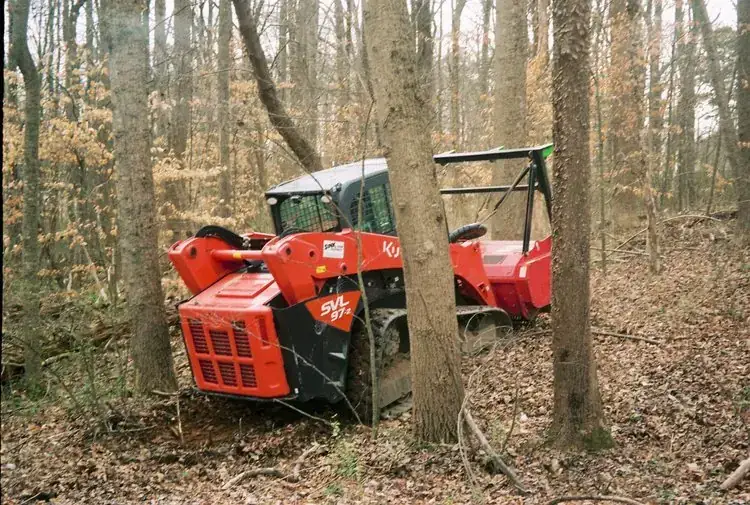
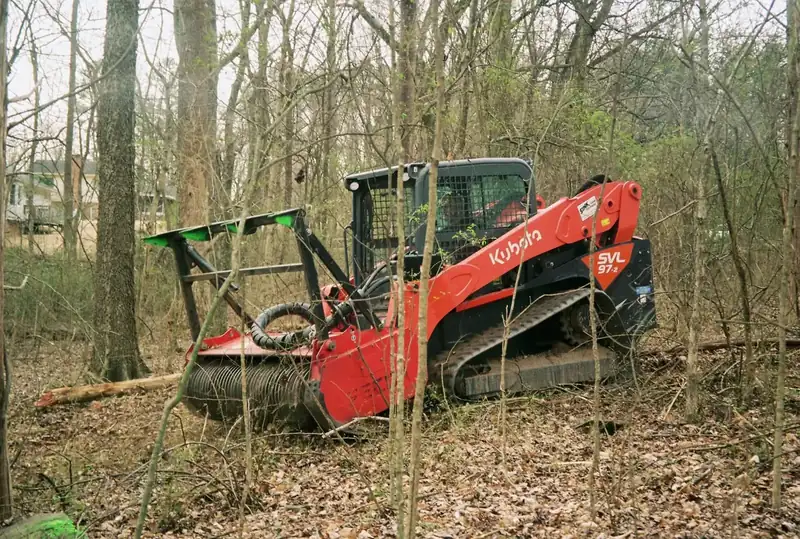
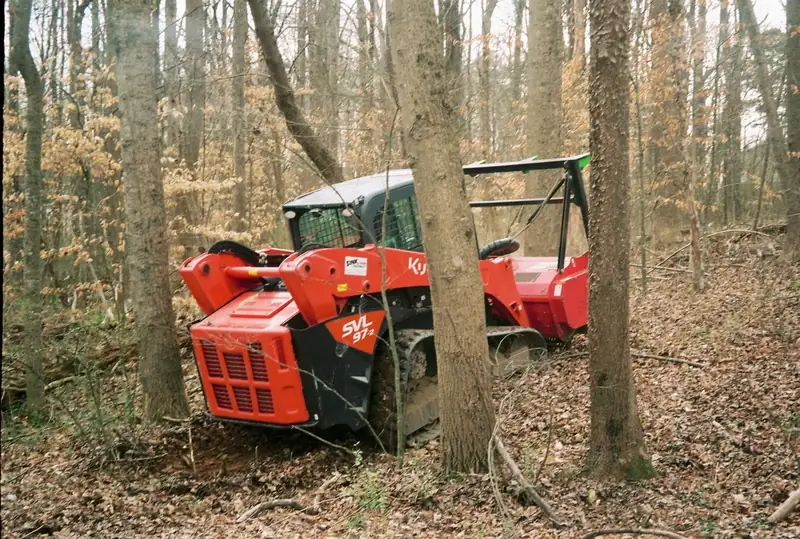
Walkertown ground conditions and how they shape pasture reclamation
Walkertown is on the northeast side of Forsyth between Winston-Salem and Belews Lake, on rolling Cecil and Appling clay with Wedowee on the sandier knolls. Salem Lake sits on its southwest edge and the whole southern part of town drains to it, which puts those parcels under Winston-Salem's water supply watershed rules. To the north the ground tips toward the Dan River basin and Belews Creek. This was tobacco and small-grain land, and the grown-up allotments are loblolly and sweetgum with privet, honeysuckle and poison ivy thick along every old fence row.
Around US-158 (Reidsville Road), Salem Lake and Old Hollow Road, the properties we're usually called to look like this:
- Five- to thirty-acre homesteads off Old Hollow, Darrow and Sullivantown Road with overgrown back acreage and lost fence lines
- Salem Lake watershed lots wanting selective, buffer-friendly clearing to open a view
- Shop pads, gravel lanes and garden plots behind existing homes
What pasture reclamation jobs look like around Walkertown
A typical Walkertown call for pasture reclamation looks like this: Five- to thirty-acre homesteads off Old Hollow, Darrow and Sullivantown Road with overgrown back acreage and lost fence lines. We've handled that exact situation around Old Hollow Road and the Dennis community more times than we can count.
The other common one is Cattle and horse pasture being brought back into production, which usually means a tighter work area and more care around what stays.
If your property is somewhere in between, send the address and we'll tell you which side of the line it falls on.
Rural Hall, Walnut Cove and Winston Salem are in the same loop as Walkertown for us — same crew, same pricing basis.
Why Walkertown property owners call A&R
Clark runs the mulcher on every Walkertown field himself — veteran, working firefighter, owner. He's reclaimed enough Forsyth County pasture to tell you within ten minutes of walking it what you've got and what it'll take.
Bring your Walkertown field back. Reach out to A&R Land Services for a free on-site estimate anywhere in Forsyth County.
Pasture Reclamation in Walkertown: questions
Will the sweetgum and pine come back?
Pine won't resprout from a stump. Sweetgum will, and so will privet. The mulch layer slows them, and two or three mowings the first year usually finishes them off. Leaving the field unmowed for a season after reclamation is the fastest way to lose the work.
What areas do you reclaim pasture in?
Greensboro and everything within about an hour and twenty minutes — the Triad counties, up to the Virginia line, west to Mount Airy and Elkin, south to Salisbury, Albemarle and Sanford, and east toward Durham, Chapel Hill and Raleigh. A lot of our field work is in Rockingham, Randolph, Alamance and Stokes.
How far is A&R Land Services from Walkertown?
We're based in Greensboro, about 28 minutes from Walkertown. Forsyth County is inside the radius we work every week, so there's no long-haul mobilization charge built into your estimate.
Do you handle pasture reclamation near US-158 (Reidsville Road) and Salem Lake?
Yes. We work throughout Walkertown and the surrounding Forsyth County area, including properties around US-158 (Reidsville Road), Salem Lake and Old Hollow Road. If you're outside the town limits, send the address and we'll confirm it's in range.
What should I expect from a pasture reclamation job in Forsyth County?
Expanding existing pasture into the grown-up edges is the most common version of it around Walkertown. We go through the growth with you — age and size of the pines and sweetgum, where the old fences and terraces are, wet spots, the pond or creek, and what the field is going back to: hay, cattle, horses or just open ground. Acreage and how long the field has been out of production is the factor that moves the price most on Forsyth County jobs, and we'll walk through it with you on site.