

If you bought or inherited a farm near Albemarle that's been let go, the fields are probably the first thing you want back. We reclaim grown-up pasture across Stanly County with a forestry mulcher, veteran and fireman owned, based in Greensboro.
Old fields around Albemarle were built with terraces and drainage ditches that still work once the brush is off them. We watch for those under the growth and leave them intact so the field drains the way it was designed to.
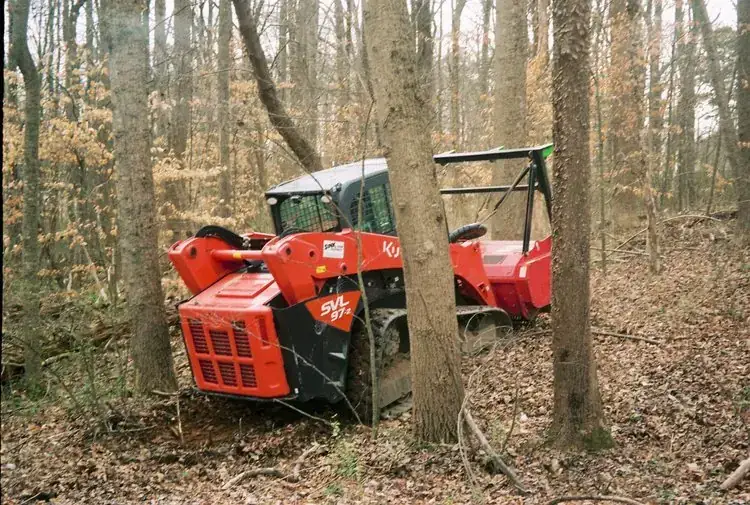
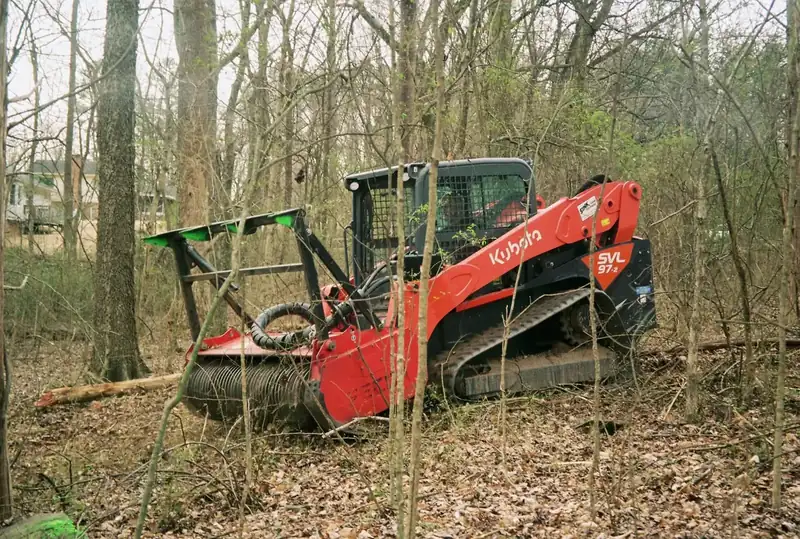
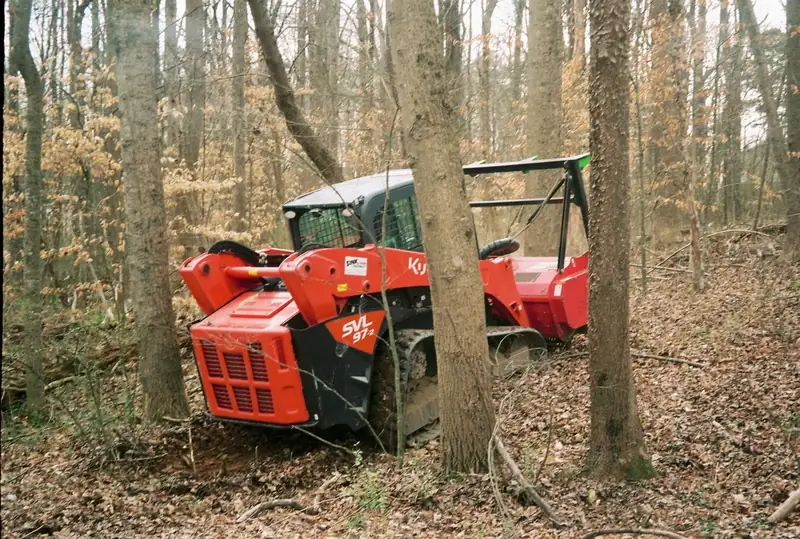
Albemarle ground conditions and how they shape pasture reclamation
Stanly County follows the state one-acre erosion threshold and has watershed protection on the lakes and the Rocky River with stream buffers. Rock is the constant. We mulch rather than grub on the slate hillsides so the thin topsoil stays put, and we probe every pad and trench before pricing — a rhyolite ledge a foot down is normal here. The slate soils drain well, so mulching and clearing go on most of the year; the creek and lake bottoms get the dry-season slots.
Around Norwood, Long Creek and NC-24/27, the properties we're usually called to look like this:
- Badin Lake and Lake Tillery waterfront and second-row lots needing view clearing, understory mulching and a graded pad over slate
- Overgrown mill-village lots and creek frontage along Long Creek inside the city
- Uwharrie-side hunting and timber tracts east of town needing trails, firebreaks and food plots
What pasture reclamation jobs look like around Albemarle
A typical Albemarle call for pasture reclamation looks like this: Badin Lake and Lake Tillery waterfront and second-row lots needing view clearing, understory mulching and a graded pad over slate. We've handled that exact situation around NC-24/27 and Badin more times than we can count.
The other common one is Conservation and wildlife openings on recreational land, which usually means a tighter work area and more care around what stays.
If your property is somewhere in between, send the address and we'll tell you which side of the line it falls on.
Neighbors in Troy, Concord and Seagrove call us for the same work; Albemarle sits right in the middle of that route.
Why Albemarle property owners call A&R
Mulching a Albemarle field keeps the topsoil where it is. That's not a small thing on Piedmont clay — a dozed field loses the thin layer of good dirt that grass needs, and a mulched one gains a layer of organic matter.
Pasture reclamation in Stanly County starts with a walk through the pines. Get in touch and we'll set it up.
Pasture Reclamation in Albemarle: questions
How much does it cost to reclaim an overgrown pasture?
Fields that have been let go five to ten years with pines under eight inches are the most economical — the mulcher runs fast and nothing needs hauling. Older fields with bigger timber take longer and may be worth logging first. Pulling stumps and removing chips for bare ground roughly doubles the work compared with mulching in place. We walk the field and give a written price, and the estimate is free.
How long before I can seed a mulched field?
If the chips stay in place, plan on mowing the resprouts through the first growing season and seeding the following fall after the mulch has broken down and you've limed. If you want grass faster, we rake the chips off and pull stumps so you can disc and seed within weeks. Most people take the slower, cheaper route.
How far is A&R Land Services from Albemarle?
We're based in Greensboro, about 1 hour 10 minutes from Albemarle. Stanly County is inside the radius we work every week, so there's no long-haul mobilization charge built into your estimate.
Do you handle pasture reclamation near Norwood and Long Creek?
Yes. We work throughout Albemarle and the surrounding Stanly County area, including properties around Norwood, Long Creek and NC-24/27. If you're outside the town limits, send the address and we'll confirm it's in range.
What does pasture reclamation typically involve on a Albemarle property?
Cattle and horse pasture being brought back into production is the most common version of it around Albemarle. We go through the growth with you — age and size of the pines and sweetgum, where the old fences and terraces are, wet spots, the pond or creek, and what the field is going back to: hay, cattle, horses or just open ground. Wet areas, pond edges and drainage that limit where the machine can run is the factor that moves the price most on Stanly County jobs, and we'll walk through it with you on site.