
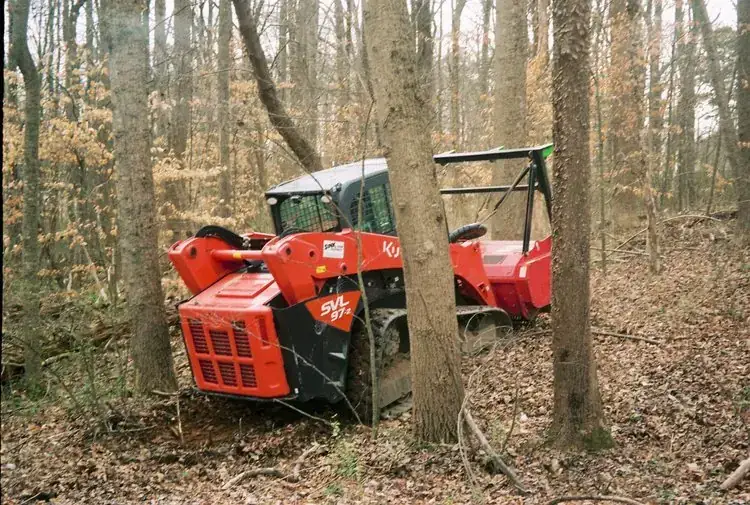
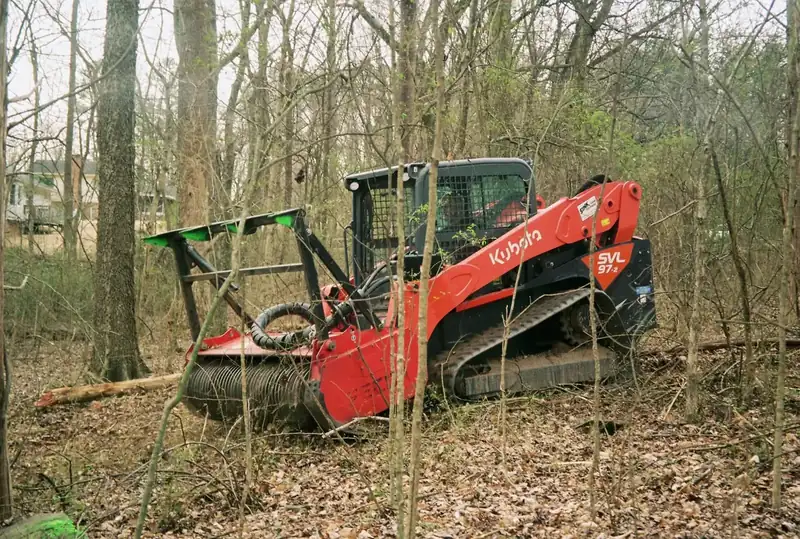
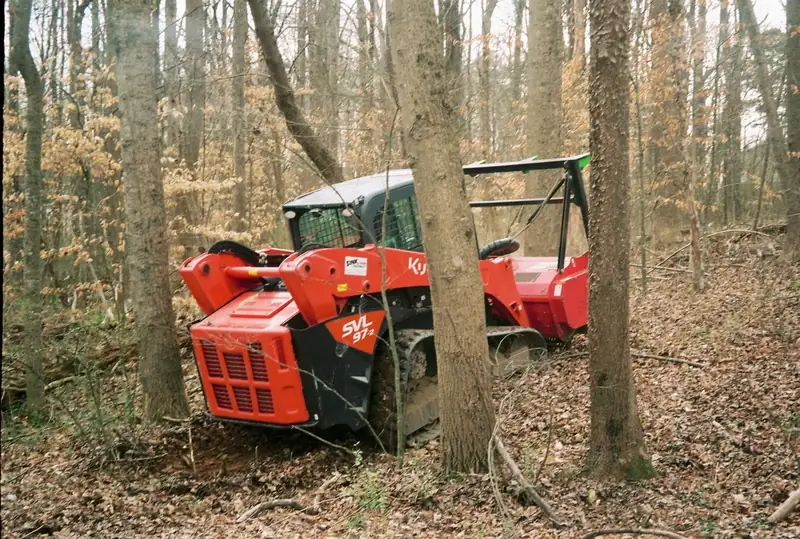
A&R turns abandoned fields around Burlington back into pasture without a dozer or a burn pile. The mulch feeds the clay, the stumps go to grade, and the field is walkable the day we leave. Alamance County farms are a regular part of our season.
Fence lines in reclaimed Alamance County fields are usually still there under the brush, with the wire grown into the sweetgum. We find and pull it before the mulcher gets close, and flag the posts worth rebuilding on.
Burlington ground conditions and how they shape pasture reclamation
Iredell clay rules the schedule. It's slick as grease when wet, cracks open in August, and will not grade cleanly until it's had a dry week. We watch the forecast and run track machines on it. Drainage work — swales, French drains, ditch cleaning — is a bigger share of the job in Burlington than anywhere else we work. Both city lakes are water supply, so the watershed overlays require buffers and limit impervious cover, and Alamance County erosion control covers disturbance past an acre outside city limits.
Around the Glen Raven and Elon area, Big Alamance Creek and Haw River, the properties we're usually called to look like this:
- Former textile and hosiery mill parcels along the rail line and the Haw River overgrown with privet, kudzu and Bradford pear
- Five- to twenty-acre rural lots north toward Lake Cammack and south toward Lake Mackintosh opening house sites and pasture
- Flat Iredell clay yards and fields that hold water and need swales, French drains and ditching
What pasture reclamation jobs look like around Burlington
A typical Burlington call for pasture reclamation looks like this: Former textile and hosiery mill parcels along the rail line and the Haw River overgrown with privet, kudzu and Bradford pear. We've handled that exact situation around Haw River and Maple Avenue more times than we can count.
The other common one is Hay fields that have gone to pine and sweetgum, which usually means a tighter work area and more care around what stays.
If your property is somewhere in between, send the address and we'll tell you which side of the line it falls on.
Elon, Greensboro and Whitsett are in the same loop as Burlington for us — same crew, same pricing basis.
Why Burlington property owners call A&R
Clark runs the mulcher on every Burlington field himself — veteran, working firefighter, owner. He's reclaimed enough Alamance County pasture to tell you within ten minutes of walking it what you've got and what it'll take.
Bring your Burlington field back. Reach out to A&R Land Services for a free on-site estimate anywhere in Alamance County.
Pasture Reclamation in Burlington: questions
Is it better to mulch or bulldoze an old field?
For a field going back to grass, mulching is better almost every time. A dozer strips the topsoil, piles the debris for burning, leaves the clay exposed to wash, and needs follow-up grading. The mulcher leaves the soil, adds organic matter, and the field is walkable the same day. Dozing makes sense only if you need bare ground immediately.
Can you find and remove the old fence?
Yes, and we do it before the mulcher gets near it. Old woven wire and barbed wire in a mulching head is expensive, so we walk the field, locate the lines, pull the wire with the grapple and pile it. Posts worth saving get flagged.
How far is A&R Land Services from Burlington?
We're based in Greensboro, about 25 minutes from Burlington. Alamance County is inside the radius we work every week, so there's no long-haul mobilization charge built into your estimate.
Do you handle pasture reclamation near the Glen Raven and Elon area and Big Alamance Creek?
Yes. We work throughout Burlington and the surrounding Alamance County area, including properties around the Glen Raven and Elon area, Big Alamance Creek and Haw River. If you're outside the town limits, send the address and we'll confirm it's in range.
What does pasture reclamation typically involve on a Burlington property?
Inherited farms and newly bought acreage that's been let go is the most common version of it around Burlington. We go through the growth with you — age and size of the pines and sweetgum, where the old fences and terraces are, wet spots, the pond or creek, and what the field is going back to: hay, cattle, horses or just open ground. Follow-up mowing or second-pass visits to control resprouts is the factor that moves the price most on Alamance County jobs, and we'll walk through it with you on site.