

There are old fields all over Lexington that were pasture twenty years ago and are pine thickets now. A&R Land Services brings them back — mulching the volunteer growth off Davidson County farms and leaving a field that can go to hay or cattle again. We're about 45 minutes away in Greensboro.
Davidson County pasture usually has a pond or a spring branch somewhere in it, and the brush is thickest there. We reclaim the field around it, keep a buffer, and talk with you about fencing the water off or fixing the drainage so the low end dries.
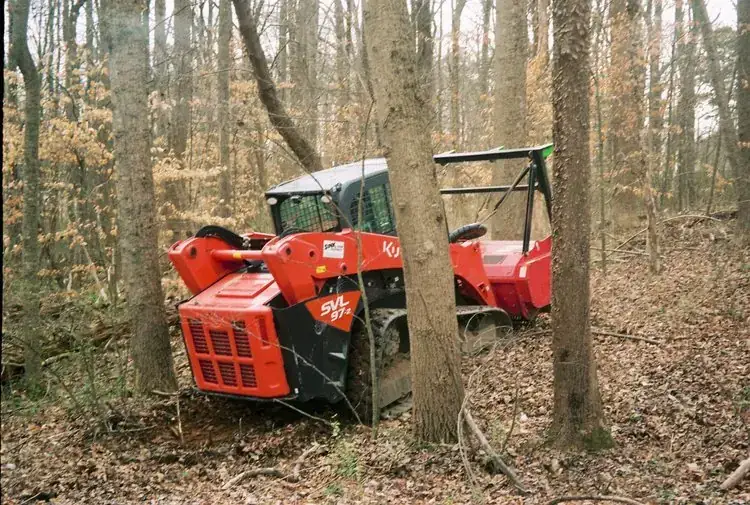
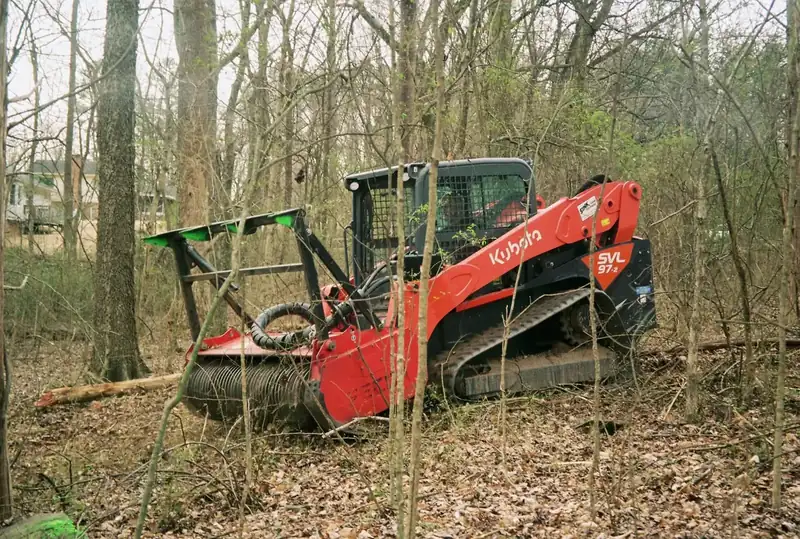
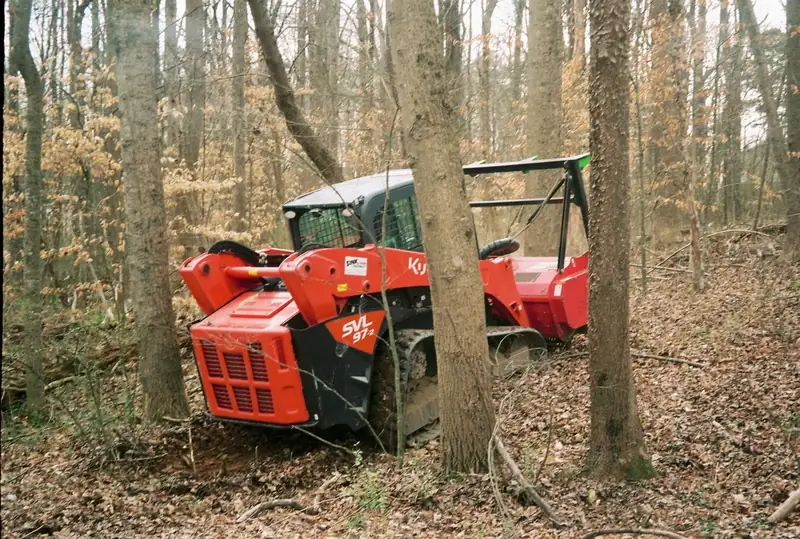
Lexington ground conditions and how they shape pasture reclamation
Lexington is the center of Davidson County and the land around it runs from the Yadkin River on the west to the Uwharrie foothills on the southeast, which means we see three kinds of dirt in one town. North and west toward Tyro and Reeds it is Cecil, Appling and Pacolet red clay; around the city itself and east toward Abbotts Creek it is Enon, Iredell and Mecklenburg shrink-swell clay over diabase; and south toward Southmont and High Rock Lake the Badin and Tatum slate-belt soils start. Abbotts Creek, Swearing Creek and Leonard Creek drain toward the Yadkin, and all three have wide Chewacla bottoms.
Around Swearing Creek, Winston Road and the Yadkin River, the properties we're usually called to look like this:
- Commercial parcels and small subdivisions along I-85, US-64 and Old US-64 needing clearing and rough grading
- Abbotts Creek and Swearing Creek bottomland owners want opened for hay, wildlife or a pond
- Cattle and grain farms toward Tyro, Reeds and Linwood with pasture gone to pine and fence rows lost to honeysuckle
What pasture reclamation jobs look like around Lexington
One job we see over and over near the Yadkin River: Commercial parcels and small subdivisions along I-85, US-64 and Old US-64 needing clearing and rough grading. That's textbook pasture reclamation work, and it's usually a one-mobilization job for us.
Out toward Leonard Creek the pattern changes — more Opening old fields for a homestead, orchard or market garden. The approach is the same, the time on site is what moves.
Either way, the first question we ask on a Lexington site walk is what the ground needs to do afterward, because that decides how far we take it.
Welcome, Wallburg and Thomasville are in the same loop as Lexington for us — same crew, same pricing basis.
Why Lexington property owners call A&R
Greensboro to Lexington is about 45 minutes, which keeps mobilization short on a job that often needs a follow-up pass or a mowing the next year. We're in Davidson County regularly and can come back when the resprouts show.
Send us an aerial of the field and a couple of photos of the growth. We'll give you a straight answer on reclaiming your Lexington pasture.
Pasture Reclamation in Lexington: questions
Will the sweetgum and pine come back?
Pine won't resprout from a stump. Sweetgum will, and so will privet. The mulch layer slows them, and two or three mowings the first year usually finishes them off. Leaving the field unmowed for a season after reclamation is the fastest way to lose the work.
Can you find and remove the old fence?
Yes, and we do it before the mulcher gets near it. Old woven wire and barbed wire in a mulching head is expensive, so we walk the field, locate the lines, pull the wire with the grapple and pile it. Posts worth saving get flagged.
How far is A&R Land Services from Lexington?
We're based in Greensboro, about 45 minutes from Lexington. Davidson County is inside the radius we work every week, so there's no long-haul mobilization charge built into your estimate.
Do you handle pasture reclamation near Swearing Creek and Winston Road?
Yes. We work throughout Lexington and the surrounding Davidson County area, including properties around Swearing Creek, Winston Road and the Yadkin River. If you're outside the town limits, send the address and we'll confirm it's in range.
What should I expect from a pasture reclamation job in Davidson County?
Conservation and wildlife openings on recreational land is the most common version of it around Lexington. We walk the field with you and talk through the mowing, liming and seeding schedule that'll actually get it back into production, and whether any drainage or fence work should happen while the ground is open. Chip handling — left in place, windrowed or removed is the factor that moves the price most on Davidson County jobs, and we'll walk through it with you on site.