

If you bought or inherited a farm near McLeansville that's been let go, the fields are probably the first thing you want back. We reclaim grown-up pasture across Guilford County with a forestry mulcher, veteran and fireman owned, based in Greensboro.
Old fields around McLeansville were built with terraces and drainage ditches that still work once the brush is off them. We watch for those under the growth and leave them intact so the field drains the way it was designed to.
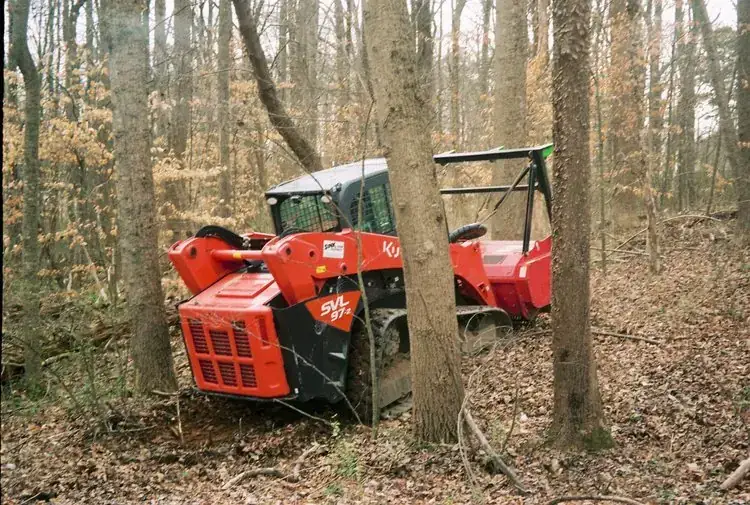
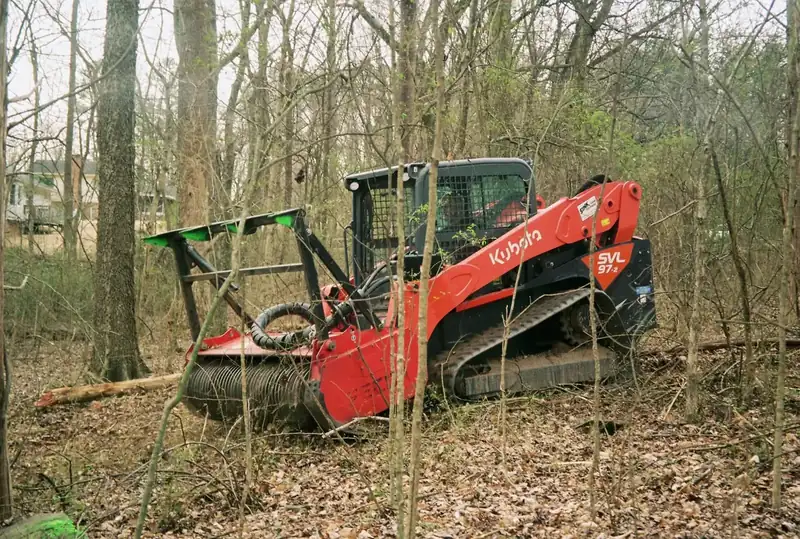
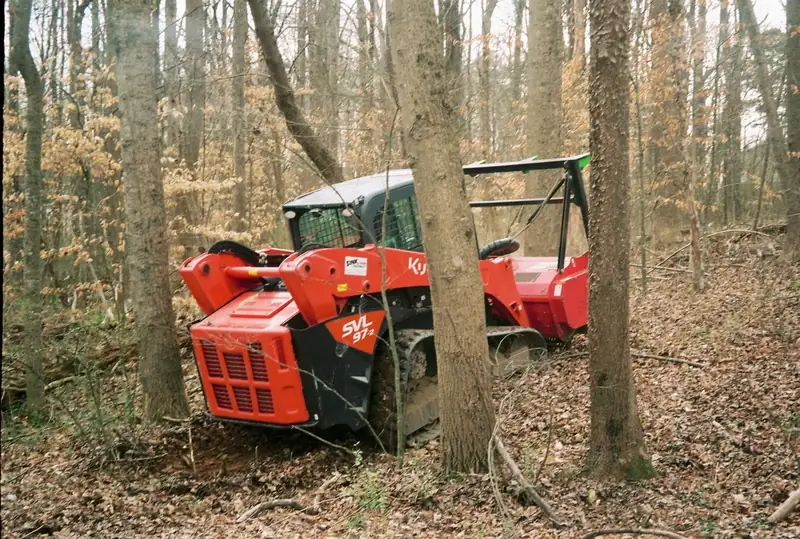
McLeansville ground conditions and how they shape pasture reclamation
East of Greensboro along US-70 and I-85, McLeansville is a wide stretch of rolling farm ground that's turning into subdivisions one field at a time. The high ground is Cecil clay, but pockets of Enon and Iredell show up around Mt. Hope Church Road and toward Gibsonville, and those spots are wet, slick and slow. Buffalo Creek and Reedy Fork both pass near here on their way to the Haw River, and the bottoms along them are Chewacla silt that floods in a hard rain. Fields that stopped being farmed grow up in loblolly first, then sweetgum and red cedar, with privet and honeysuckle underneath.
Around Huffine Mill Road, Buffalo Creek and Frieden Church Road, the properties we're usually called to look like this:
- Subdivision build lots along McLeansville Road and NC-61 needing pine thickets cleared and pads leveled
- Old dairy and tobacco farms being divided into family parcels, each needing a house site and drive
- Shop and pole barn pads with gravel access lanes behind existing homes
What pasture reclamation jobs look like around McLeansville
Most of our pasture reclamation work in McLeansville comes from two directions. First, subdivision build lots along McLeansville Road and NC-61 needing pine thickets cleared and pads leveled. Second, expanding existing pasture into the grown-up edges.
Both show up regularly along Frieden Church Road and Northeast Park (Browns Summit side), and both are jobs we can usually walk, quote and schedule inside a couple of weeks.
We also cover pasture reclamation in Greensboro, Gibsonville and Elon, so if you've got property in more than one spot we can often batch the work.
Why McLeansville property owners call A&R
Mulching a McLeansville field keeps the topsoil where it is. That's not a small thing on Piedmont clay — a dozed field loses the thin layer of good dirt that grass needs, and a mulched one gains a layer of organic matter.
Pasture reclamation in Guilford County starts with a walk through the pines. Get in touch and we'll set it up.
Pasture Reclamation in McLeansville: questions
How much does it cost to reclaim an overgrown pasture?
Fields that have been let go five to ten years with pines under eight inches are the most economical — the mulcher runs fast and nothing needs hauling. Older fields with bigger timber take longer and may be worth logging first. Pulling stumps and removing chips for bare ground roughly doubles the work compared with mulching in place. We walk the field and give a written price, and the estimate is free.
Will the sweetgum and pine come back?
Pine won't resprout from a stump. Sweetgum will, and so will privet. The mulch layer slows them, and two or three mowings the first year usually finishes them off. Leaving the field unmowed for a season after reclamation is the fastest way to lose the work.
How far is A&R Land Services from McLeansville?
We're based in Greensboro, about 15 minutes from McLeansville. Guilford County is inside the radius we work every week, so there's no long-haul mobilization charge built into your estimate.
Do you handle pasture reclamation near Huffine Mill Road and Buffalo Creek?
Yes. We work throughout McLeansville and the surrounding Guilford County area, including properties around Huffine Mill Road, Buffalo Creek and Frieden Church Road. If you're outside the town limits, send the address and we'll confirm it's in range.
What should I expect from a pasture reclamation job in Guilford County?
Fields being reclaimed for lease to a neighboring farmer is the most common version of it around McLeansville. The mulcher takes the growth to grade in passes, working around keeper shade trees and the pond. Larger pines are dropped and grappled off. Old wire is pulled before it reaches the head. Whether stumps are mulched flush or pulled for bare ground is the factor that moves the price most on Guilford County jobs, and we'll walk through it with you on site.