

Ditch cleaning in Raleigh is one of the cheapest drainage fixes there is, and one of the most put off. We bring a mini excavator and a blade from Greensboro, pull the silt and brush, restore the fall to the outlet and leave the ditch carrying water the way it did when it was dug.
Subdivisions around Raleigh were built with drainage swales between lots that nobody maintains. When they fill in, backyards flood. We reshape those swales to a gentle, mowable profile with a defined low line so they carry water again in a Wake County thunderstorm.
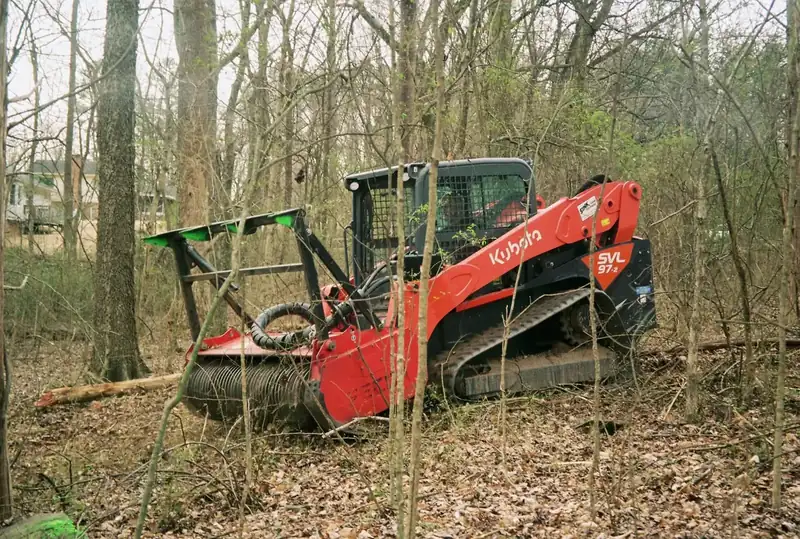
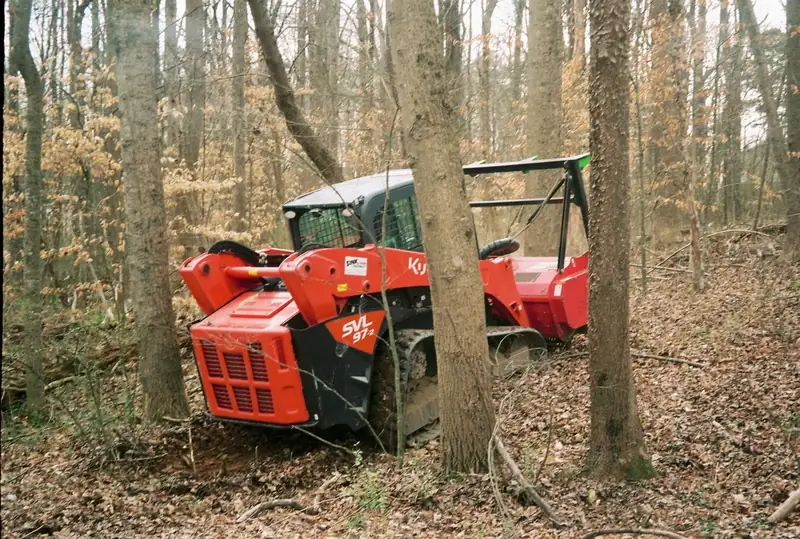
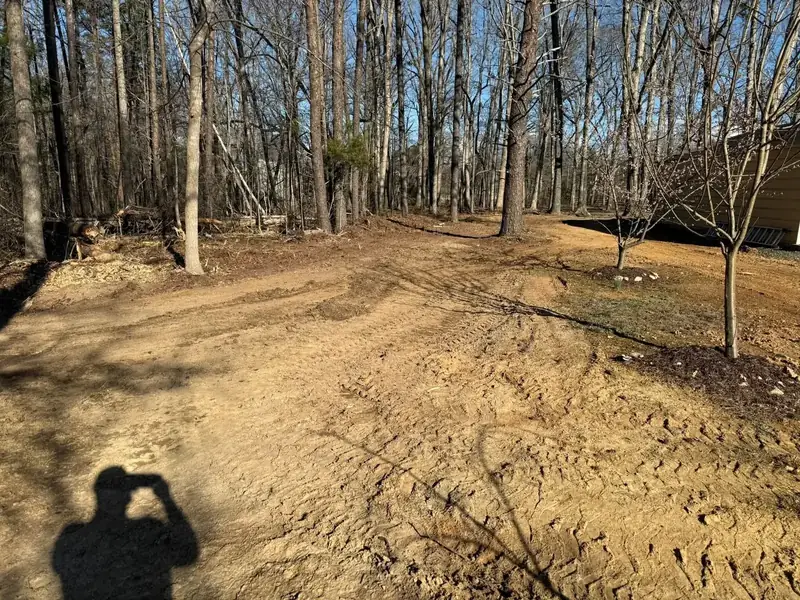
Raleigh ground conditions and how they shape ditch cleaning
Raleigh is the far end of our service area, so we are selective and we go for real jobs. North Raleigh past Falls of Neuse Road, Leesville Road and Durant Road still has estate lots and the last wooded parcels in the big subdivisions, and owners want understory mulched, views opened and backyards reclaimed. The south and east sides along Rock Quarry Road, Poole Road and Old Stage Road toward Garner have larger wooded and former-farm tracts being cleared for infill subdivisions and commercial. Wendell, Knightdale and the US-64 corridor are close enough that we handle them on the same trip.
Around Falls Lake, Swift Creek and Lake Wheeler, the properties we're usually called to look like this:
- Former farm and timber tracts on the south and east sides along Rock Quarry Road, Poole Road and Old Stage Road being cleared for infill subdivisions
- Neuse River and Crabtree Creek frontage with buffer-limited clearing and trail work
- Wooded infill lots inside the Beltline that have grown up in privet and ivy for decades
What ditch cleaning jobs look like around Raleigh
One job we see over and over near Lake Wheeler: Former farm and timber tracts on the south and east sides along Rock Quarry Road, Poole Road and Old Stage Road being cleared for infill subdivisions. That's textbook ditch cleaning work, and it's usually a one-mobilization job for us.
Out toward Poole Road the pattern changes — more Drainage swales through lawns and subdivisions that no longer flow. The approach is the same, the time on site is what moves.
Either way, the first question we ask on a Raleigh site walk is what the ground needs to do afterward, because that decides how far we take it.
Cary, Sanford and Durham are in the same loop as Raleigh for us — same crew, same pricing basis.
Why Raleigh property owners call A&R
If the ditch is part of a bigger drainage or driveway problem on your Raleigh property, we handle the whole thing from Greensboro — ditch, culvert, driveway regrade, erosion fix. One estimate, one mobilization.
Water backing up in the ditch along your Raleigh drive? Call or text (336) 392-8138 for a free estimate on cleaning and regrading it.
Ditch Cleaning in Raleigh: questions
Do you reshape swales in yards?
Yes. A swale is just a shallow, wide ditch you can mow across. We cut them through lawns and fields to carry water to an outlet, and we reshape old ones that have filled in or lost their grade. Done right, a swale disappears into the lawn except when it's raining.
Can you clean out a ditch that's grown up in brush and trees?
Yes. That's most of the ditches we see. The mulcher or brush cutter takes the growth off the banks, the grapple pulls anything bigger, and the excavator digs out the roots and silt. Then we reshape the banks and bottom so the water flows again. If the trees are big enough to shade the ditch and keep it from regrowing, we can leave them.
How far is A&R Land Services from Raleigh?
We're based in Greensboro, about 1 hour 20 minutes from Raleigh. Wake County is inside the radius we work every week, so there's no long-haul mobilization charge built into your estimate.
Do you handle ditch cleaning near Falls Lake and Swift Creek?
Yes. We work throughout Raleigh and the surrounding Wake County area, including properties around Falls Lake, Swift Creek and Lake Wheeler. If you're outside the town limits, send the address and we'll confirm it's in range.
How do you approach ditch cleaning on Raleigh ground?
Culvert inlets and outlets buried in sediment is the most common version of it around Raleigh. We follow the ditch from the top to the outlet, note where it's silted, where the brush is and where the grade has gone flat. If there's a culvert, we check whether it's clear and set at the right height. Depth of silt and how dense the material is is the factor that moves the price most on Wake County jobs, and we'll walk through it with you on site.