
Bare, cleared ground in Raleigh wants to grow sweetgum sprouts from every root left in it. Raking the roots out now saves years of fighting them, and it's quick work with the right attachment. We cover all of Wake County from Greensboro.
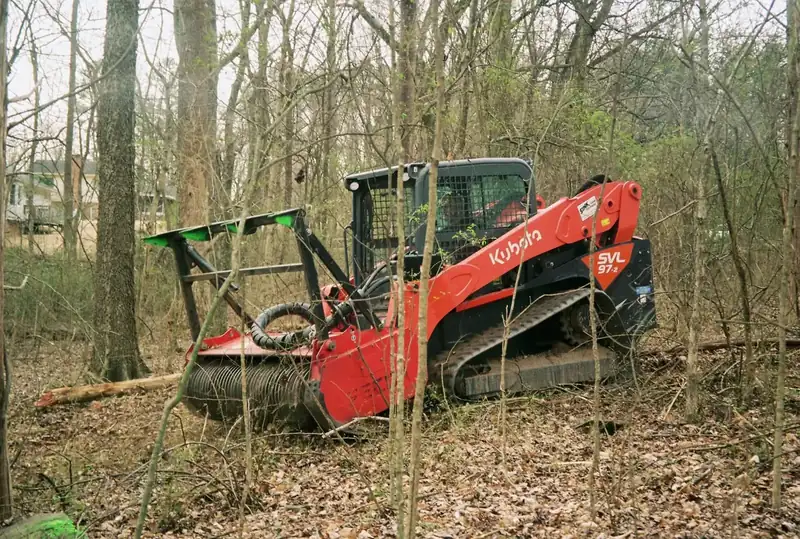
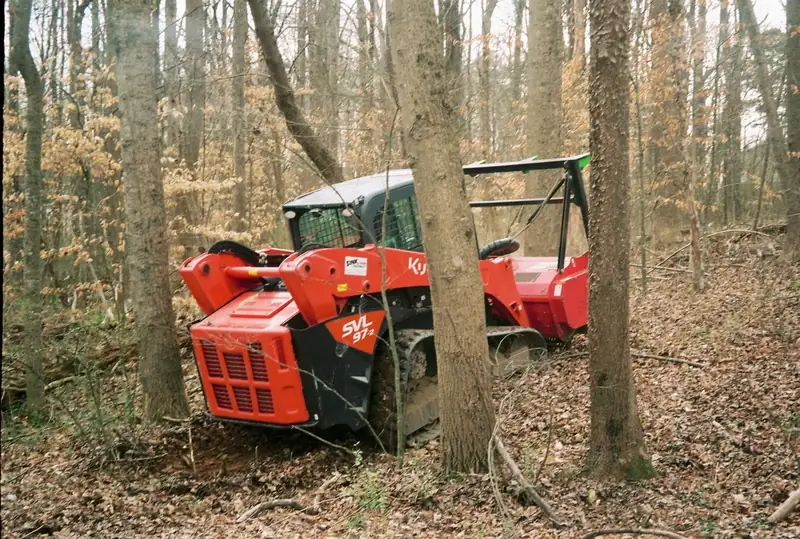
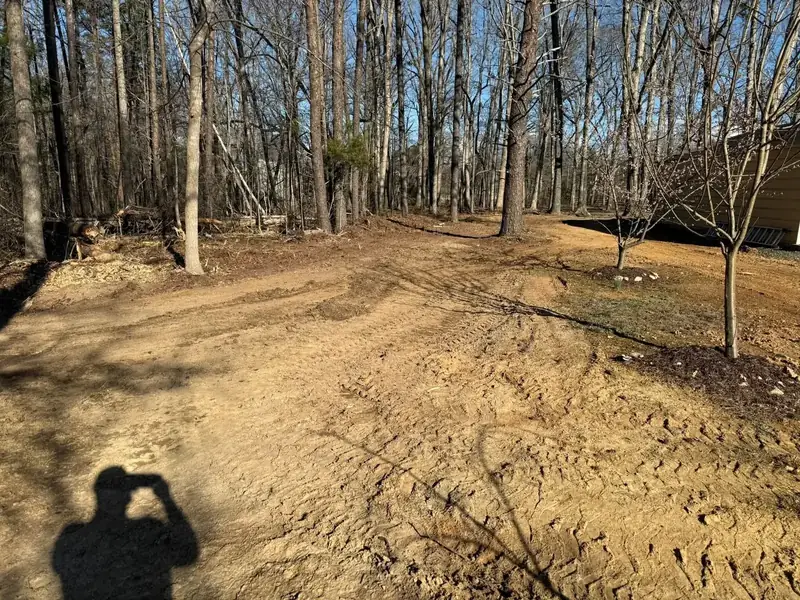
Cleared land around Raleigh is full of sweetgum and oak laterals, pine taproots snapped off below grade and chunks of stump, all in the top foot of red clay. The rake lifts it, the clay falls through, and the Wake County ground that was a minefield for a disk or a mower becomes clean.
Raleigh ground conditions and how they shape root raking
Wake County has its own erosion and sediment control program, and the City of Raleigh enforces a tree-conservation ordinance on larger lots and a Neuse River riparian buffer rule — 50 feet on perennial and intermittent streams — that applies across the entire basin. Falls Lake watershed adds more rules north of town. We map buffers and tree-save areas before we quote, mulch rather than grub where the root mat matters, and keep the Crabtree and Neuse bottoms for dry months. Granite is near the surface in north Raleigh and can turn a pad into a hammer job.
Around I-540, Lake Wheeler and Durant Road, the properties we're usually called to look like this:
- Commercial outparcels along US-64, US-401 and US-70 needing stumps pulled and rough grading
- Neuse River and Crabtree Creek frontage with buffer-limited clearing and trail work
- Estate and large subdivision lots in north Raleigh off Falls of Neuse, Leesville and Durant Roads wanting understory mulched and views opened
What root raking jobs look like around Raleigh
One job we see over and over near Durant Road: Commercial outparcels along US-64, US-401 and US-70 needing stumps pulled and rough grading. That's textbook root raking work, and it's usually a one-mobilization job for us.
Out toward US-64 the pattern changes — more Storm-damaged areas with roots, limbs and debris in the ground. The approach is the same, the time on site is what moves.
Either way, the first question we ask on a Raleigh site walk is what the ground needs to do afterward, because that decides how far we take it.
Neighbors in Durham, Chapel Hill and Apex call us for the same work; Raleigh sits right in the middle of that route.
Why Raleigh property owners call A&R
We match the passes to the use. Pasture in Wake County doesn't need lawn-clean ground and a pad doesn't need the whole lot raked. We'll tell you what your Raleigh property actually needs instead of raking everything three times.
Send us photos of your Raleigh property and tell us what it's going to be. We'll tell you how many passes it needs and what that costs.
Root Raking in Raleigh: questions
How much does root raking cost per acre?
It depends on how much is in the ground and how clean you need it. A mulched lot that needs one pass to expose dirt for a pad is quick. A dozer-cleared tract full of roots, stumps and rock that needs to be lawn-clean takes several passes and a lot of pile handling. We quote per job after walking it, free, and we'll tell you how many passes your end use actually needs.
Do I need root raking after forestry mulching?
Only if you need bare dirt. Mulching leaves roots in the ground on purpose and the chip layer is a good surface for pasture, trails, hunting land or anything you'll mow. If the spot is going to be a lawn, a building pad, a driveway or a garden, raking the chips and roots off and grading is the next step.
How far is A&R Land Services from Raleigh?
We're based in Greensboro, about 1 hour 20 minutes from Raleigh. Wake County is inside the radius we work every week, so there's no long-haul mobilization charge built into your estimate.
Do you handle root raking near I-540 and Lake Wheeler?
Yes. We work throughout Raleigh and the surrounding Wake County area, including properties around I-540, Lake Wheeler and Durant Road. If you're outside the town limits, send the address and we'll confirm it's in range.
What does root raking typically involve on a Raleigh property?
Lots cleared by dozer that are full of roots and debris is the most common version of it around Raleigh. Blade over the raked ground to level, fill stump holes and set drainage. Topsoil, seed and straw if the scope calls for it, so the clay isn't left bare. Rock content, which slows the work is the factor that moves the price most on Wake County jobs, and we'll walk through it with you on site.