
Erosion control in Durham is cheapest when it's done early. We'd rather fix a six-inch wash in an afternoon than rebuild a six-foot gully next spring, and we cover all of Durham County from Greensboro to make that easy.
The slopes around Durham are classic Piedmont: thin topsoil over dense Cecil clay that sheds water and cuts easily once it's bare. We see the worst erosion on Durham County lots that were cleared or graded and then left through a summer of thunderstorms without seed or mulch.
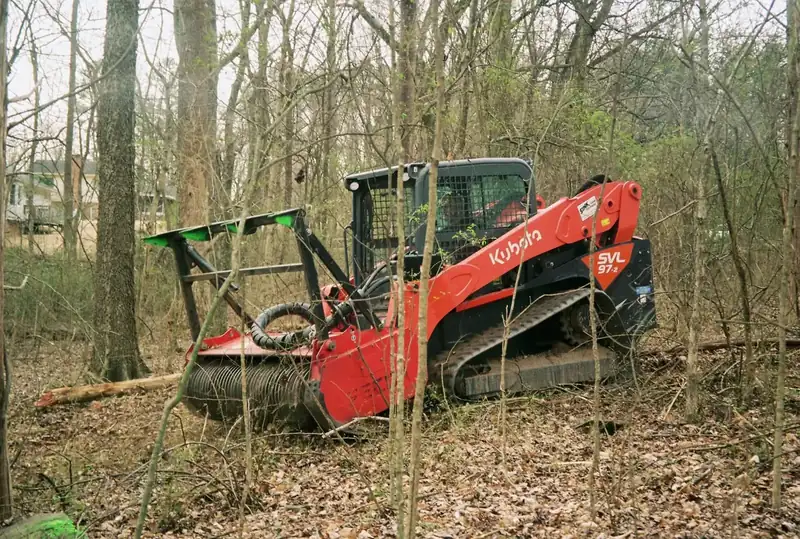
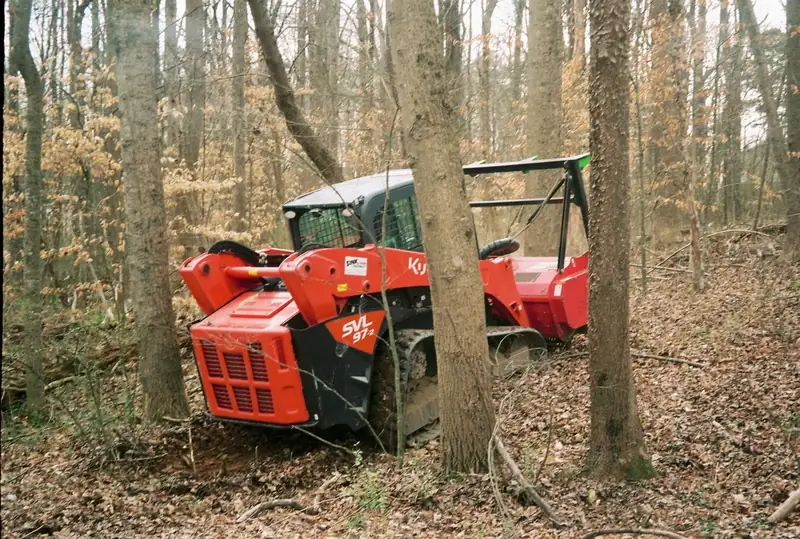
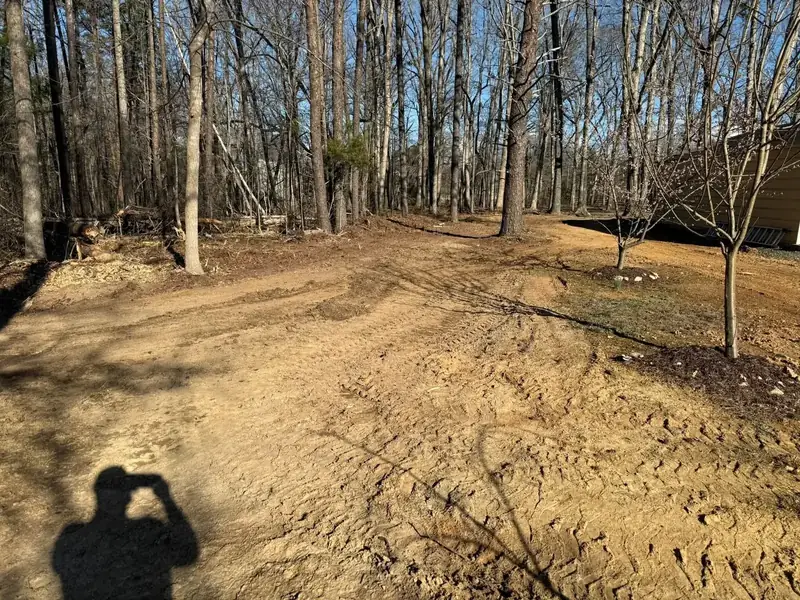
Durham ground conditions and how they shape erosion control
Durham has a city-county planning department with a tree-coverage requirement on larger lots and a sediment and erosion control program that inspects. More than that, nearly the whole county is in either the Falls Lake or Jordan Lake watershed, so perennial and intermittent streams carry 50-foot buffers that the Division of Water Resources takes seriously. We map the buffers before we quote. On the Triassic side we don't fight the clay — we schedule heavy grading for dry months, mulch instead of grub where we can, and keep the root mat on any slope.
Around the Little River, Rougemont and Hope Valley, the properties we're usually called to look like this:
- Estate lots in Hope Valley, Treyburn and along NC-751 wanting understory mulched for views and fire safety
- Church and school properties with wooded back acreage they want opened for parking, fields or trails
- Commercial outparcels around RTP, NC-55 and US-70 east needing rough grading and debris removal
What erosion control jobs look like around Durham
A typical Durham call for erosion control looks like this: Estate lots in Hope Valley, Treyburn and along NC-751 wanting understory mulched for views and fire safety. We've handled that exact situation around Hope Valley and Research Triangle Park more times than we can count.
The other common one is Bare lots waiting on construction through the storm season, which usually means a tighter work area and more care around what stays.
If your property is somewhere in between, send the address and we'll tell you which side of the line it falls on.
If you're just outside Durham — Raleigh, Efland, Roxboro or anywhere between — you're still inside our regular range.
Why Durham property owners call A&R
We treat erosion as a water problem first and a dirt problem second. Plenty of contractors will haul in fill and dump it in a gully; we figure out why the water is concentrating there and fix that too, so the repair in Durham County lasts.
Send us photos of the eroded area on your Durham land and we'll tell you what we think before the visit. Free estimates, honest answers, and we're only about 55 minutes away.
Erosion Control in Durham: questions
What's the best erosion control after land clearing?
Leave the mulch. Forestry mulching puts a layer of wood chips on the ground that holds moisture, breaks the impact of rain and keeps the clay from moving. If you need bare ground for building, seed and straw it immediately and cut a diversion above the pad so runoff doesn't cross the disturbed area.
Do I need a permit for erosion control work in NC?
For small repairs on your own property, no. North Carolina's Sedimentation Pollution Control Act kicks in when you disturb more than an acre, and that requires an erosion and sediment control plan approved by the state or your county. Work inside a stream buffer has its own rules. We'll tell you if your project crosses either line.
How far is A&R Land Services from Durham?
We're based in Greensboro, about 55 minutes from Durham. Durham County is inside the radius we work every week, so there's no long-haul mobilization charge built into your estimate.
Do you handle erosion control near the Little River and Rougemont?
Yes. We work throughout Durham and the surrounding Durham County area, including properties around the Little River, Rougemont and Hope Valley. If you're outside the town limits, send the address and we'll confirm it's in range.
What does erosion control typically involve on a Durham property?
Slopes behind houses that wash out every heavy rain is the most common version of it around Durham. We trace where water concentrates, where it's cutting, and where it ends up. Most erosion problems start uphill of where the damage shows, so we look at the whole drainage path. Cover type — seed and straw vs. erosion blanket vs. mulch is the factor that moves the price most on Durham County jobs, and we'll walk through it with you on site.